5 Panel Drug Test: Where to Buy One (Pharmacy, Big-Box, Online) and How to Pick the Right Kit
Ad: we may earn a commission if you buy through this link. Information only, not medical or legal advice. Tampering with a drug test can be illegal and usually counts as a refusal. The only sure way to pass is to not use.
Updated ·  Written by Daniel Brooks ·
If you need a 5 panel drug test and you're wondering where to buy one, the good news is you have plenty of choices: pharmacies like Walgreens and CVS, big-box stores like Walmart and Target, Amazon, and specialist drug-test sellers all carry them. The not-so-good news is that "5 panel" doesn't mean the same five drugs or the same sensitivity on every box. A kit from one shelf can test for different things than a kit from the next shelf, at different cutoff levels. So before you grab whatever is cheapest, it helps to know where each type of seller fits, what the five panels usually are, which format suits you, and what to look for on the label so the test actually answers the question you're asking.
Disclaimer: This page is general information, not medical or legal advice. A home drug test is a screening test. Any positive result is preliminary and should be confirmed by a lab method such as GC-MS or LC-MS/MS before anyone makes a serious decision based on it. Home kits are not a substitute for DOT, federal, court-ordered, probation or military testing, which must be done through an approved collector and lab.
The quick answer: where to buy a 5 panel drug test
Here's the short version, sorted by what most people care about: speed, price and choice.
- Need it today: a pharmacy (Walgreens, CVS, Rite Aid where still open) or a big-box store (Walmart, Target). Look in the family planning or diagnostics aisle near pregnancy tests. Selection is small and the per-test price is usually the highest.
- Cheapest per test: multi-packs online. Amazon, Walmart.com and specialist sellers sell 5, 10 or 25 packs where the price per test drops a lot.
- Most choice of panels and cutoffs: specialist drug-test sellers. They tend to list the exact drugs and cutoff numbers clearly, and they carry variations (for example a 5 panel with oxycodone or fentanyl instead of PCP).
- Need a result that holds up for a job or legal matter: don't buy a home kit at all. Book a lab test through a collection site, because only a chain-of-custody lab result counts for those purposes.
If you want one simple online option, the 5-panel home dip test at TestClear lists its panels on the product page, ships discreetly and is aimed at people testing at home. We earn a commission if you buy through our links, which is how this site is funded, but the advice below applies wherever you shop.
What "5 panel" actually means
A "panel" is one drug or drug class on the test. A 5 panel test checks for five of them at once. The name comes from the original federal workplace program, which for years tested for five classes often called the "NIDA 5": marijuana, cocaine, opiates, amphetamines and PCP. Many home kits still copy that list, but not all of them do.
The classic five
- THC (marijuana). Looks for THC-COOH, the main metabolite. Usually the panel people care about most.
- COC (cocaine). Looks for benzoylecgonine, the metabolite cocaine breaks down into.
- OPI or MOP (opiates). Looks for morphine and codeine, which also catches heroin because heroin breaks down into morphine. It usually does not reliably catch oxycodone, fentanyl, buprenorphine or methadone.
- AMP (amphetamine). Picks up amphetamine, which includes Adderall. Some kits use MET or mAMP (methamphetamine) instead, or include both on larger panels.
- PCP (phencyclidine). Rarely used today but still on many 5 panel kits because it was on the original list.
Common variations
Because PCP is uncommon, some sellers swap it out. You'll see 5 panel kits that test for benzodiazepines (BZO), methamphetamine (MET), oxycodone (OXY) or, more recently, fentanyl (FYL) instead. That's not a trick, but it does mean two "5 panel" boxes can answer different questions. Always read the list of abbreviations on the box or listing before you buy, and match it to what you're worried about.
The current federal workplace urine panel also looks different from the old NIDA 5. Under the HHS guidelines, labs test for marijuana, cocaine, opioids (including oxycodone and related drugs, plus heroin's 6-acetylmorphine marker), amphetamines (including MDMA) and PCP, with fentanyl added in the 2025 update. A drugstore 5 panel kit is a simpler screen and doesn't copy that lab panel exactly.
Where to buy, seller by seller
Pharmacies (Walgreens, CVS and similar)
Pharmacies are the easiest place to find a test the same day. Most stores carry a few brands of single-panel THC tests and one or two multi-panel cups or dip cards. You can usually also order online for in-store pickup, which saves wandering the aisles.
Good for: one-off tests when you need a result tonight. Watch out for: higher price per test, limited panel choice and boxes that don't print the cutoff levels on the outside. Ask the pharmacist if you can't see them; the package insert inside always lists them.
Walmart and Target
Both carry 5 panel urine kits in store and a much wider range online, including multi-packs from brands like Easy@Home. In-store prices are often a little lower than pharmacies. Online listings at both retailers usually show the panels in the product title, which makes comparing easier.
Good for: a mix of convenience and price. Watch out for: third-party marketplace sellers on the websites, whose stock and expiration dates vary. Check that the listing is sold by the retailer or by a seller with plenty of reviews.
Amazon
Amazon has the widest choice of 5 panel tests and the lowest per-test prices on bulk packs. You'll find cups, dip cards and strips from many manufacturers, with variations for nearly every combination of drugs.
Good for: buying several tests at once, comparing many options and reading reviews. Watch out for: very similar-looking listings from unfamiliar brands, listings that leave out cutoff numbers, and short expiration dates on cheap bulk lots. Look for FDA-cleared or CLIA-waived wording and a clear cutoff table in the images or description.
Specialist drug-test sellers
Companies that focus on drug testing tend to give the most detail: exact panels, cutoffs, format, shelf life and instructions. They also usually stock confirmation and adulteration-check options for people who need them. TestClear is one of these, with a 5-panel dip test plus single-drug and larger multi-panel options if you decide you need more coverage.
Good for: knowing exactly what you're buying, discreet shipping and matching a test to a specific drug. Watch out for: shipping time, so order a few days before you need it.
Medical supply and wholesale sites
Employers, sober-living homes and clinics often buy 5 panel cups in cases of 25 or more from medical supply sites. If you're testing regularly, this is usually the cheapest route per test. For one person testing once, it's overkill.
Cup, dip card or strip: which format to buy
The same five panels come in a few formats. None is more "accurate" in a meaningful way if both kits have the same cutoffs; the difference is mostly convenience and mess.
- Integrated cup: you pee into the cup and the strips inside read the sample through a window. It's the least messy, many include a temperature strip, and you never touch the sample. It costs a bit more.
- Dip card: you collect urine in any clean cup, then dip the card's tips in for the time stated in the instructions. It's cheaper and compact, but you handle the sample.
- Individual strips: separate strips for each drug. Cheapest of all, handy if you only need certain panels, but fiddly when you want all five.
For a parent or someone testing at home once in a while, a dip card is a sensible balance of cost and simplicity. For regular testing where you want it clean and quick, a cup is easier.
The label details that matter more than the store
Where you buy matters less than what's printed on the box. Before paying, check these things.
1. Which five drugs
Read the abbreviations. If the drug you're worried about isn't listed, the test can't detect it, no matter how good the brand is. Oxycodone and fentanyl in particular need their own panels.
2. The cutoff numbers
The cutoff is the concentration (in nanograms per milliliter, ng/mL) the test needs to see before it shows a positive. Lower cutoffs catch smaller amounts. Common home-kit cutoffs look like this, though they vary by brand:
- THC: 50 ng/mL is the usual standard, matching the federal screening cutoff. Some kits use 20 or 25 ng/mL, which is more sensitive.
- Cocaine: often 300 or 150 ng/mL.
- Opiates: 2,000 ng/mL (matching federal workplace rules) or 300 ng/mL (more sensitive, and more likely to react to poppy seeds or codeine).
- Amphetamine: often 1,000 or 500 ng/mL.
- PCP: usually 25 ng/mL.
If you're trying to preview what an employer's screen might show, a kit with cutoffs that match workplace levels gives the closest comparison. Even then, an employer's lab uses its own equipment and confirmation testing, so a home result is a rough guide, not a prediction.
3. FDA clearance and CLIA waiver
Look for wording that the test is FDA-cleared for home or over-the-counter use, or CLIA-waived. That tells you it went through a basic regulatory review for the way you'll use it.
4. Expiration date
Test strips lose reliability after their expiration date. When buying in bulk, make sure you'll use them before they expire. Store them at room temperature and keep each one sealed until you use it.
5. Clear instructions and read time
Most kits are read at about 5 minutes and should not be read after the window stated in the insert (often 10 minutes). A box that doesn't say this clearly is a sign of a low-quality product.
How many tests to buy
Buying a single test is tempting, but there are good reasons to get a two-pack at least:
- A retest. If a result is unclear, or a line looks odd, you'll want to test again with a fresh sample.
- Timing. If you're checking whether something has cleared your system, one test now and another a few days later tells you more than a single result.
- Mistakes happen. Dipping too long, too short, or reading too late can spoil a test.
Multi-packs usually cost much less per test, so the second test often adds only a small amount to the total.
Reading a 5 panel test correctly
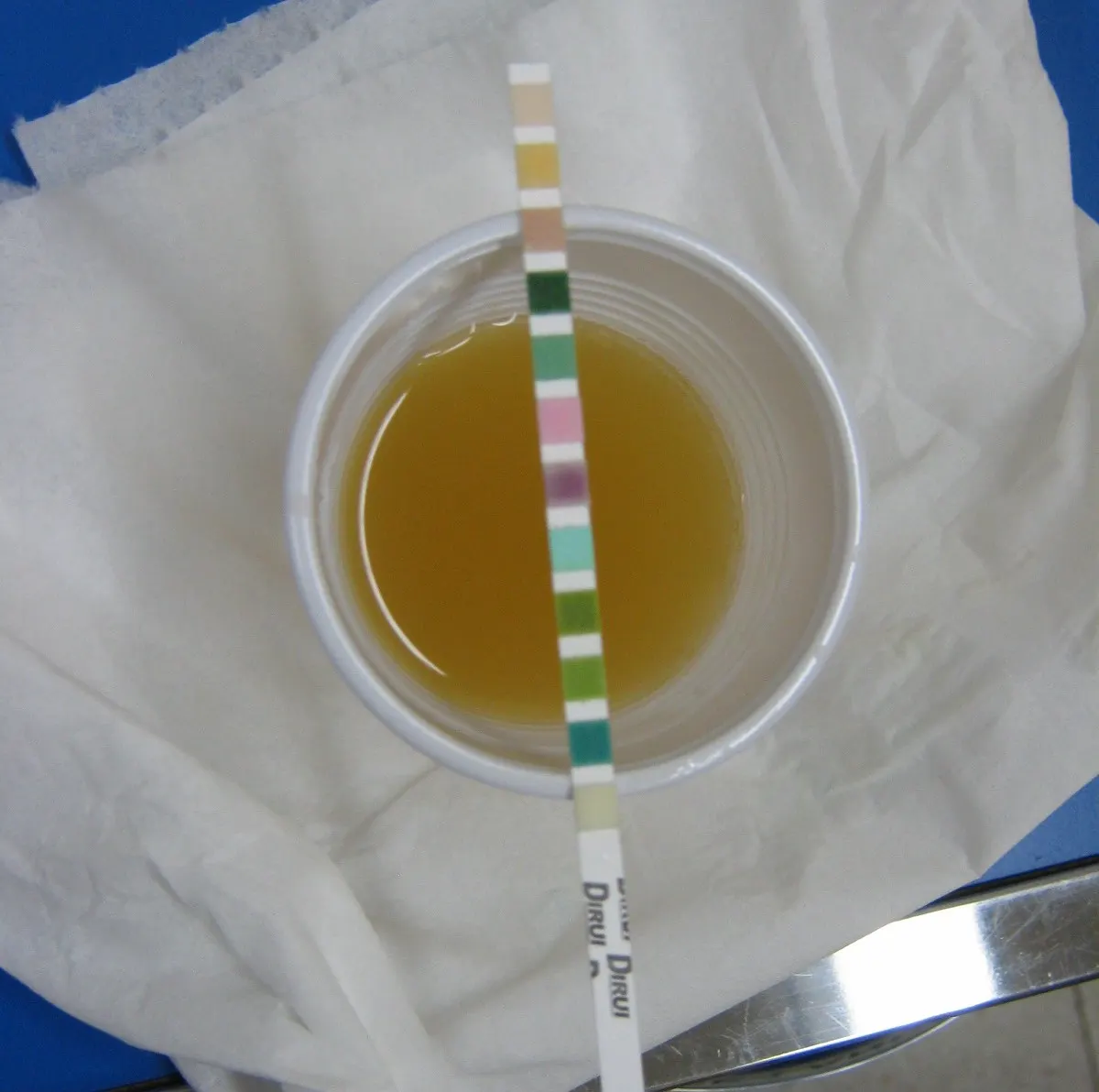
Most home 5 panel tests are lateral-flow immunoassays, and they read the opposite of what many people expect:
- Two lines (C and T) on a panel: negative for that drug. Even a very faint T line counts as negative.
- Only the C line: preliminary positive. The drug was found at or above the cutoff.
- No C line: invalid. The test failed, so use a new one.
Read each of the five panels separately. It's common for four to show negative and one to show positive. Our guide on how to know if a drug test kit is positive has more detail on faint lines and timing.
Ad: we may earn a commission if you buy through this link. Information only, not medical or legal advice. Tampering with a drug test can be illegal and usually counts as a refusal. The only sure way to pass is to not use.
When a 5 panel isn't the right test
Sometimes the answer to "where to buy a 5 panel drug test" is "don't, buy something else." For example:
- You need more drugs covered. If benzodiazepines, oxycodone, methadone, buprenorphine or fentanyl matter, a 10 or 12 panel test covers more. The 10 panel buying guide explains the extra panels.
- You only care about one drug. A single-panel test, such as a marijuana-only strip, is cheaper and often more sensitive for that drug.
- The test you're facing isn't urine. If your employer uses a mouth swab or a hair test, a urine 5 panel won't tell you much. Get a saliva or hair test that matches.
- You need an official result. Pre-employment, legal, custody or probation situations need a lab test with chain of custody. See where to get a lab drug test.
Common reasons people buy a 5 panel test at home
Parents checking on a teenager
A 5 panel test covers the drugs most likely to come up and costs little. If you go this route, many family therapists suggest talking first and testing second, and having a plan for what happens if a result is positive. A test is a conversation starter, not a solution on its own.
Checking yourself before a job screen
Many people want to know whether something will still show up before a pre-employment test. A home 5 panel with workplace-level cutoffs gives a rough idea. It can't guarantee anything about the employer's test, and you should never use a home result as a reason to try to tamper with a real test, which is illegal in many states and is usually treated as a refusal.
Recovery and accountability
People in recovery, or their families, sometimes use regular home testing for accountability. Buying multi-packs or cases makes this affordable. A clinic or counselor can help set up a schedule that's supportive rather than punishing.
Worry about a medication
If you take a prescribed medication and want to see whether it triggers a panel, a home test can help you prepare to tell a medical review officer about your prescription. For workplace tests, the MRO will verify a valid prescription, so a positive for a prescribed drug doesn't automatically count against you.
False positives to keep in mind
Immunoassay tests can sometimes react to substances that aren't the target drug. A few well-known examples:
- Poppy seeds can push opiate results above lower cutoffs.
- Some cold medicines and certain prescription drugs can trigger the amphetamine panel.
- Some medications, such as certain antidepressants or pain relievers, have been reported to cause false positives on specific panels.
This is why a home positive should be treated as "possible," not "proven." A lab confirmation test separates the real drug from look-alikes. If you take any medication, keep a list to share if you're ever tested formally.
Price expectations
Prices change often, so we won't quote exact numbers, but the pattern is consistent: a single 5 panel test from a pharmacy shelf costs the most per test; the same type of test in a multi-pack online costs much less each; and cases bought by clinics and employers cost the least. Specialist sellers sit in the middle and often offer more detail and options for the price. Our guide to home drug test kit prices goes deeper on what drives cost.
Buying discreetly
If privacy matters, online is easiest. Most specialist sellers ship in plain packaging, and big online retailers list the item simply as a medical or diagnostic product. In stores, self-checkout is an option. There's nothing unusual about buying a drug test; pharmacies sell thousands of them.
A simple checklist before you buy
- Does it list the exact drug I'm worried about?
- Are the cutoff numbers printed, and do they suit my purpose?
- Is it a cup or dip card, and which do I prefer?
- Is it FDA-cleared or CLIA-waived?
- Is the expiration date comfortably in the future?
- Am I buying at least two, in case I need to retest?
- Would a lab test be the better choice for my situation?
Bottom line
You can buy a 5 panel drug test almost anywhere: pharmacies and big-box stores when you need it today, Amazon and multi-packs when price matters, and specialist sellers when you want clear panel and cutoff details. The store matters much less than the label. Make sure the five drugs on the box match what you're worried about, check the cutoffs, buy more than one, and treat any positive as a screen that a lab should confirm. For anything official, skip the home kit and go to a lab.
Getting help
If a test result has raised worries about someone you love, or about yourself, help is available. The SAMHSA National Helpline is free, confidential and open 24/7 at 1-800-662-4357. If anyone is in crisis or thinking about self-harm, call or text 988. In an emergency, call 911.
Sources
Detection windows, cutoffs and procedures on this page are based on these public sources. Individual results vary; this is information, not medical or legal advice. See how the DrugTestAnswers Editorial Team checks facts.
- HHS/SAMHSA, Mandatory Guidelines: Authorized Testing Panels, Federal Register, 13 Mar 2026
- HHS/SAMHSA, Mandatory Guidelines for Federal Workplace Drug Testing Programs using Urine, Federal Register, 12 Oct 2023
- Moeller KE et al., "Clinical Interpretation of Urine Drug Tests", Mayo Clinic Proceedings, 2017 (PubMed)
- MedlinePlus Medical Encyclopedia: Urine drug screen
- SAMHSA National Helpline (free, confidential, 24/7)
Questions people ask
Where can I buy a 5 panel drug test near me?
Most pharmacies such as Walgreens and CVS, and big-box stores such as Walmart and Target, stock 5 panel urine tests, usually near pregnancy tests in the family planning or diagnostics aisle. Many let you order online for same-day pickup.
Is it cheaper to buy a 5 panel drug test online?
Usually, yes. Multi-packs from Amazon, retailer websites or specialist sellers cost much less per test than a single kit from a store shelf.
What drugs does a 5 panel drug test check for?
Most check for marijuana (THC), cocaine, opiates (morphine and codeine), amphetamines and PCP. Some swap PCP for benzodiazepines, methamphetamine, oxycodone or fentanyl, so read the panel list on the box.
Does a 5 panel test detect fentanyl or oxycodone?
A standard 5 panel usually does not. Fentanyl and oxycodone need their own panels, so choose a kit that lists FYL or OXY if those matter.
Is a dip card or a cup better?
Neither is more accurate if the cutoffs match. Cups are cleaner and easier; dip cards are cheaper. Pick whichever suits how you'll use it.
Can a home 5 panel test be used for a job or court?
No. Job, court, probation, DOT and federal tests must be done by an approved collector and lab with chain of custody. A home kit is for personal screening only.
How accurate are home 5 panel drug tests?
Good FDA-cleared kits are reliable screens when used as directed, but they can give false positives and miss amounts below the cutoff. Confirm any important positive with a lab test.
Ad: we may earn a commission if you buy through this link. Information only, not medical or legal advice. Tampering with a drug test can be illegal and usually counts as a refusal. The only sure way to pass is to not use.
No product can promise you a pass, and the only certain way is to not use. Tampering with a drug test can be illegal and is usually treated as a refusal. We never help anyone beat DOT, federal, safety-sensitive, or court-ordered tests. If substance use is getting on top of you, call the free, confidential SAMHSA National Helpline on 1-800-662-4357 (24/7, English and Spanish), or call or text 988 in a crisis. Source: samhsa.gov.