Are Lab Drug Tests Harder to Pass Than Instant Tests? Cutoffs, Validity Checks and Confirmation Compared
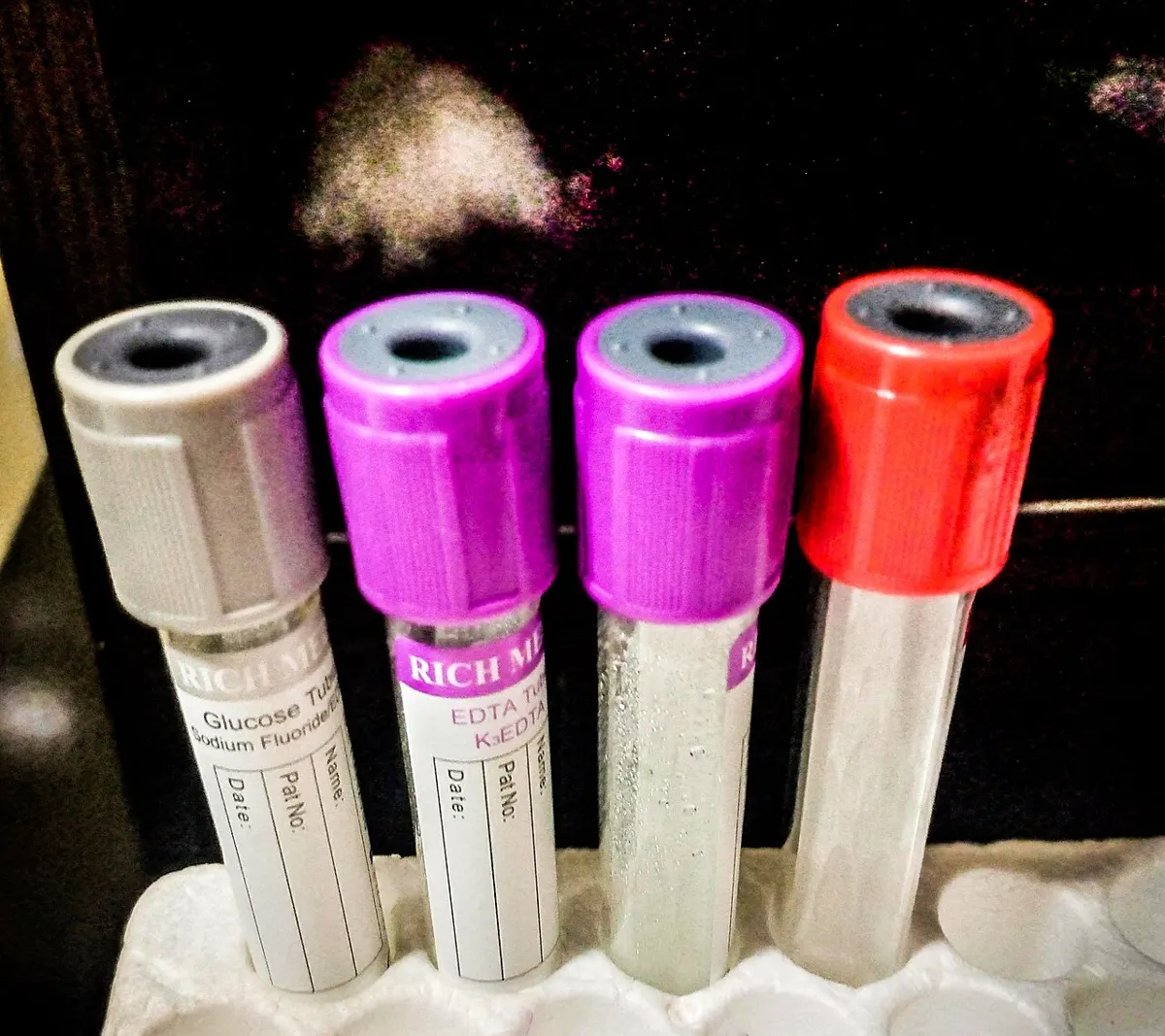
You've heard guys at work say "if it's the instant cup you're fine, but if they send it to the lab you're done." There's some truth in that, and a lot of myth. Let's compare instant and lab tests side by side so you know what you're actually facing.
Ad: we may earn a commission if you buy through this link. Information only, not medical or legal advice. Tampering with a drug test can be illegal and usually counts as a refusal. The only sure way to pass is to not use.
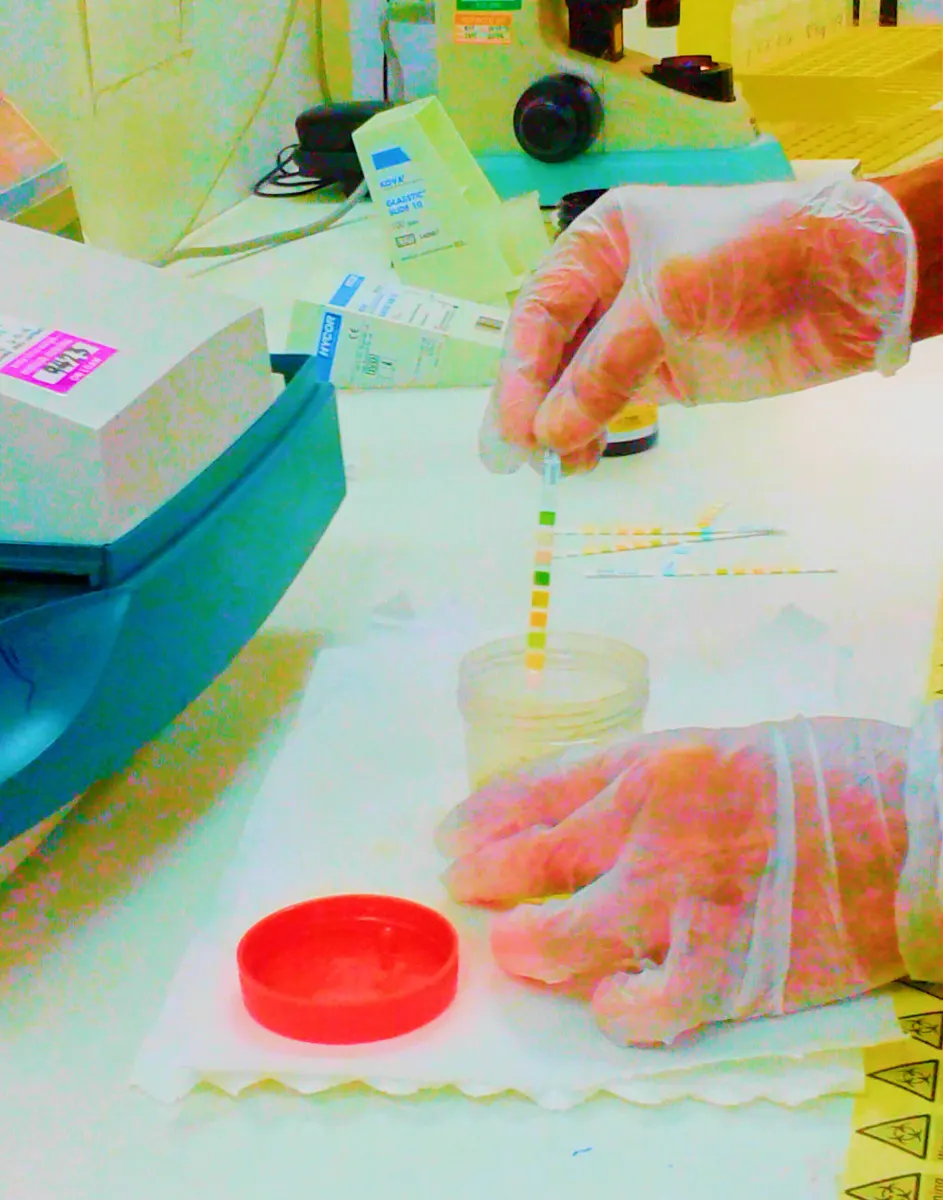
The honest headline
For the drug itself, a lab test isn't dramatically more sensitive at the screening stage. Both usually use immunoassay with similar cutoffs. Where the lab really pulls ahead is in three areas: precise confirmation, specimen validity testing and paperwork that holds up. So the lab is "harder" mainly because it's much harder to fool and much less likely to make mistakes in your favor or against you.
Side-by-side comparison
| Instant cup / dip card | Lab test | |
|---|---|---|
| Screening method | Lateral-flow immunoassay | Automated immunoassay analyzer |
| THC screening cutoff (typical) | 50 ng/mL (some 20 or 25) | 50 ng/mL |
| Result type | Line / no line | Numeric, then reported pos/neg |
| Confirmation | Only if sent out | GC-MS or LC-MS/MS built in |
| Validity checks | Temperature, sometimes basic adulterant strips | Creatinine, specific gravity, pH, oxidants, more |
| Human reading error | Possible (faint lines) | Minimal |
| Turnaround | 5 minutes | 1-5 days |
Why people think labs are "stricter"
1. Faint lines
On an instant cup, any visible test line means negative, no matter how faint. But collectors are human. A busy clinic worker might squint at a barely-there line and call it non-negative, which sends the sample to a lab. In the lab, an analyzer gives a number, so borderline samples get a clean, objective answer either way.
2. Validity testing
This is the big one. Labs routinely measure creatinine and specific gravity to flag dilute urine, check pH, and test for oxidizing chemicals like bleach, nitrites or chromates. Many also screen for signs of synthetic urine. An instant cup typically checks temperature and nothing else. So tricks that might slip past a cup, mostly water-loading, often get caught at the lab as "dilute," "invalid" or "substituted."
3. Confirmation with lower cutoffs
If a lab screen is non-negative, GC-MS confirms at a lower cutoff (15 ng/mL for THC versus 50 for the screen). That's not a trap: it's matched to a more precise measurement. But it means a confirmed positive is very hard to argue with.
4. Expanded panels
Labs can add analytes cheaply: fentanyl, oxycodone, buprenorphine, synthetic cannabinoids, EtG for alcohol. A cup only tests the strips built into it.
Where instant tests can be stricter
Funny enough, some instant cups are more sensitive than a federal-style lab screen. Cheap cups sold for home use sometimes use a 20 ng/mL THC cutoff. Someone who'd pass a 50 ng/mL lab screen could fail that cup. And instant tests sometimes give false positives that would have been cleared at the lab. That's one reason it's worth knowing the cutoff on any test you take.
What happens when an instant test says non-negative
A responsible employer sends that sample to a lab for confirmation and MRO review before deciding anything. In some states, confirmation is legally required before adverse action. In regulated DOT testing, instant cups aren't allowed for the official result at all; everything goes to a certified lab.
Observed collections
Neither type is "observed" by default, but labs and clinics may require direct observation for retests after a dilute or invalid result, for return-to-duty tests in regulated programs, or when the collector sees signs of tampering. Observed collections remove any chance of substitution.
Ad: we may earn a commission if you buy through this link. Information only, not medical or legal advice. Tampering with a drug test can be illegal and usually counts as a refusal. The only sure way to pass is to not use.
So which is harder to pass?
If you're truly clean, neither: a lab will almost certainly confirm that, and a false positive on a cup will usually be cleared. If you've recently used, the lab is harder because its numbers are objective and it catches dilution and tampering. Either way, the deciding factor is still your detection window, not the test format.
Know before you go
Find out which drugs and cutoffs your test uses, then check yourself with a home test at the same cutoff a few days before. Our 5-panel guide and cutoff table help you match them up, and the detection window calculator estimates your timeline.
A word on "beating" lab tests
We don't coach anyone on fooling a lab, and for DOT, federal, safety-sensitive and court-ordered tests, trying to tamper can mean losing your job, your license or worse. A dilute or adulterated result is often treated exactly like a positive or a refusal. The honest path is time, and if you can't stop using, help is available at the SAMHSA National Helpline, 1-800-662-4357.
Lab vs instant, drug by drug
The difference between formats isn't the same for every substance. Here's how it tends to shake out.
Marijuana
Both formats usually screen at 50 ng/mL, so for THC the screen is a coin flip between them. But if you're borderline, the lab's numeric reading removes the "faint line" guesswork. Cheap home cups at 20 or 25 ng/mL will catch you longer than a lab screen.
Opioids
This is where labs really are stronger. Older instant cups have a basic "opiates" strip that reacts well to morphine and codeine but poorly to oxycodone, fentanyl and some semi-synthetics. Labs routinely run separate assays for oxycodone, fentanyl, buprenorphine and more. If you take a prescription opioid, expect the lab to see it and the MRO to ask about it.
Amphetamines
Instant amphetamine strips are known for cross-reacting with some cold medicines and other drugs. Lab confirmation sorts out those false positives, so in this case the lab is actually easier on people who are clean.
Benzodiazepines
Some benzos, like clonazepam and lorazepam, are poorly detected by many basic immunoassays. Labs with targeted LC-MS/MS testing catch them much more reliably.
Why employers choose one or the other
Instant tests are cheap and give same-day hiring decisions, which is why warehouses, retail and staffing agencies like them. Labs cost more but give defensible results, which matters for safety jobs, unionized workplaces and anywhere a firing could end up in court. Many employers use both: instant cups first, lab confirmation for anything non-negative.
What it means for your preparation
Practically, preparation is the same for both: know your detection window, check yourself at home, bring a list of your medications, and don't over-hydrate. The only extra thing to remember for a lab test is that results take days, so don't panic if you hear nothing for 48 hours. Silence is usually just processing time.
Myths we hear all the time
- "Labs can see everything you've ever taken." No. Labs only test for what's ordered, and only within the detection window for that specimen.
- "Instant cups can't detect small amounts." Cups use cutoffs just like labs, sometimes lower ones.
- "If the lab takes longer, you failed." Not necessarily. Dilute samples, prescription checks and weekends all slow things down.
- "Labs keep your sample forever." Positive samples are typically stored frozen for at least a year in federal programs; negative samples are usually discarded soon after reporting.
- "Labs test your DNA." Workplace drug labs don't run DNA tests on routine samples, though DNA testing can be ordered in disputes about whose sample it is.
Questions people ask
Are lab results ever wrong?
Rarely at the confirmation stage, but sample mix-ups and chain-of-custody errors can happen, which is why split specimens exist.
Do labs check if urine is real?
Yes. Labs check creatinine, specific gravity, pH and other markers, and many screen for synthetic urine.
Can I ask for a lab test instead of an instant cup?
You can ask. Employers aren't always required to agree, but a non-negative instant result should be lab-confirmed.
Is a lab drug test more sensitive than an instant cup?
At the screening step they're similar. Labs are stronger at confirmation and validity testing.
Do labs test for dilution?
Yes. They measure creatinine and specific gravity and report dilute samples.
Can an instant test be positive and the lab negative?
Yes. Instant tests can produce false positives that lab GC-MS confirmation clears.
Do all employers send samples to a lab?
No. Some use instant cups and only send non-negative results for confirmation.
Ad: we may earn a commission if you buy through this link. Information only, not medical or legal advice. Tampering with a drug test can be illegal and usually counts as a refusal. The only sure way to pass is to not use.
No product can promise you a pass, and the only certain way is to not use. Tampering with a drug test can be illegal and is usually treated as a refusal. We never help anyone beat DOT, federal, safety-sensitive, or court-ordered tests. If substance use is getting on top of you, call the free, confidential SAMHSA National Helpline on 1-800-662-4357 (24/7, English and Spanish), or call or text 988 in a crisis. Source: samhsa.gov.