Best Drug Test for Weed: How to Pick the Right THC Test for What You Need to Know
Ad: we may earn a commission if you buy through this link. Information only, not medical or legal advice. Tampering with a drug test can be illegal and usually counts as a refusal. The only sure way to pass is to not use.
Updated ·  Written by Daniel Brooks ·
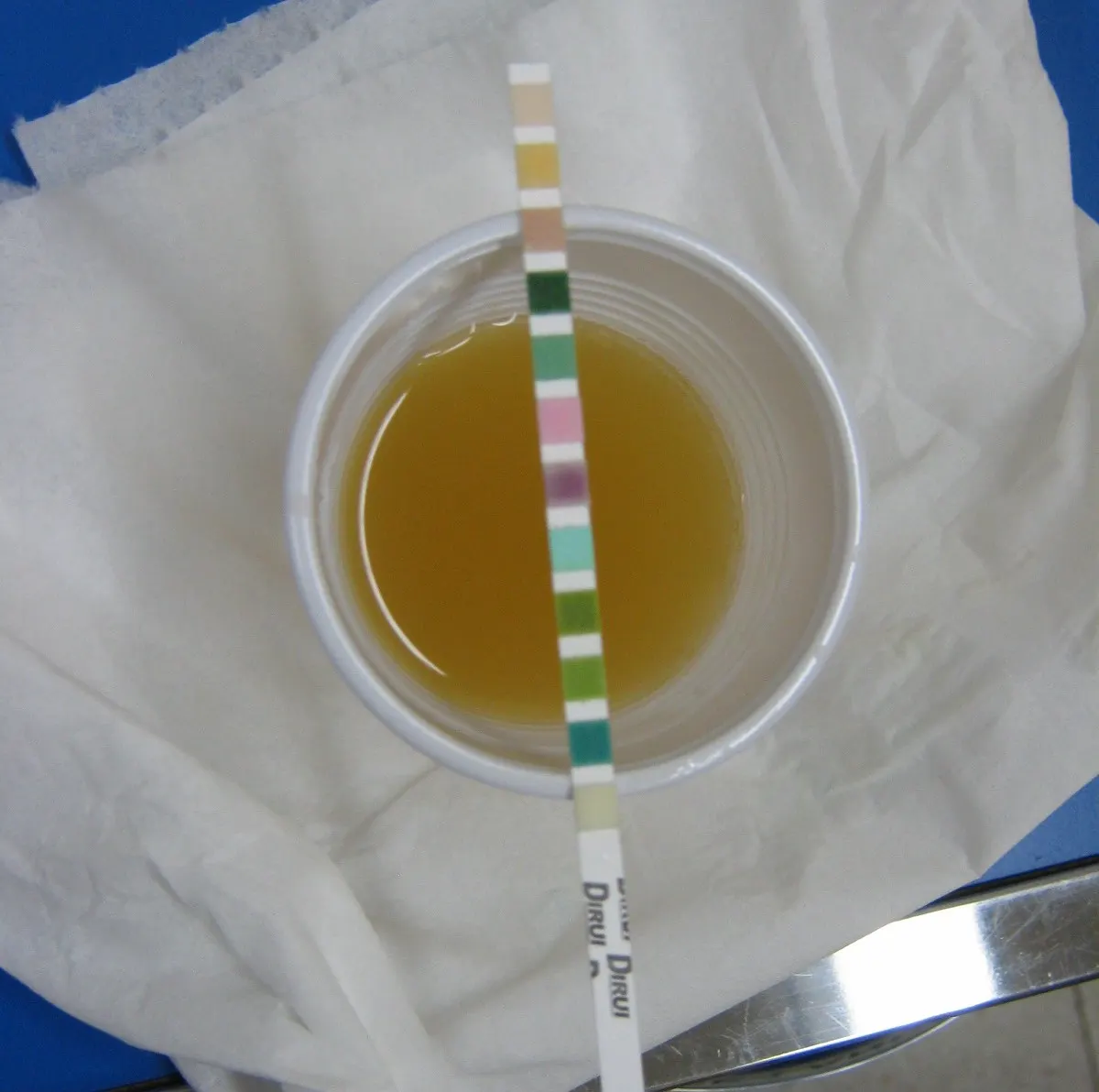
There isn't one best drug test for weed for everybody. The right THC test depends on what you're trying to find out: whether you'd show positive on a standard workplace urine screen, whether you've used in the last day or two, or whether use from months back would still show up. Pick the wrong type and you get an answer to a question you didn't ask. This guide matches each kind of home THC test to the job it does well, explains the cutoff numbers printed on the box, and walks through reading results without fooling yourself.
Start with the question, not the product
Before you buy anything, write down what you actually want to know. Most people land in one of four camps:
- "Would I pass a typical pre-employment urine screen right now?" You want a urine test at the same cutoff most employers use for the first screen.
- "Have I used in the last day or two?" A saliva (oral fluid) test fits, because it mostly picks up recent use.
- "Is any THC metabolite left at all?" A urine test with a lower cutoff is more sensitive and will stay positive longer.
- "Would something from the last few months show up?" Only a hair test looks back that far.
Once you know which camp you're in, picking the best drug test for weed gets simple. The rest of this page explains why.
The four types of home THC tests compared
| Test type | What it detects | Typical window (varies a lot by person) | Best for | Main drawback |
|---|---|---|---|---|
| Urine dip strip | THC-COOH, the main inactive metabolite | About 1-3 days for a single use, longer with regular use | Cheap, repeatable checks over several days | You need a clean cup and steady hands |
| Urine test cup | THC-COOH | Same as strips | Easy, less mess, often several panels | Costs more per test |
| Saliva swab | Parent THC in oral fluid | Roughly the past 24-72 hours in most cases | Recent-use questions, roadside-style checks | Short window; eating or drinking first throws it off |
| Hair kit (mailed to a lab) | THC-COOH bound in the hair shaft | Up to about 90 days with a standard 1.5-inch sample | Long look-back | Slower, pricier, weaker at catching light use |
Detection windows here are general ranges reported in testing literature and by testing labs, not promises. How often you use, how much, your body fat, metabolism and hydration all shift them, and heavy daily users can stay positive on urine for weeks.
Cutoff levels: the number that decides everything
Every immunoassay drug test has a cutoff. If the metabolite in your sample is above that level, the test reads positive. Below it, negative. A lower number means a more sensitive test.
Common urine cutoffs for THC
- 50 ng/mL is the initial screening cutoff in the federal HHS Mandatory Guidelines, and most private employers and labs copy it. If you want to know how you'd do on a typical screen, this is the one to match.
- 20 ng/mL tests are sold for people who want to catch low levels. They'll turn positive in situations where a 50 test reads negative.
- 15 ng/mL is the federal confirmation cutoff. That's for the lab's GC-MS or LC-MS/MS retest of a positive screen, not something a home strip does.
Saliva cutoffs
The federal oral fluid guidelines set the THC screening cutoff at 4 ng/mL, with 2 ng/mL for confirmation. Home saliva kits vary, so read the package insert. A saliva test with a higher cutoff than the one an employer uses can miss what the employer's test would catch.
Why matching the cutoff matters
Say your sample holds 30 ng/mL of THC-COOH. A 50 test reads negative. A 20 test reads positive. Both are working correctly. If you bought the 20 test hoping to predict a 50 screen, you'd worry for nothing. If you bought the 50 test when the screen is actually at 20, you'd get false comfort. Check the insert for the exact cutoff before you trust any line.
So which is the best drug test for weed?
Best for predicting a standard job screen: 50 ng/mL urine test
For most people asking this question, a single-panel marijuana urine test at 50 ng/mL is the best fit. It mirrors the first step of most workplace programs, it's inexpensive, and you can buy several and test over a few days to see your trend. TestClear sells a marijuana home test kit you can use for this; check the listed cutoff on the product page before you order.
Best for recent use: saliva swab
If the test you're facing is a mouth swab, or you just want to know about the last day or so, a saliva test is the right tool. It looks at a different window and a different compound than urine, so a urine strip can't predict a swab result well, and vice versa. For more on that, see our guide to how long weed shows on a mouth swab.
Best for maximum sensitivity: low-cutoff urine test
Want to know whether any measurable metabolite is left, not just whether you'd clear a 50 screen? A 20 ng/mL strip will tell you. It's also useful as an early warning: once a 20 test turns negative, a 50 test almost always will too.
Best for the long look-back: hair test
Hair testing is the only home option that reaches back months. It's also the least sensitive to light or one-time use. If you're facing a hair test, a home hair kit is the only meaningful way to check ahead. Our page on whether a hair test can detect weed covers how labs read THC in hair.
Strip vs cup vs multi-panel: what you're really paying for
All urine tests in this category use the same basic chemistry: a lateral-flow immunoassay where THC metabolite in your sample competes with a test antibody. What changes between formats is convenience and how many drugs are checked at once.
- Dip strips are the cheapest per test. You collect urine in a clean cup, dip to the marked line for the time on the insert, lay it flat and read it. Great for testing several days in a row.
- Test cups have the strips built in. You pee in the cup, put the lid on and read it through the window. Less mess, higher price.
- Multi-panel tests check THC plus other drugs, such as a 5-panel or 10-panel. If all you care about is weed, a multi-panel test is extra cost. If your actual screen will be a panel, it can be handy to mirror it. Our 5-panel test explainer lists what those usually include.
How to get an accurate home result
- Check the expiry date and that the foil pouch is sealed. Expired strips can give weak or wrong lines.
- Use first-morning urine if you want the most concentrated sample, which is the most cautious check. A sample after drinking lots of water may read lower than a lab sample would.
- Bring the test to room temperature if it's been in a cold car.
- Follow the dip time exactly, usually a few seconds. Over-dipping floods the strip.
- Read in the window on the insert, often around 5 minutes. Lines that show up much later don't count.
- Write down the date, time and result so you can see the trend over several days.
Reading the lines (the part everyone gets wrong)
Most THC immunoassay tests work backward from what people expect:
- Two lines (control C and test T) means negative, even if the T line is very faint.
- Only the C line means positive (at or above the cutoff).
- No C line means the test is invalid. Use a new one.
A faint T line is still a line, so the result is negative at that cutoff. That said, a very faint line usually means you're close to the cutoff. If you're watching a trend, faint lines getting darker day by day is a good sign that your level is falling. Our guide to how to know if a drug test kit is positive has pictures-in-words of each case.
Ad: we may earn a commission if you buy through this link. Information only, not medical or legal advice. Tampering with a drug test can be illegal and usually counts as a refusal. The only sure way to pass is to not use.
Home test vs lab test: what a home kit can't tell you
A home test is a screen. A lab adds things a home test doesn't:
- Confirmation testing. Any non-negative screen at a lab goes to GC-MS or LC-MS/MS, which identifies THC-COOH specifically and measures the amount.
- Specimen validity checks. Labs check creatinine, specific gravity and pH, and screen for adulterants. A sample can be reported as dilute or invalid even with no drug found. See whether lab tests are harder to pass.
- Chain of custody. Workplace samples are sealed and tracked.
So a home negative at the matching cutoff is a good sign, not a guarantee. Lab variation, a different cutoff, or a validity issue can still change the outcome.
Worked example (made-up numbers)
Here's an example to show how people use home tests over time. These numbers are invented for illustration, not data from a real person.
Someone who used a few times a week stops on day 0 and has a pre-employment screen in about 10 days. They buy a pack of 50 ng/mL strips and one 20 ng/mL strip.
- Day 3: 50 test shows only the C line (positive).
- Day 5: 50 test shows a very faint T line (negative, but close).
- Day 7: 50 test shows a clear T line (negative).
- Day 8: 20 test shows a faint T line (negative even at the lower cutoff).
The trend is what matters. One strip on one day can mislead; several strips over a week tell a story. Everyone's timeline is different, and some regular users take much longer than this example.
Things that cause confusing THC results
- CBD products. Many CBD items contain some THC, even when labeled otherwise, and can lead to a positive urine screen. More in does CBD show up on a work drug test.
- Delta-8 and other hemp cannabinoids. Standard THC immunoassays often cross-react with delta-8 metabolites. See delta-8 vs delta-9 drug test results.
- Certain medications. Some drugs, including efavirenz and some NSAIDs at high doses, have been reported to cause false positives on some immunoassays. A lab confirmation sorts this out.
- Edibles and drinks. These can produce long-lasting metabolite levels. See how long THC from a drink stays in your system.
What about "same-day" tricks?
We get asked about detox drinks and other quick fixes on almost every weed page. Here's the honest version: there's no independent proof that any product reliably gets a regular user under the cutoff, and labs check urine for dilution and adulterants. Tampering with a test may be illegal and can be treated as a refusal or a failed test. The only sure way to test negative is time without use. A home THC test is the most useful thing you can buy, because it shows you where you actually stand.
If you want to estimate your own timeline, our THC elimination estimator gives a rough range, and how long after smoking weed to pass a urine test goes deeper on the numbers.
Who should not rely on a home THC test
If your test is under DOT, FAA, federal employment, military, court, probation or parole rules, the stakes and procedures are different. Don't use this page or any home kit as a plan for those tests. Talk to the program, your employer's medical review officer, or a lawyer if you have concerns about a result.
Quick buying checklist
- Pick the specimen that matches your real test: urine, saliva or hair.
- Match the cutoff to the one your test likely uses (50 ng/mL urine is the common first screen).
- Buy more than one so you can test over several days.
- Check expiry dates and sealed pouches.
- Read the insert before you start, not after.
Help is available
If you'd like to cut back or stop using cannabis and it feels harder than expected, free help exists. The SAMHSA National Helpline is free, confidential and open 24/7 at 1-800-662-4357. If you're in crisis, call or text 988.
This page is for information only and isn't medical or legal advice. Tampering with a drug test may be illegal and can count as a refusal or a failed test. The only guaranteed way to pass is not using.
Sources
Detection windows, cutoffs and procedures on this page are based on these public sources. Individual results vary; this is information, not medical or legal advice. See how the DrugTestAnswers Editorial Team checks facts.
- Moeller KE et al., "Clinical Interpretation of Urine Drug Tests", Mayo Clinic Proceedings, 2017 (PubMed)
- SAMHSA, TAP 32: Clinical Drug Testing in Primary Care
- National Institute on Drug Abuse (NIDA): Drugs A to Z
- MedlinePlus Medical Encyclopedia: Urine drug screen
- SAMHSA National Helpline (free, confidential, 24/7)
Questions people ask
What is the best drug test for weed at home?
For predicting a typical workplace urine screen, a marijuana urine test with a 50 ng/mL cutoff is the best match. For recent use, a saliva test fits better, and for months of history only a hair test works.
Which THC test is the most sensitive?
A urine test with a lower cutoff, such as 20 ng/mL, will detect smaller amounts of THC metabolite and stay positive longer than a 50 ng/mL test.
Is a faint line on a weed test positive?
No. On most THC tests, any visible T line next to the C line means negative at that cutoff. A faint line usually means your level is close to the cutoff.
Are home weed tests as accurate as lab tests?
Home immunoassay tests are screening tests. Labs confirm non-negative screens with GC-MS or LC-MS/MS and also check specimen validity, so a lab result is more definitive.
How long after quitting will a home THC test be negative?
It varies widely. A single use often clears urine in about 1-3 days at a 50 ng/mL cutoff, while regular heavy use can take weeks. Testing over several days shows your own trend.
Can CBD make a weed test positive?
It can. Many CBD products contain some THC, and regular use can push THC metabolite over a urine cutoff.
Ad: we may earn a commission if you buy through this link. Information only, not medical or legal advice. Tampering with a drug test can be illegal and usually counts as a refusal. The only sure way to pass is to not use.
No product can promise you a pass, and the only certain way is to not use. Tampering with a drug test can be illegal and is usually treated as a refusal. We never help anyone beat DOT, federal, safety-sensitive, or court-ordered tests. If substance use is getting on top of you, call the free, confidential SAMHSA National Helpline on 1-800-662-4357 (24/7, English and Spanish), or call or text 988 in a crisis. Source: samhsa.gov.