What Does Specific Gravity in Urine Mean? Normal Range, High and Low Results and Why Drug Tests Check It
Compare TestClear's urine-test products in one place: detox drinks, multi-day programs and more.
Ad: we may earn a commission if you buy through this link. Information only, not medical or legal advice. Tampering with a drug test can be illegal and usually counts as a refusal. The only sure way to pass is to not use.
Updated ·  Written by Daniel Brooks ·
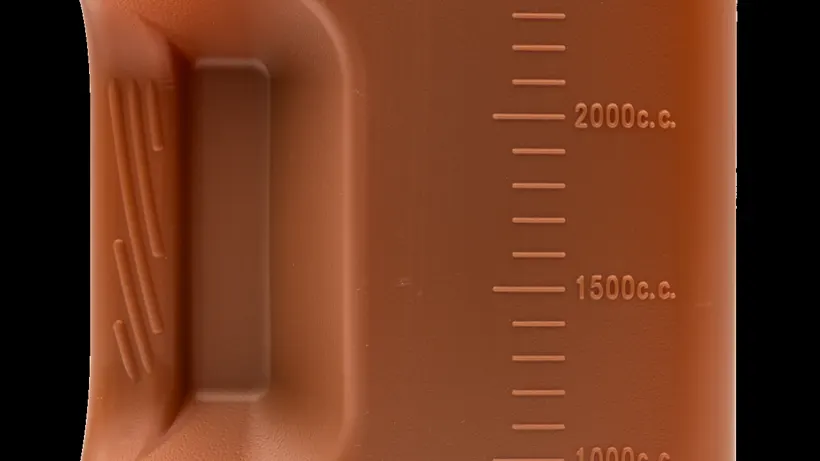
Specific gravity in urine is a measure of how concentrated your pee is. It compares the weight of your urine with the weight of pure water, which is set at 1.000. The more dissolved stuff in the sample (salts, urea, sugar, protein), the higher the number. Most healthy adults land somewhere around 1.005 to 1.030 depending on how much they've had to drink. Doctors use it to read hydration and kidney function, and drug test labs use it to decide whether a sample looks real and normally concentrated.
The simple version
Think of specific gravity (often written SG or USG) as a "how watery is it" score. Pure water is 1.000. Urine always has some waste dissolved in it, so it's heavier than water and the number is above 1.000. A big glass of water an hour ago pushes the number down toward 1.000. A hot day, a long run or a night without drinking pushes it up.
The differences look tiny on paper. 1.005 and 1.030 don't look far apart. But in urine terms that's the gap between pale, watery pee and dark, strong pee. Labs care about the third and sometimes fourth decimal place.
What's a normal urine specific gravity?
Reference ranges differ a little from lab to lab, but these are typical for adults:
| Result | What it usually suggests |
|---|---|
| Below 1.005 | Very dilute urine. Often lots of fluid, but sometimes a sign the kidneys aren't concentrating urine. |
| 1.005 to 1.030 | The usual normal range for a random sample. |
| Around 1.010 to 1.020 | Often seen in well-hydrated people during the day. |
| Above 1.030 | Concentrated urine. Often mild dehydration, but sugar, protein or contrast dye can also raise it. |
First-morning urine tends to be the most concentrated sample of the day because you haven't had anything to drink for hours. A single number out of range doesn't mean something's wrong. Doctors look at it alongside your symptoms, what you've been drinking and the rest of the urinalysis.
How specific gravity is measured
There are three common ways, and they're not equally precise:
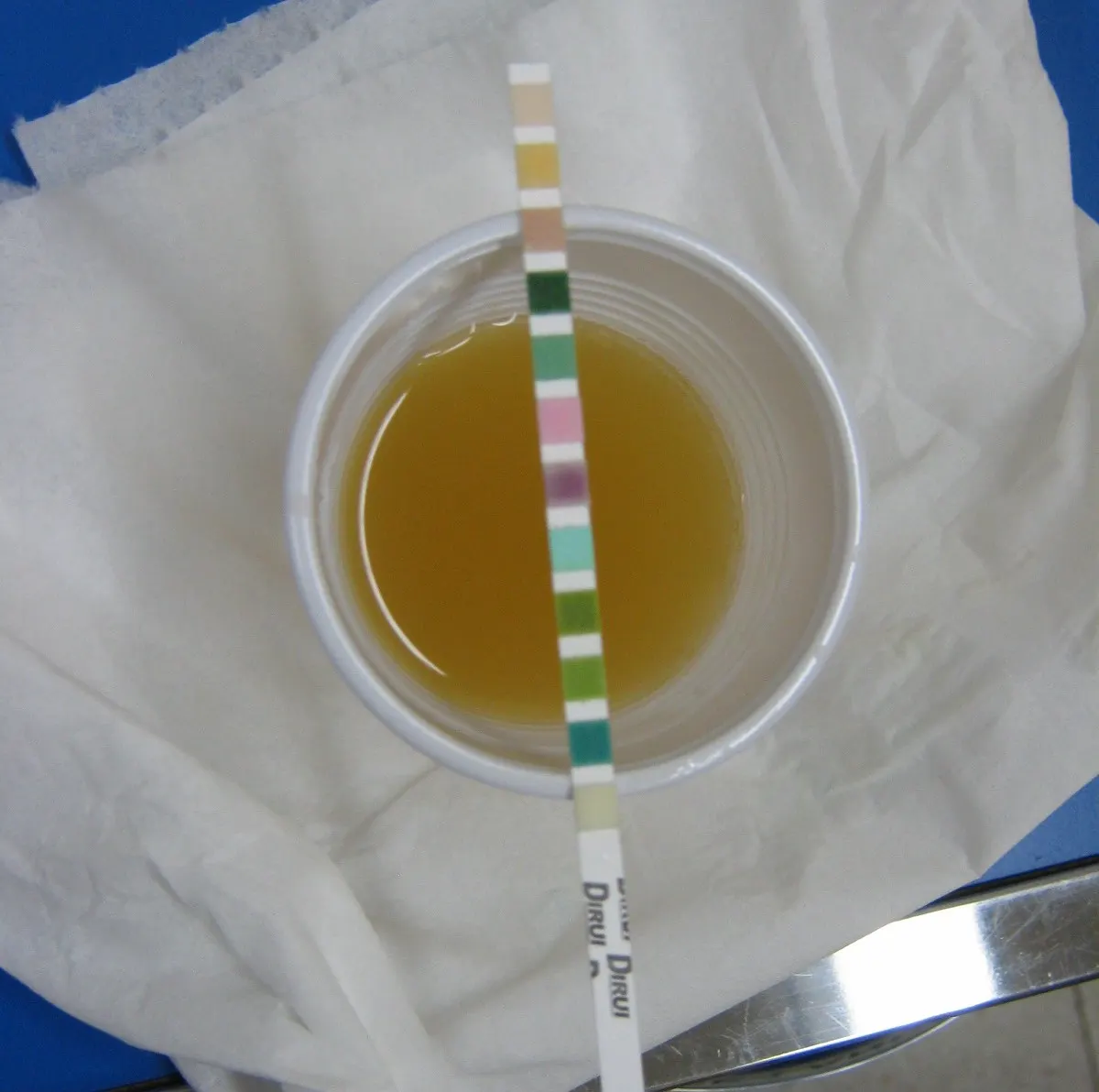
- Reagent strips (dipsticks). A pad on the strip changes color based on the ions in the urine. It's fast and cheap, but it reads in steps (usually 0.005 apart) and can be thrown off by very acidic or alkaline urine and by protein. It's a rough screen.
- Refractometer. A drop of urine bends light, and the instrument converts that to specific gravity. Clinical and drug testing labs use refractometers because they can read to three or four decimal places.
- Hydrometer (urinometer). A weighted float in a cylinder of urine. It's mostly historical now because it needs a lot of sample and is fiddly.
There's a related number called osmolality, which counts dissolved particles directly. It's more accurate for medical decisions, so if a doctor is really worried about your kidneys or sodium, they may order it instead of relying on specific gravity.
What can make specific gravity high?
A high reading means the urine is concentrated. The most common reasons:
- Not drinking enough or losing fluid through sweat, fever, vomiting or diarrhea.
- Sugar in the urine from uncontrolled diabetes. Glucose is heavy and pushes the number up.
- Protein in the urine, which can come from kidney problems.
- Contrast dye after a CT scan or other imaging. This can push readings very high for a day or so.
- Heart failure or liver problems, where the body holds on to water and the kidneys make less, more concentrated urine.
- SIADH, a condition where too much antidiuretic hormone makes the kidneys hang on to water.
Most of the time, though, a high number in a healthy person just means "drink some water."
What can make specific gravity low?
A low reading means the urine is watery. Common reasons:
- Drinking a lot of fluid, especially in a short time.
- Diuretics, including prescription water pills, and to a smaller degree caffeine and alcohol.
- Diabetes insipidus, an uncommon condition where the body can't concentrate urine because of a hormone problem. It's not the same thing as the more familiar diabetes.
- Kidney damage that stops the kidneys from concentrating urine properly.
If your urine stays very dilute even when you're not drinking much, or you're always thirsty and peeing large amounts, that's worth bringing up with a doctor.
What "fixed" specific gravity means
Healthy kidneys swing the number up and down through the day as you drink more or less. When kidneys are badly damaged, they sometimes lose that ability and the urine sits close to about 1.010 no matter what. That's called isosthenuria. One reading near 1.010 doesn't mean anything on its own; it's the lack of change across samples that a doctor would notice.
Why drug test labs look at specific gravity
Drug tests have cutoff levels. If a urine sample is very watered down, drug levels drop too, sometimes enough to change what the screen shows. Labs know this, so along with the drug screen they run validity checks. Specific gravity and creatinine are the main two, and pH is often checked as well.
The criteria most labs use go roughly like this:
| Lab result | Creatinine | Specific gravity |
|---|---|---|
| Normal | 20 mg/dL or more | Within the normal range |
| Dilute | 2 to under 20 mg/dL | Above 1.0010 and below 1.0030 |
| Substituted (not consistent with human urine) | Under 2 mg/dL | 1.0010 or less, or 1.0200 or more |
A dilute result isn't a failed test by itself, but many employers ask for a retest, and some treat a second dilute as a problem. A substituted result is treated very seriously. A specific gravity at or almost at 1.000 with almost no creatinine looks like water, not urine. That's also why a reading of exactly 1.000 is a red flag on a drug test: human kidneys basically don't make urine that's identical to water.
If you got a dilute result and want to know what happens next, our page on what a negative dilute urine test means walks through retests and options. And if you're mixing up creatinine with the gym supplement, see creatine vs creatinine on a drug test.
Is drinking a lot of water before a test a problem?
It can be. People sometimes drink gallons before a urine drug test hoping to "flush" it. What actually happens is the sample comes back with low specific gravity and low creatinine, and the lab reports it as dilute. That doesn't make anything leave your body faster. It just makes the sample look watery, and you may be sent back for another test.
Normal, steady drinking the day before and a regular amount the morning of the test is the sensible approach. If you're a naturally heavy water drinker or you have a medical reason for very dilute urine, tell the collector or the medical review officer. Some people do make dilute urine for medical reasons, and a doctor's note can help.
First-morning urine is usually the most concentrated sample of the day, so if your appointment time is flexible, an earlier slot is a reasonable choice for anyone who tends to run dilute.
Ad: we may earn a commission if you buy through this link. Information only, not medical or legal advice. Tampering with a drug test can be illegal and usually counts as a refusal. The only sure way to pass is to not use.
Reading specific gravity on a home test strip
Some home drug test cups and many urinalysis strips include an SG pad. If you're reading one at home:
- Read it at the exact time the instructions say. Colors keep changing after that.
- Compare in good light against the chart on the bottle.
- Expect steps, not exact numbers. A strip might show 1.010 or 1.015 but can't tell 1.012 from 1.014.
- Remember strips are less accurate with very acidic or alkaline urine or with protein present.
A home strip is fine for a rough look at hydration. It can't promise what a lab refractometer will read, and it isn't a diagnosis. If you want to see what a home drug test cup with validity pads looks like, our guide to reading a home drug test kit can help.
Specific gravity and hydration in everyday life
Outside of drug tests, athletes and people working in heat sometimes check urine specific gravity to judge hydration. Sports medicine guidance often treats readings above about 1.020 to 1.025 as a sign of under-hydration. Urine color charts are a cheaper rough guide: pale straw is good, dark yellow means drink more, and completely clear all day may mean you're drinking more than you need.
Things like vitamins (especially B2), beets and some medications can change urine color without changing specific gravity much, so color isn't perfect either.
Things that can skew a reading
Specific gravity is affected by anything heavy dissolved in urine, not just normal waste. That's why one odd number needs context:
- Glucose and protein raise refractometer readings more than they reflect true concentration, so someone with diabetes or kidney protein loss can look "dehydrated" when they aren't.
- X-ray or CT contrast can push readings above 1.040 for a day or two after the scan.
- Some antibiotics and IV fluids used in hospitals can change the number.
- Temperature matters for older hydrometers, which is one reason labs moved to refractometers.
- Strip chemistry reacts to ions, so it can read lower than a refractometer when urine has a lot of sugar but few salts.
Kids, pregnancy and older adults
Newborns and very young babies can't concentrate urine as much as adults, so their readings run lower. In pregnancy, a higher blood volume and more fluid intake often mean slightly lower numbers, and doctors watch for protein and sugar at the same time. Older adults sometimes lose some ability to concentrate urine and may also feel less thirsty, which can make dehydration easier to miss. In every case the number is read alongside the person, not on its own.
When to talk to a doctor
A single result outside the range usually isn't a worry, especially if you know you were thirsty or had just chugged water. Get it checked if:
- Your urine is very dilute all the time and you're unusually thirsty.
- Your results stay high even when you're drinking normally.
- Other urinalysis results like protein, glucose or blood are also abnormal.
- You have swelling, changes in how much you pee, or other kidney symptoms.
What this page doesn't cover
This is general information about urine specific gravity and ordinary workplace urine tests. It doesn't cover DOT, federal, court-ordered, probation or military testing, which have their own rules. It's also not medical advice. Ask your doctor about a lab result, or the employer or medical review officer about a drug test result.
Bottom line
Specific gravity is a "how concentrated is it" number for urine, with water at 1.000 and most normal samples between 1.005 and 1.030. High usually means dehydration, low usually means lots of fluid, and either can sometimes point to a medical issue. On a drug test, labs use it with creatinine to spot samples that are too watery or don't look like urine at all, which is why overdrinking before a test tends to backfire.
Getting help
If a drug test is stressful because substance use has become hard to manage, free help is available. SAMHSA's National Helpline at 1-800-662-4357 is confidential and open 24/7. If you're in crisis, call or text 988 to reach the Suicide and Crisis Lifeline.
Sources
Detection windows, cutoffs and procedures on this page are based on these public sources. Individual results vary; this is information, not medical or legal advice. See how the DrugTestAnswers Editorial Team checks facts.
- MedlinePlus (U.S. National Library of Medicine): Drug Testing
- SAMHSA, TAP 32: Clinical Drug Testing in Primary Care
- Moeller KE et al., "Clinical Interpretation of Urine Drug Tests", Mayo Clinic Proceedings, 2017 (PubMed)
- HHS/SAMHSA, Mandatory Guidelines for Federal Workplace Drug Testing Programs using Urine, Federal Register, 12 Oct 2023
- SAMHSA National Helpline (free, confidential, 24/7)
Questions people ask
What does specific gravity in urine mean?
It's a measure of how concentrated your urine is compared with pure water, which is 1.000. Higher numbers mean more dissolved material.
What is a normal urine specific gravity?
Most labs use roughly 1.005 to 1.030 for a random adult sample, with first-morning urine usually toward the higher end.
Is a urine specific gravity of 1.030 bad?
It usually means concentrated urine from not drinking much. If it stays high with other symptoms or abnormal results, ask a doctor.
What does low specific gravity mean on a drug test?
Low specific gravity together with low creatinine can get a sample reported as dilute, which often means a retest.
Can urine have a specific gravity of 1.000?
Human urine basically never matches water exactly. A reading at or near 1.000 with very low creatinine is treated as a red flag by drug test labs.
Does drinking water lower specific gravity?
Yes. Drinking a lot of fluid quickly makes urine more dilute and pushes specific gravity down for a few hours.
Is urine specific gravity the same as urine color?
No. Color gives a rough hint about concentration, but vitamins, foods and medicines can change color without changing specific gravity much. Specific gravity is measured with a strip or a refractometer.
Should I worry about one high or low reading?
Usually not. One result reflects what you drank in the last few hours. Repeated abnormal results or other symptoms are the reason to see a doctor.
Where can I get help with substance use?
SAMHSA's National Helpline at 1-800-662-4357 is free, confidential and open 24/7. If you're in crisis, call or text 988.
Ad: we may earn a commission if you buy through this link. Information only, not medical or legal advice. Tampering with a drug test can be illegal and usually counts as a refusal. The only sure way to pass is to not use.
No product can promise you a pass, and the only certain way is to not use. Tampering with a drug test can be illegal and is usually treated as a refusal. We never help anyone beat DOT, federal, safety-sensitive, or court-ordered tests. If substance use is getting on top of you, call the free, confidential SAMHSA National Helpline on 1-800-662-4357 (24/7, English and Spanish), or call or text 988 in a crisis. Source: samhsa.gov.