Macujo Method Clean and Clear Step: Which Product, How Long and What Isn't Proven
Old Style Aloe Toxin Rid, sold direct by TestClear. Read our how-to before you buy.
Ad: we may earn a commission if you buy through this link. Information only, not medical or legal advice. Tampering with a drug test can be illegal and usually counts as a refusal. The only sure way to pass is to not use.
Almost every Macujo method guide tells you to grab "Clean & Clear," and then the confusion starts. Which one, the face wash or the astringent? Does it have to be that brand? Is the pink grapefruit bottle the right one? How long does it stay on, and what is it supposed to do? This page answers those questions for the Macujo method's Clean and Clear step specifically: which product each version names, how to read the label, what salicylic acid really does to a scalp, how much you'll need, what to swap in, and who shouldn't use it at all. Up front: no version of the Macujo method has independent proof of beating a hair follicle test, Clean & Clear is a face product being used off-label, and the only sure way to pass is not using. We may earn a commission if you buy through our links.
The short answer
Clean & Clear is the brand name people use as shorthand for "a salicylic acid acne product" inside the Macujo method. The original version published on TestClear's site calls for Clean & Clear Deep Cleansing massaged into the scalp on top of vinegar, then left under a shower cap for about an hour. Mike's version on macujo.com swaps the wash for a spray astringent (Clean & Clear, Neutrogena Clear Pore or Equate Deep Clean) left on for 30 minutes, twice per session. In both, the active ingredient doing anything at all is salicylic acid. Nobody has published a controlled study showing that Clean & Clear, or the routine it sits in, removes drugs from the inside of a hair strand. What it reliably does is strip oil, loosen scalp flakes and irritate skin if you overdo it.
If you are choosing a product, the label matters more than the logo. Look for salicylic acid in the Drug Facts box, decide whether you are following the wash version or the astringent version, and leave anything with benzoyl peroxide or retinoids on the shelf.
Why a face wash ended up in a hair routine
It sounds odd until you look at what the Macujo method is trying to do. The story behind it is that hair has a tough outer layer, and drug residue sits deeper inside. Every step is chosen to soften, strip or "open" that outer layer so a detox shampoo can reach further in. Vinegar was picked because it is an acid people already own. Laundry detergent was picked because it is a strong surfactant. And an acne product was picked because acne products are sold on the promise that they dig into pores and dissolve oil and dead skin.
Salicylic acid fits that story better than most drugstore ingredients. It is oil-soluble, so it can mix into sebum rather than sliding off it. It is a keratolytic, which means it loosens the bonds holding dead skin cells together. Dermatologists use it on scalps already, in dandruff and psoriasis shampoos. So somebody, years ago, reasoned that an acne wash with salicylic acid would help break down the scalp's oily layer and the hair's surface. Clean & Clear was cheap, sold everywhere and had salicylic acid in several of its products, so it became the name everyone repeats.
That history matters for one practical reason: the brand was never special. Guides name it because it was easy to buy, not because it carries a unique formula. Any product with the same active ingredient at a similar strength is doing the same job in the routine.
Which Clean & Clear product each Macujo version names
Most confusion comes from people mixing instructions from two or three different sources. Here is what each widely shared version actually says, in plain terms.
| Version | Product named | How it is applied | Contact time per application | Applications per session |
|---|---|---|---|---|
| Original Macujo method (TestClear write-up) | Clean & Clear Deep Cleansing, a salicylic acid cleanser | Massaged into the scalp on top of vinegar, without rinsing the vinegar first | About 1 hour under a shower cap | 1 |
| Mike's Macujo Method (macujo.com) | Clean & Clear, Neutrogena Clear Pore Astringent or Equate Deep Clean Astringent | Sprayed over the whole head until saturated, massaged 5 to 7 minutes | 30 minutes | 2 (once after baking soda, once after vinegar) |
| Forum and video remixes | Clean & Clear Pink Grapefruit or "any Clean & Clear with salicylic acid" | Usually massaged in over vinegar, like the original | Anywhere from 15 to 60 minutes | 1, sometimes 2 |
Two big differences jump out. The original treats Clean & Clear as a rinse-off cleanser that you leave on far longer than any face wash label intends. Mike's version treats it as a leave-on astringent and calls the astringent "the strongest chemical used during this process," with a tip to put petroleum jelly around the forehead and ears to prevent a rash. Same brand name, two different product types, two different exposure patterns.
If you only remember one thing from this section, make it this: decide which version you are reading before you buy anything. A foaming wash sprayed from a bottle won't spread like an astringent, and an astringent left on for an hour under a cap is a much heavier dose than either guide describes.
Cleanser vs astringent: what changes in the bottle
Clean & Clear sells both kinds of products, and so do the store brands that copy them. They are built differently, and that changes how they behave on a scalp.
| Feature | Salicylic acid cleanser (wash) | Salicylic acid astringent (toner) |
|---|---|---|
| Base | Water plus foaming surfactants and thickeners | Mostly water and alcohol, thin and watery |
| Meant to be | Rinsed off after a short massage | Left on the skin to dry |
| How it spreads on hair | Thick, needs working through by hand, can clump in long hair | Runs easily, soaks hair fast, drips toward eyes and ears |
| Drying effect | Moderate, mostly from the surfactants | Strong, the alcohol evaporates and pulls moisture with it |
| Typical sting | Tingling on a healthy scalp | Noticeable sting, worse on scratches and the hairline |
| Fire risk | Low | Alcohol-based toners are often labeled flammable; keep away from flames and heat tools while wet |
None of this means one is "stronger" at removing drugs. There is no evidence either is. It means the astringent route is rougher on skin, especially when it is applied twice in one session as Mike's instructions describe, while the wash route depends on very long contact time under a cap.
How to read the label before you buy
Formulas change, product names get reused, and the same shelf can hold a grapefruit wash with salicylic acid next to a grapefruit wash without it. The only reliable check is the label on the bottle you are holding.
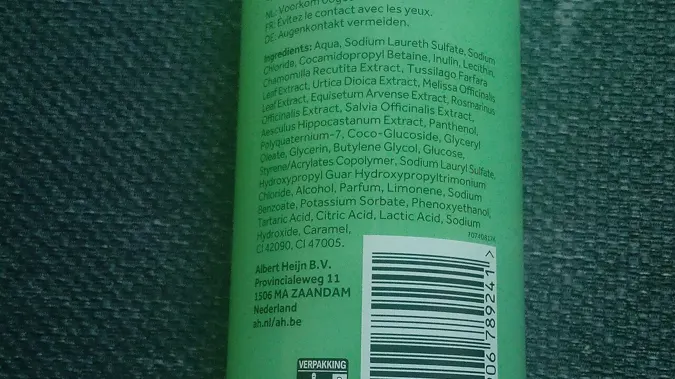
- Find the Drug Facts box. In the United States, acne products with salicylic acid are regulated as over-the-counter drugs, so the active ingredient and its percentage have to appear in a Drug Facts panel. If there is no Drug Facts box, the product probably has no salicylic acid at a drug level.
- Check the percentage. The federal acne rules allow salicylic acid from 0.5 percent to 2 percent in these products. Most "deep cleaning" washes and astringents sit at the top of that range, while "sensitive skin" versions often sit lower. Higher numbers mean more irritation, not a better detox.
- Scan the inactive ingredients for alcohol. If "alcohol denat." or "SD alcohol" appears near the top of the list, you are holding an astringent-style product that will dry your scalp quickly.
- Look for a second active. If you see benzoyl peroxide, sulfur, resorcinol or adapalene listed as an active, put it back. These are different acne drugs with their own risks, and benzoyl peroxide in particular can bleach hair and fabric.
- Read the warnings. Acne labels warn about using more than one topical acne medicine at a time and about irritation. The Macujo routine already stacks vinegar and detergent on top, so take those warnings seriously.
A quick tip from people who have stood in that aisle: photograph the label before you leave the store. When you're standing in a steamy bathroom later, it helps to know exactly what percentage you bought and whether alcohol is in it.
What salicylic acid actually does
Salicylic acid is a beta hydroxy acid and a cousin of aspirin. On skin it does three well-documented things. It softens and loosens the outer layer of dead skin, which is why it helps unclog pores and lifts scale. It dissolves into oil, which lets it work inside greasy follicle openings. And at higher doses it irritates, which is why labels cap it at low percentages for daily acne use.
On a scalp, those effects are familiar to dermatologists. Federal dandruff rules allow salicylic acid from 1.8 to 3 percent in shampoos meant to control dandruff and seborrheic dermatitis, where the goal is to loosen and wash away flakes. That tells you what the ingredient is good at on a head: clearing scale and oil from the skin surface.
What it is not known to do is pull compounds out of the hair cortex. Drugs and their metabolites get into hair mostly from the bloodstream feeding the root, plus from sweat and sebum, and they end up locked inside the growing strand, partly bound to melanin and proteins. Labs know surface contamination is a problem, which is why standard hair testing protocols include a decontamination wash with solvents before the sample is ground up and extracted. If ordinary surface cleaning removed the drug from inside the hair, those lab washes would wipe out positive results too. They don't, which is a strong hint that a face wash on the outside of the strand has limited reach.
The "opens the cuticle" claim, checked
Macujo guides describe the Clean & Clear step as opening the cuticle so the detox shampoo can flush out what's inside. It's worth splitting that claim into pieces, because some parts are reasonable and some are a stretch.
- Acids and alcohol change how hair feels. True. Anyone who has used a harsh toner on their hair knows it leaves strands squeaky, dry and rough. That roughness is real surface change.
- Salicylic acid is used to loosen keratin-based scale. Also true, but that's the soft keratin in dead skin cells, not the hard, cross-linked keratin that makes up the hair cortex. The two behave very differently. Scalp flakes come apart in a dandruff shampoo; hair strands come through it intact.
- An acidic product "opens" the cuticle. This is backwards for the most part. Hair care chemistry generally treats low pH as something that helps the cuticle lie flatter, which is why acidic rinses are marketed for shine. Alkaline products are the ones known for swelling the fiber. Salicylic acid on top of vinegar makes the mix more acidic, not less.
- The detox shampoo then reaches deeper. There is no published lab work showing that sequence changes what a hair test lab measures. Seller pages state success rates, but those are not controlled studies and don't say how they were counted.
So the honest read is this: the Clean & Clear step strips oil and residue from the scalp and hair surface, and it can irritate. Whether it does anything to drug compounds bound inside the strand is unknown, and the basic chemistry doesn't support the "opening" explanation very well.
Clean & Clear and vinegar together
In the original version, the cleanser goes straight on top of vinegar, and the two sit together under a cap for an hour. In Mike's version, the astringent goes on after vinegar has been massaged in and patted dry. Either way, two acids end up on your scalp at once.
The good news is that this pairing isn't a toxic-gas combination. Vinegar is dilute acetic acid, salicylic acid is a weak acid, and mixing them doesn't release anything dangerous. The less good news is that irritation stacks. Vinegar lowers the scalp's pH, alcohol in an astringent strips the protective oil, and salicylic acid loosens the outer skin layer, so whatever stings a little on its own stings a lot more together. That's why people describe the hairline and the skin behind the ears as the first places to burn.
The combinations that are truly dangerous involve bleach. Bleach mixed with vinegar or other acids can release chlorine gas, and bleach mixed with ammonia-based cleaners can release chloramine gases. Clean & Clear doesn't contain bleach, but people who run the Macujo method sometimes also bleach their hair or keep cleaning products in the shower. Keep all of that out of the bathroom on Macujo days.
How long it stays on, version by version
Contact time is the biggest hidden difference between versions. Product labels for acne washes generally describe a brief massage and rinse, and astringents are wiped on and left to dry, not soaked under plastic. Here is how far each Macujo version goes beyond that.
| Version | Massage time | Leave-on time | Total acid contact per session | Over 3 sessions |
|---|---|---|---|---|
| Original (cleanser over vinegar, capped) | A few minutes | About 60 minutes | About 1 hour | About 3 hours |
| Mike's (astringent, twice) | 5 to 7 minutes, twice | 30 minutes, twice | About 70 to 75 minutes | About 3.5 to 3.75 hours |
| Typical remix | A few minutes | 20 to 30 minutes | About 25 to 35 minutes | About 1.25 to 1.75 hours |
Seller pages push for three or more sessions, and some talk about five or seven. Multiply the numbers above and you can see why scalp damage builds up: by the third day, the same skin has spent hours under acid and alcohol with little time to recover. If you notice the scalp is still red or tender from the previous session, the next one will hurt more, not less.
How much product you'll go through
People often run out halfway through a session because they bought one small bottle. These are rough planning numbers based on how much liquid it takes to saturate hair of different lengths. They're estimates, not measurements from a study, and thick or curly hair can need more.
| Hair length | Rough amount per application | Applications from an 8 fl oz (237 ml) bottle | Bottles for 3 sessions, original version | Bottles for 3 sessions, Mike's version (2 per session) |
|---|---|---|---|---|
| Short, under 2 inches | About 30 ml | About 8 | Under half a bottle | About 3/4 of a bottle |
| Medium, around shoulder length | About 60 ml | About 4 | About 3/4 of a bottle | About 1.5 bottles |
| Long, past the shoulders | About 100 ml | About 2 to 3 | About 1.3 bottles | About 2.5 bottles |
| Very long or very thick | About 140 ml | About 1 to 2 | About 1.8 bottles | About 3.5 bottles |
Two lessons come out of that table. First, the drugstore part of the routine is cheap even when you need several bottles, so there's no reason to stretch one bottle by thinning it with water. Second, needing a lot of product is a signal about how much acid your skin is taking in. Long-haired people running Mike's version twice a session are putting a large volume of astringent on their scalp every day, which raises the irritation risk.
Swaps people use when Clean & Clear isn't on the shelf
Because the brand isn't special, swapping is normal. Mike's own instructions list three interchangeable astringents. Here's how common substitutes compare, judged by what's on the label rather than what forums promise.
| Substitute | Why people pick it | Watch out for |
|---|---|---|
| Neutrogena salicylic acid astringent or toner | Named in Mike's version, easy to find | Alcohol-based, same sting and dryness as the Clean & Clear astringent |
| Equate or other store-brand deep clean astringent | Named in Mike's version, cheapest option | Check the percentage; store brands vary between products |
| Store-brand salicylic acid face wash | Closest match to the original's cleanser | Some "acne" washes use benzoyl peroxide instead; read the active |
| Salicylic acid dandruff shampoo | Made for scalps, often gentler on skin | Usually rinses off quickly by design; not what any Macujo version names |
| Salicylic acid body wash | Large bottle for long hair | Often lower strength and heavy fragrance |
Things people should not substitute, no matter what a video says:
- Benzoyl peroxide washes. It is an oxidizer that can bleach hair, towels and pillowcases, and it irritates on its own.
- Retinoid creams or gels. These are not cleansers and increase skin sensitivity.
- Chemical peels. Professional or "at-home peel" products can contain salicylic or glycolic acid at many times acne-wash strength. On a scalp under a shower cap, that's a burn risk.
- Pure salicylic acid powder. Mixing your own solution makes it easy to end up far stronger than any regulated product.
The Pink Grapefruit question
Lots of forum posts and videos say "Clean & Clear Pink Grapefruit," and people end up buying whatever pink bottle they see first. The brand has sold several grapefruit-scented products over the years, including washes, scrubs and other formats, and not every one has carried the same active ingredient or strength. Some have been salicylic acid acne products; scent alone tells you nothing.
Use the label test from earlier. If the Drug Facts box lists salicylic acid, it matches what the guides intend. If it doesn't, it's just a scented cleanser, and there's no reason to use it over your regular soap. A scrub with grainy beads also adds friction, which matters on a scalp that's already being hit with acid and detergent.
Who should skip the Clean & Clear step entirely
Salicylic acid is safe in normal acne use for most adults. The Macujo pattern isn't normal acne use: it's a large patch of skin, a long contact time, occlusion under plastic and repeat sessions. That shifts the risk picture for some people.
- Aspirin allergy or salicylate sensitivity. Salicylic acid is chemically related to aspirin. If aspirin gives you hives, wheezing or swelling, don't put salicylic acid on your scalp.
- Pregnancy and breastfeeding. Small amounts in a face wash are a different question from soaking the scalp for an hour, several days in a row. Ask a doctor first.
- Kidney disease or blood-thinning medication. Salicylic acid absorbed through skin is processed like other salicylates. Case reports of salicylate toxicity from skin products usually involve large areas, broken skin, occlusion or people with kidney problems, which describes the Macujo setup more closely than a quick face wash does.
- Psoriasis flares, eczema, open sores or recent scalp injury. Damaged skin absorbs more and burns faster.
- Anyone under 18. Teens shouldn't be doing multi-chemical scalp routines for a drug test.
- Anyone facing a regulated test. Covered in more detail below, but the short version: no detox routine for DOT, FAA, federal, military, court, probation or parole tests.
Signs that too much salicylic acid is getting in are worth knowing even though they're uncommon: ringing in the ears, nausea, unusually fast breathing, dizziness or confusion. If any of those show up after a long session, rinse everything off and get medical advice right away. Poison control in the US is 1-800-222-1222.
Protecting your skin during the step
If you decide to go ahead, a few precautions make a real difference. Most of the injuries people describe come from the hairline, ears, neck and eyes, not the middle of the scalp.
- Patch test 24 hours earlier. Dab the exact product you bought behind one ear. A red, itchy or raised patch the next day means stop.
- Barrier the edges. Mike's version suggests a thin layer of petroleum jelly around the forehead and ears. Keep it on the skin, not on the hair you're trying to treat.
- Wear goggles and gloves. Astringents run. One drip into an eye is enough to end the session with a trip for eyewash.
- Ventilate. Vinegar and alcohol fumes in a small, hot bathroom cause headaches. Run the fan or crack a window.
- Keep heat away. Don't blow-dry or use a flat iron while alcohol-based product is still wet in your hair, and keep lighters and candles out of the room.
- Use a timer and stick to it. Longer isn't better. If the label-free hour of the original version is too much for your skin, the session is over.
- Rinse with cool or lukewarm water. Hot water on an irritated scalp makes stinging worse.
What the step does to hair you want to keep
The target in a drug test is the strand, but the strand is also what you'll be looking at in the mirror for months. A salicylic acid soak plus alcohol astringent has predictable cosmetic effects, separate from any detox question.
| Hair situation | What people usually notice after the Clean & Clear step | What helps afterward |
|---|---|---|
| Fine or straight | Strands feel squeaky and flyaway; ends tangle | Light conditioner on the lengths after the final wash |
| Thick or coarse | Stiff, straw-like texture, slow to dry | Leave-in conditioner, wide-tooth comb only |
| Curly or coily | Curls lose definition and frizz badly; dryness lasts longer | Deep conditioner once testing is done, no heat for days |
| Color-treated | Color can look duller or fade faster | Expect a touch-up; don't re-dye right before a test without reading our dye page |
| Relaxed or permed | Already weakened hair snaps more easily | Strongly consider skipping harsh steps altogether |
Most of the dryness grows out or settles with conditioning. Breakage doesn't heal; it just has to grow out. If your hair is already fragile, factor that in before stacking acid steps.
Where Old Style Aloe Toxin Rid fits after the Clean & Clear step
In every Macujo version, the salicylic acid step is followed by washing with a detox shampoo. The original write-up on TestClear calls Old Style Aloe Toxin Rid the essential product and says to wash with it twice after rinsing out the vinegar and Clean & Clear. Mike's version uses his own Aloe Rid shampoo at the start, middle and end. Either way, the Clean & Clear step is described as prep, and the shampoo is the part the guide relies on.
Here are the product facts, so you know what you're buying and what isn't proven:
- What it is. Old Style Aloe Toxin Rid is a detox shampoo sold by TestClear and widely named in Macujo guides as the shampoo to use. You can see the current product page and directions at TestClear's Old Style Aloe Toxin Rid page.
- What the seller says. TestClear markets it for deep cleaning hair before a hair test and describes using it over several days, with more washes for longer or heavier use. We cover the maker's directions in detail in our Old Style Aloe Toxin Rid review and how-to-use guide.
- What isn't proven. No independent, controlled study shows that Aloe Toxin Rid, alone or after a Clean & Clear soak, makes a positive hair sample test negative. Seller success claims are not lab evidence.
- How it differs from the Clean & Clear step. It's a shampoo designed to be used on hair and scalp, while the acne product is a face product being used off-label. Plenty of people choose to use Aloe Toxin Rid on its own, without any acid or detergent steps, because it's far easier on the scalp.
If you're weighing whether the Clean & Clear step adds anything over shampoo alone, the honest answer is that nobody knows. What is known is that it adds irritation. Our Aloe Toxin Rid and Zydot Ultra Clean page covers the shampoo-only routine many people pick instead.
Ad: we may earn a commission if you buy through this link. Information only, not medical or legal advice. Tampering with a drug test can be illegal and usually counts as a refusal. The only sure way to pass is to not use.
Check where you stand before any scalp routine
A lot of people start the Macujo method in a panic without knowing whether their hair would even test positive. Occasional, light use sometimes falls below lab cutoffs, while heavy daily use usually doesn't. A home hair test kit sends a sample to a lab and gives you an answer for the same kind of panel employers use. If you come back negative, you can skip the acid steps entirely. If you come back positive, you at least know what you're dealing with, and you can decide whether to delay, disclose a prescription or talk to the employer about timing. Our page on the best hair follicle drug test kit explains what the home kits test for and how long results take.
A drugstore checklist for the Clean & Clear step
If you're heading to the store, this keeps you from buying the wrong thing or coming home short.
- Which version am I following, the original cleanser or Mike's astringent? Buy the matching product type.
- Does the Drug Facts box list salicylic acid as the only active ingredient?
- Is the strength somewhere in the 0.5 to 2 percent acne range? Note the number.
- No benzoyl peroxide, sulfur, resorcinol or adapalene listed as an active.
- Enough volume for my hair length and number of sessions (see the table above).
- A spray bottle if I'm using the astringent version and the product has a flip cap.
- Petroleum jelly for the hairline and ears.
- Nitrile gloves, swim goggles, a pack of shower caps, a cheap timer.
- No bleach or ammonia cleaners stored in the shower area.
Mistakes people make with this step
These come up again and again in Macujo threads and videos. Most are easy to avoid once you know about them.
- Buying by color or scent. A pink bottle isn't automatically a salicylic acid product.
- Mixing versions. Using the original's hour-long cap time with Mike's double astringent turns one session into a heavy acid exposure neither guide describes.
- Grabbing benzoyl peroxide. "Acne wash" and "salicylic acid wash" aren't the same thing. Benzoyl peroxide can leave light patches on dark hair and towels.
- Adding a second acid product. Doubling up with a glycolic toner or a peel pad "for extra strength" mainly doubles irritation.
- Skipping the patch test. Allergies to fragrance or preservatives show up in the worst place possible, all over a scalp under plastic.
- Running sessions on a raw scalp. If the skin is still burning or peeling, another session tomorrow makes it worse.
- Scratching the scalp hard. Fingernails create tiny cuts that the next acid step finds immediately. Use fingertips.
- Using heat right after. Alcohol-based products plus a blow dryer is a bad mix, and stripped hair is weakest when hot.
- Re-contaminating clean hair. Going straight back to an old pillowcase, hat or hairbrush. Most guides tell people to use fresh ones.
- Assuming it guarantees anything. Seller claims of 90 percent, 95 percent or 99 percent aren't independent results, and nobody can promise a pass.
Timing the step inside a session
People ask how to fit this step into a busy evening. These are example timelines built only from the published steps, to show how much of the session the acid step takes up. They're not a recommendation to do the routine.
| Time | Original version (cleanser) | Mike's version (astringent) |
|---|---|---|
| 0:00 | Wet hair, apply vinegar | Aloe Rid wash, towel dry |
| 0:05 | Massage Clean & Clear on top, put on cap | Baking soda paste, rinse, towel dry |
| 0:15 | Waiting under cap | Spray astringent, massage 5 to 7 minutes |
| 0:20 to 0:50 | Waiting under cap | Astringent sits 30 minutes |
| 0:50 | Waiting under cap | Tide scrub, rinse, Aloe Rid wash |
| 1:00 | Rinse, then Aloe Toxin Rid twice | Vinegar spray, pat dry |
| 1:05 to 1:45 | Detergent wash, Zydot, finish | Astringent again for 30 minutes, then Tide, final wash |
Seen side by side, the acid step is the longest single block of the session in both versions. That's also why it's the step that most often gets cut short when someone's scalp starts burning.
Clean & Clear step vs leaving it out
Some people run a "light" routine that drops the acne product and keeps only shampoo. Here's how the options compare on what you can actually observe. None of the three has independent proof of beating a hair test.
| With Clean & Clear (original) | With astringent (Mike's) | Shampoo only (no acid step) | |
|---|---|---|---|
| Extra time per session | About an hour | About 70 minutes over two rounds | None |
| Scalp irritation | Moderate to high | High | Low to moderate |
| Hair dryness | Noticeable | Strong | Mild |
| Extra cost | One or two drugstore bottles | Several bottles for long hair | None |
| Proven to change a hair test result | No | No | No |
If irritation is what's holding you back, dropping the acid step is the most common compromise people make. It takes the harshest part out of the routine without changing what the evidence says about any version.
What people report after the Clean & Clear step
We don't run tests on people's hair, so we can't tell you what happened to anyone's lab result. What we can do is summarize the kinds of experiences people describe publicly, which are mostly about how the step feels.
- Tingling turning into burning around the 20-minute mark, especially with the astringent and especially at the hairline, temples and nape.
- Tight, flaky scalp the next day, sometimes peeling like mild sunburn by the second or third session.
- Hair that feels "squeaky" or like straw, with knots that are hard to comb out.
- Headaches from fumes in small, unventilated bathrooms.
- Confusion over products, with people realizing mid-session they'd bought a benzoyl peroxide wash or a non-medicated scrub.
- Mixed test outcomes. People who pass credit the routine and people who fail blame fake shampoo or not enough sessions. Neither tells you what the routine itself did, because nobody knows what their result would have been without it.
Myths about Clean & Clear in the Macujo method
| Myth | What's actually true |
|---|---|
| Only the Clean & Clear brand works | The active ingredient is salicylic acid; the brand is just the one guides happened to name |
| Stronger acid means a better result | Higher strength mainly means more irritation; no study links strength to test outcomes |
| Leaving it on overnight helps | It raises the burn and absorption risk; no version recommends it |
| Any acne wash will do | Benzoyl peroxide washes are a different drug that can bleach hair |
| The tingle means it's working | Tingling means the skin is being irritated; it says nothing about drug levels inside the hair |
| It removes drugs from the root | Drugs are inside the strand; a surface product isn't known to reach them, and labs wash samples before testing anyway |
Label words, decoded
- Active ingredient: the drug part of the product, listed with its percentage in the Drug Facts box.
- Salicylic acid: a beta hydroxy acid that loosens dead skin and dissolves into oil; related to aspirin.
- Astringent: a thin, usually alcohol-based liquid meant to be wiped on and left to dry.
- Alcohol denat. / SD alcohol: denatured alcohol; dries quickly and dries skin.
- Keratolytic: an ingredient that softens and loosens the outer skin layer.
- Benzoyl peroxide: a different acne drug and an oxidizer; not part of any Macujo version.
- Occlusion: covering skin (for example with a shower cap) so products stay in contact longer and absorb more.
If the step starts to burn
Tingling is common. Burning that keeps building is your skin telling you the session is over. Here's what basic first aid looks like for an acid and alcohol product on the scalp.
- Rinse right away. Get the cap off and run cool or lukewarm water over the scalp for at least 10 to 15 minutes. Don't wait to "finish the timer."
- Skip the next steps. Laundry detergent or more acid on burning skin will make it worse. A plain, gentle shampoo is enough to finish.
- Eyes first if anything got in. Flush with clean lukewarm water for 15 minutes, holding the eyelid open. Get medical help if pain, redness or blurred vision continue.
- Leave the skin alone. No more sessions until the redness, tenderness and any peeling are completely gone. Don't pick at flakes.
- Get checked for blisters or open skin. Weeping, blistering, crusting or swelling around the eyes or ears needs a clinician, not another YouTube remedy.
- Call poison control for whole-body symptoms. Ringing ears, nausea, rapid breathing or confusion after a long session are reasons to call 1-800-222-1222 or seek emergency care.
Scalp care between sessions
If you've already decided on more than one session, the hours between them matter for how the next one feels. A scalp that has had a salicylic acid soak and an alcohol astringent is short on oil and has a thinned outer layer, so treat it gently until the next round.
- Skip extra washing. Shampooing again with a strong product between sessions keeps the scalp raw. If guides call for a detox shampoo wash between sessions, do just that and nothing more.
- Keep conditioner on the lengths. Conditioning the ends limits tangling and breakage without coating the scalp.
- Stay out of the sun and the gym sauna. Freshly exfoliated skin burns faster, and heavy sweating on an irritated scalp stings.
- Sleep on a fresh pillowcase. Guides recommend it to avoid putting old residue back on clean hair, and a clean cotton case is also kinder to sore skin.
- Space sessions out if the skin needs it. A day off costs you far less than a chemical burn that rules out every session after it.
- Watch for spreading redness or swelling. That's the point to stop the routine completely and get the skin looked at.
Short hair, buzz cuts and body hair
The Clean & Clear step gets harder to justify the shorter the hair. With a buzz cut, most of the product lands directly on scalp skin rather than hair, so you get nearly all of the irritation for very little hair surface. People with very short hair also tend to be the ones whose body hair gets collected instead, and that changes the picture again.
Applying an acid soak or alcohol astringent to the armpits, chest or groin is a bad idea. Those areas are thinner-skinned, more prone to chafing and often freshly shaved, which means tiny nicks everywhere. Skin there can burn badly under an astringent, and occluding it isn't practical. If body hair is likely to be collected, read our page on what body hair can be used for drug testing first, and keep any product use to the gentle end of the spectrum.
Applying the astringent version without making a mess
Mike's version says to spray the astringent until the whole head is saturated. Astringents are thin, so most of the mess and most of the eye accidents come from this step. A few practical points people share:
- Section the hair first. Clip it into four parts so you can reach the scalp under each section instead of soaking only the top layer.
- Lean forward over the tub or sink. Gravity pulls drips away from your face rather than into your eyes.
- Keep a folded towel at the nape and one at the forehead. Swap them when they get soaked.
- Use a pump spray, not a squeeze. A fine mist gives better coverage with less runoff. Never spray toward your face.
- Massage with the pads of your fingers. The instructions call for 5 to 7 minutes of massage. Fingernails turn that into a scratch session.
- Cap it once it's in. A shower cap keeps the liquid off your neck and shoulders while you wait, though it also raises absorption, so stick to the time.
Questions worth asking before you start
Before you spend an evening soaking your scalp in an acne product, a few questions can save you the trouble altogether.
- What kind of test is it? Many employers use urine or mouth swab tests, not hair. If the job posting or HR doesn't say "hair," ask.
- Is it a regulated test? If it's DOT, FAA, federal, military or court-ordered, no detox routine belongs anywhere near it.
- Do you have a prescription that explains a result? Disclosing it to the medical review officer is a legitimate path, and a much safer one than chemical scalp routines.
- How much time do you have? Hair grows roughly half an inch a month, and the standard sample covers about the most recent 90 days. Timing can matter more than any product.
- Would you pass already? A home hair test answers that before you put your scalp through anything.
Related reading
- Macujo method step by step
- The Macujo baking soda step
- Macujo method hair damage and recovery
- Does the Macujo method work for THC
- Macujo Aloe Rid shampoo ingredients
- Macujo method reviews
- How long it takes to pass a hair follicle test
How we put this page together
We compared the original Macujo write-up on TestClear's site, Mike's Macujo Method instructions on macujo.com, the FDA's over-the-counter rules for acne products (salicylic acid 0.5 to 2 percent) and dandruff products (salicylic acid 1.8 to 3 percent), general dermatology references on salicylic acid, poison control guidance on mixing household chemicals, and published forensic material on how labs wash hair samples before testing. We did not test any product on hair samples and we don't claim any routine works. Product formulas and names change, so always check the label in your hand. More on our process is on the editorial methodology page.
Tests this page does not apply to
Don't use the Macujo method, Clean & Clear or any acne, astringent or detox product for DOT-regulated tests (truck drivers, CDL holders, rail, transit, pipeline, maritime), FAA aviation testing, federal employee programs, military testing, or court, probation and parole testing. Tampering with those programs can count as a refusal, may be illegal and can carry serious consequences.
Disclaimer and support
Informational only, not medical or legal advice. Tampering with a drug test may be illegal and can count as a refusal or failed test. The only guaranteed way to pass is abstinence. If you're worried about your use, free and confidential help is available 24/7 from the SAMHSA National Helpline at 1-800-662-4357, and you can call or text 988 if you're in crisis.
Sources
Detection windows, cutoffs and procedures on this page are based on these public sources. Individual results vary; this is information, not medical or legal advice. See how the DrugTestAnswers Editorial Team checks facts.
- HHS/SAMHSA, proposed Mandatory Guidelines using hair specimens, Federal Register, 10 Sep 2020
- SAMHSA, TAP 32: Clinical Drug Testing in Primary Care
- MedlinePlus (U.S. National Library of Medicine): Drug Testing
- Moeller KE et al., "Clinical Interpretation of Urine Drug Tests", Mayo Clinic Proceedings, 2017 (PubMed)
- SAMHSA National Helpline (free, confidential, 24/7)
Questions people ask
Which Clean and Clear product is used in the Macujo method?
The original version published on TestClear's site names Clean & Clear Deep Cleansing, a salicylic acid cleanser massaged in over vinegar. Mike's Macujo Method on macujo.com uses a salicylic acid astringent instead and lists Clean & Clear, Neutrogena Clear Pore or Equate Deep Clean as interchangeable.
Does it have to be the Clean and Clear brand?
No. The ingredient doing anything is salicylic acid. Any product listing salicylic acid as its only active ingredient is doing the same job in the routine; the brand was named because it was cheap and easy to find.
How long do you leave Clean and Clear on for the Macujo method?
The original write-up says about an hour under a shower cap together with the vinegar. Mike's version leaves the astringent on for 30 minutes, twice per session. Longer contact mainly increases irritation.
Is Clean and Clear Pink Grapefruit OK for Macujo?
Only if the Drug Facts box on that exact bottle lists salicylic acid. The brand has sold several grapefruit-scented products, and scent tells you nothing about the active ingredient.
Can I use a benzoyl peroxide face wash instead?
No. Benzoyl peroxide is a different acne drug and an oxidizer that can bleach hair, towels and pillowcases. It isn't part of any Macujo version.
Does Clean and Clear open the hair cuticle?
That's the claim, but the chemistry doesn't support it well. Acidic products generally help the cuticle lie flatter, and salicylic acid works on soft skin keratin, not the hard keratin inside a strand. There's no study showing it changes a hair test result.
Is it safe to mix Clean and Clear with vinegar?
The two don't create a toxic gas, but they stack irritation, so expect more stinging. Never bring bleach into the routine, because bleach mixed with vinegar or other acids can release chlorine gas.
Who should not use salicylic acid on their scalp?
People with an aspirin allergy, anyone pregnant or breastfeeding without a doctor's okay, people with kidney disease or on blood thinners, anyone with psoriasis flares, eczema or open sores, and anyone under 18.
Does the Clean and Clear step make the Macujo method work?
There's no independent evidence that the Macujo method, with or without Clean & Clear, beats a hair follicle test. Seller success rates aren't controlled studies. The only sure way to pass is abstinence.
Can I use the Macujo method for a DOT or court test?
No. Don't use any detox routine for DOT, FAA, federal, military, court, probation or parole tests. Tampering can count as a refusal and may be illegal.
Ad: we may earn a commission if you buy through this link. Information only, not medical or legal advice. Tampering with a drug test can be illegal and usually counts as a refusal. The only sure way to pass is to not use.
No product can promise you a pass, and the only certain way is to not use. Tampering with a drug test can be illegal and is usually treated as a refusal. We never help anyone beat DOT, federal, safety-sensitive, or court-ordered tests. If substance use is getting on top of you, call the free, confidential SAMHSA National Helpline on 1-800-662-4357 (24/7, English and Spanish), or call or text 988 in a crisis. Source: samhsa.gov.