Does Fake Pee Ever Go Bad? Shelf Life of Synthetic and Powdered Urine, Storage and Signs It's Spoiled
Ad: we may earn a commission if you buy through this link. Information only, not medical or legal advice. Tampering with a drug test can be illegal and usually counts as a refusal. The only sure way to pass is to not use.
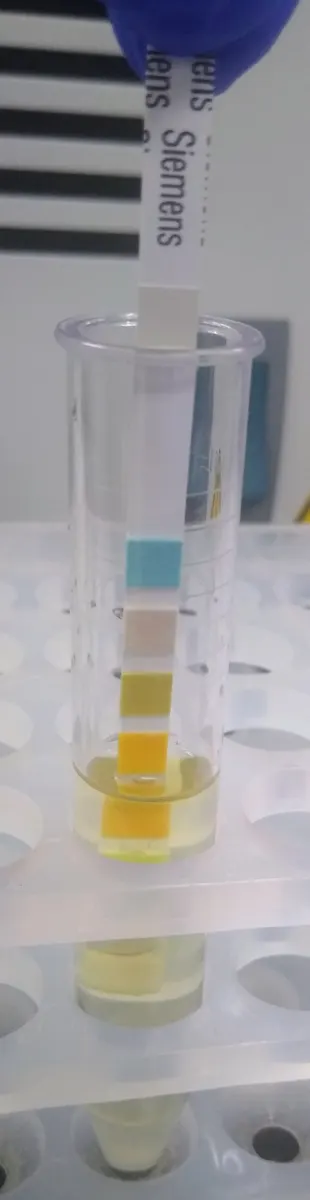
Yes, brother, fake pee can go bad, and it's more fragile than most people think. Premixed synthetic urine is basically a carefully balanced chemistry set in a bottle, and once it's opened or stored badly, bacteria and time start breaking it down. Powdered urine lasts a lot longer because it's dry. Below is the honest shelf-life picture, what spoilage looks and smells like, and how labs and equipment makers think about it. One thing up front: we cover these products as product facts. We don't explain how to use them on a drug test, and doing that can be a crime and counts as a refusal.
What synthetic urine actually is
Synthetic urine (also called fake pee, artificial urine or urine simulant) is a lab-made liquid designed to mimic the chemistry of human urine. It has real, legitimate uses:
- Calibrating and checking equipment such as urinalysis analyzers, test strips and drug test cups.
- Product testing for diapers, incontinence pads, urinals and cleaning products.
- Training in medical, nursing and lab programs.
- Science classes, pranks and novelty uses.
A typical formula includes purified water plus urea, creatinine, uric acid, salts like sodium chloride and potassium chloride, phosphates or sulfates, buffering agents to set the pH, and coloring. Better formulas aim for realistic specific gravity (how dense it is compared with water) and a believable foam when shaken. Some include preservatives to slow bacterial growth.
Powdered urine is either a dried form of a synthetic formula or, in some products, dehydrated real human urine. You add water to make a sample.
Shelf life: the quick version
| Form and condition | Typical shelf life |
|---|---|
| Premixed, sealed, stored cool and dark | Often labeled around 1 to 2 years from manufacture; check the date on the package |
| Premixed, opened, kept in the fridge | Days to a few weeks at most; many makers advise using soon after opening |
| Premixed, opened, left at room temperature | Can start to degrade within hours to a day or two |
| Premixed, warmed repeatedly | Breaks down faster each time |
| Powdered, sealed and dry | Usually longer than premixed, often a couple of years or more if kept dry |
| Powdered, after mixing with water | Treat like opened liquid: use promptly |
These are general ranges. The manufacturer's printed expiration date and storage directions always win, because formulas and preservatives differ.
Why fake pee goes bad
1. Bacteria break down urea
This is the big one. Urea is one of the main ingredients in both real and synthetic urine. Many common bacteria carry an enzyme called urease that splits urea into ammonia and carbon dioxide. Once bacteria get into an opened bottle, from the air, your hands or a dirty container, they start feeding. The result:
- A strong ammonia smell, like an old cat litter box.
- The pH climbs and the liquid becomes more alkaline.
- Cloudiness as bacteria multiply and minerals fall out of solution.
Exactly the same thing happens to real urine left sitting out, which is why labs refrigerate specimens they can't test right away.
2. Creatinine and uric acid aren't forever
Creatinine slowly converts to related compounds over time, especially in warm conditions or at off-balance pH. Uric acid is not very soluble and can crystallize out of solution, particularly when it gets cold, leaving a sandy sediment at the bottom. That's one reason freezing and thawing can change a sample.
3. Heat speeds up everything
Chemical reactions and bacterial growth both run faster when it's warm. A bottle stored in a hot car, a sunny windowsill or a steamy bathroom ages much faster than one in a cool cupboard. Repeated warming and cooling cycles are especially hard on it.
4. Light and air
Some dyes and organic compounds fade or degrade in sunlight. Opening and closing the bottle lets in oxygen, moisture and microbes. Every exposure shortens its useful life.
Signs your fake pee has gone bad
- Ammonia or foul odor. Fresh synthetic urine has little smell; a sharp, nose-wrinkling stink means bacterial breakdown.
- Cloudy or murky appearance. Good synthetic urine is clear, like normal pee.
- Sediment, crystals or floating bits. Could be precipitated uric acid, mineral salts or bacterial growth.
- Color change. Unusual darkening, fading or a greenish tint.
- Mold or film on the surface or around the cap.
- Swollen or leaking packaging. Gas from bacterial activity can puff up pouches.
- Past the expiration date. Even if it looks fine, the chemistry may have drifted.
If you see any of these, don't use it for calibration or testing work. Dispose of it and open a fresh supply.
How to store synthetic urine properly
For anyone using these products for equipment checks, training or product testing, here's what keeps them in spec longest:
- Keep it sealed until you need it. The factory seal is the best protection.
- Store cool, dry and dark. Room temperature or slightly below, away from sunlight and heat sources. Avoid bathrooms, cars and garages.
- Refrigerate after opening if the label allows, tightly capped, and use within the time the maker suggests.
- Use clean tools. Pour out what you need instead of dipping anything into the bottle.
- Don't pour leftovers back. Once some has been dispensed, consider it used.
- Label the date you opened it with a marker.
- Keep powdered kits dry. Moisture is what wakes up spoilage in powder; reseal tightly or keep in an airtight container with a desiccant pack.
Can you freeze fake pee?
Some manufacturers say their premixed product can be frozen to extend life; others don't recommend it. Freezing slows bacterial growth a lot. The trade-off is that some components, especially uric acid and certain salts, can come out of solution as crystals during freezing and may not fully redissolve when thawed. That can change the specific gravity and appearance. If you freeze it, thaw it slowly in the fridge, swirl gently, and check for clarity and sediment. Follow the product's own directions above anything general.
Powdered urine: why it lasts longer
Bacteria need water. A dry powder in a sealed packet gives them nothing to work with, so powdered urine generally keeps much longer than premixed liquid. The weak points are moisture getting in and heat. Once you add water, the clock starts, and a mixed sample should be treated like a freshly opened bottle of liquid: used promptly and not stored for later. If a powder has clumped, hardened or changed color, moisture has probably gotten in.
Does real pee go bad too?
Yes, and faster than most synthetic formulas, because it arrives with bacteria and cells already in it and has no preservatives. Clinical guidance generally says urine samples for routine analysis should be tested within a couple of hours or refrigerated. Left out, real urine becomes more alkaline, smells of ammonia, and its cells and chemistry break down. That's one reason labs track how long a specimen sat between collection and testing.
Why labs care: validity testing
Workplace drug testing labs don't just look for drugs; they check whether a sample looks like it came from a human body. Standard specimen validity tests measure creatinine, specific gravity and pH, and labs can test for oxidizing adulterants. Many labs now run additional checks designed specifically to spot synthetic urine, such as looking for compounds that should be present in human urine or for preservatives and markers that aren't. Collection sites also check that a specimen's temperature is in the normal body range within minutes of collection.
Put simply: a degraded sample is more likely to look abnormal, and even a fresh synthetic product faces lab checks built to catch it. Submitting fake urine as your own can be treated as a refusal or a failed test, and it's illegal to sell or use for that purpose in a growing number of places. Our page on whether lab drug tests are harder to pass explains validity testing in more detail.
Ad: we may earn a commission if you buy through this link. Information only, not medical or legal advice. Tampering with a drug test can be illegal and usually counts as a refusal. The only sure way to pass is to not use.
Common myths about synthetic urine shelf life
- "It never expires because it's synthetic." False. Synthetic doesn't mean stable. Urea, creatinine and uric acid all change over time.
- "If it doesn't smell, it's fine." Not always. Chemistry can drift before you notice odor.
- "Shaking it fixes sediment." Shaking may suspend crystals temporarily, but the dissolved composition has still changed.
- "The microwave is fine for warming it." Fast, uneven heating can speed degradation. For equipment work, warm gently according to the instrument's needs.
- "Powder lasts forever." Longer, yes. Forever, no. Moisture and heat still degrade it.
How to dispose of it
Synthetic urine is mostly water and salts, so small amounts can typically be poured down a sink or toilet with running water. Rinse and recycle the bottle if your local program accepts it. If the product contains a listed preservative, check the safety data sheet or label for any special disposal note.
A better first step for most people
If the real reason you're reading this is an upcoming drug test, the lowest-risk move isn't a bottle of fake pee. It's finding out where you actually stand. A home drug test kit lets you check your own urine privately, days ahead. If you're clear, great. If you're not, you know you need more time or need to have an honest conversation about scheduling. Our guide on how to read a home drug test walks through results, and the detection window calculator shows typical timelines.
And if your test is DOT, federal, safety-sensitive or court-ordered, there's no gray area: substitution is treated as a refusal with serious consequences. We won't help with that.
Premixed vs powdered vs lab reference standards
Not all fake pee is the same kind of product, and shelf life follows the type:
| Type | Who it's for | Shelf life notes |
|---|---|---|
| Consumer premixed bottles | Novelty, product testing, hobby use | Moderate; quality and preservatives vary by brand |
| Powdered kits | Novelty, travel, longer storage | Longest while dry; short once mixed |
| Certified reference materials and QC controls | Clinical and forensic labs | Tightly specified, lot-numbered, with documented stability and storage temperature (often refrigerated or frozen) |
| Bulk industrial simulants | Diaper, textile and sanitation testing | Often made fresh or bought in drums with short use windows once opened |
Clinical labs that need dependable results use controls with certificates of analysis and documented stability, and they toss them on the expiry date without exception. That's a good model for anyone using consumer products for equipment checks: if the date's passed or the bottle's been open a while, assume it's out of spec.
What's typically in a powdered urine kit
Most consumer powdered kits contain a small vial or packet of dry powder, a mixing container or bottle, and printed instructions. Some include a temperature strip on the container, which is meant to show the liquid's temperature at a glance. Product pages often describe the kit as being for calibration or novelty purposes. The powder may be fully synthetic or dehydrated real urine, depending on the brand; the label should say which. As with any powder, keep the packet sealed and dry until you need it, and check that the outer packaging isn't torn or damp when it arrives.
Buying smart: freshness checks
- Look for a printed expiration or manufacture date. If there isn't one, you have no idea how old it is.
- Buy from the maker or a known seller rather than random marketplace listings, where products may have sat in hot warehouses for months.
- Check the seal and the liquid's appearance on arrival. Cloudiness straight out of the box is a bad sign.
- Don't stockpile premixed bottles. Buy what you'll use in the near term; powder is the better choice if you need to keep some on hand.
- Read the safety data if the product mentions preservatives, especially if kids or pets are around.
Temperature extremes in shipping and storage
A package that sits on a summer porch can hit well over 100 degrees Fahrenheit inside the box, and a winter doorstep can freeze it solid. Neither is ideal. If your product arrives hot, let it cool to room temperature and inspect it; if it shows cloudiness or odor, contact the seller. If it arrives frozen, let it thaw slowly and check for crystals that don't dissolve. Powdered products handle shipping swings much better, which is another reason labs and testers who need a stable supply often prefer dry formats.
If you're testing your own urine at home
A lot of people land on this question because they collected a sample for a home drug test and got distracted. Here's the practical answer for real urine. Test it fresh, ideally within an hour of collecting it. If you can't, cap it and put it in the fridge, and test within about a day; let it come back to room temperature first, because very cold urine can slow the strip. After a day or two, or if it has been sitting out warm, its pH and concentration may have changed enough that you shouldn't trust the result. Just collect a fresh sample. First-morning urine is the most concentrated and gives the most conservative read on a home kit.
A quick word on the law
Synthetic urine is legal to buy and own in many places for its stated purposes, but a number of US states have made it a crime to sell, possess or use it to defraud a drug test, and penalties range from fines to jail time. Employers can also fire or refuse to hire someone caught substituting. We're not giving state-by-state legal advice here; if you have a legal question, talk to a lawyer in your state. The safest stance is simple: these products are for equipment, training and novelty, not for drug tests.
Shelf life cheat sheet
- Sealed liquid, cool cupboard: good until the printed date, often 1 to 2 years.
- Opened liquid, fridge: use within days; follow the label.
- Opened liquid, counter: assume a day or less.
- Sealed powder, dry: the longest-lasting option.
- Mixed powder: use right away; don't save it.
- Any smell, cloud, crystals or mold: throw it out.
- Real urine for a home test: test within an hour, or refrigerate and test within about a day.
Sources
Detection windows, cutoffs and procedures on this page are based on these public sources. Individual results vary; this is information, not medical or legal advice. See how the DrugTestAnswers Editorial Team checks facts.
Questions people ask
How long does unopened synthetic urine last?
Many premixed products are labeled for about 1 to 2 years from manufacture when kept sealed, cool and dark. Always check the printed expiration date.
How long is fake pee good for after opening?
Not long. Opened liquid is exposed to bacteria and starts degrading; refrigerate it and use it quickly, within the maker's guidance.
How can you tell if synthetic urine has gone bad?
An ammonia smell, cloudiness, sediment or crystals, color changes, mold, or a puffed-up pouch are all signs of spoilage.
Does powdered urine expire?
Yes, but it usually lasts longer than premixed liquid as long as it stays dry. Once mixed with water, use it promptly.
Can you freeze synthetic urine to make it last?
Some makers allow it, but freezing can make uric acid and salts crystallize. Thaw slowly and check for clarity and sediment, and follow the label.
Can labs detect synthetic urine?
Many can. Labs run validity tests and, increasingly, specific checks for synthetic urine, and substitution can be treated as a refusal.
Ad: we may earn a commission if you buy through this link. Information only, not medical or legal advice. Tampering with a drug test can be illegal and usually counts as a refusal. The only sure way to pass is to not use.
No product can promise you a pass, and the only certain way is to not use. Tampering with a drug test can be illegal and is usually treated as a refusal. We never help anyone beat DOT, federal, safety-sensitive, or court-ordered tests. If substance use is getting on top of you, call the free, confidential SAMHSA National Helpline on 1-800-662-4357 (24/7, English and Spanish), or call or text 988 in a crisis. Source: samhsa.gov.