How Long Does Alcohol Stay in Your System After Your Last Drink? A Clock That Starts at the Peak
Ad: we may earn a commission if you buy through this link. Information only, not medical or legal advice. Tampering with a drug test can be illegal and usually counts as a refusal. The only sure way to pass is to not use.
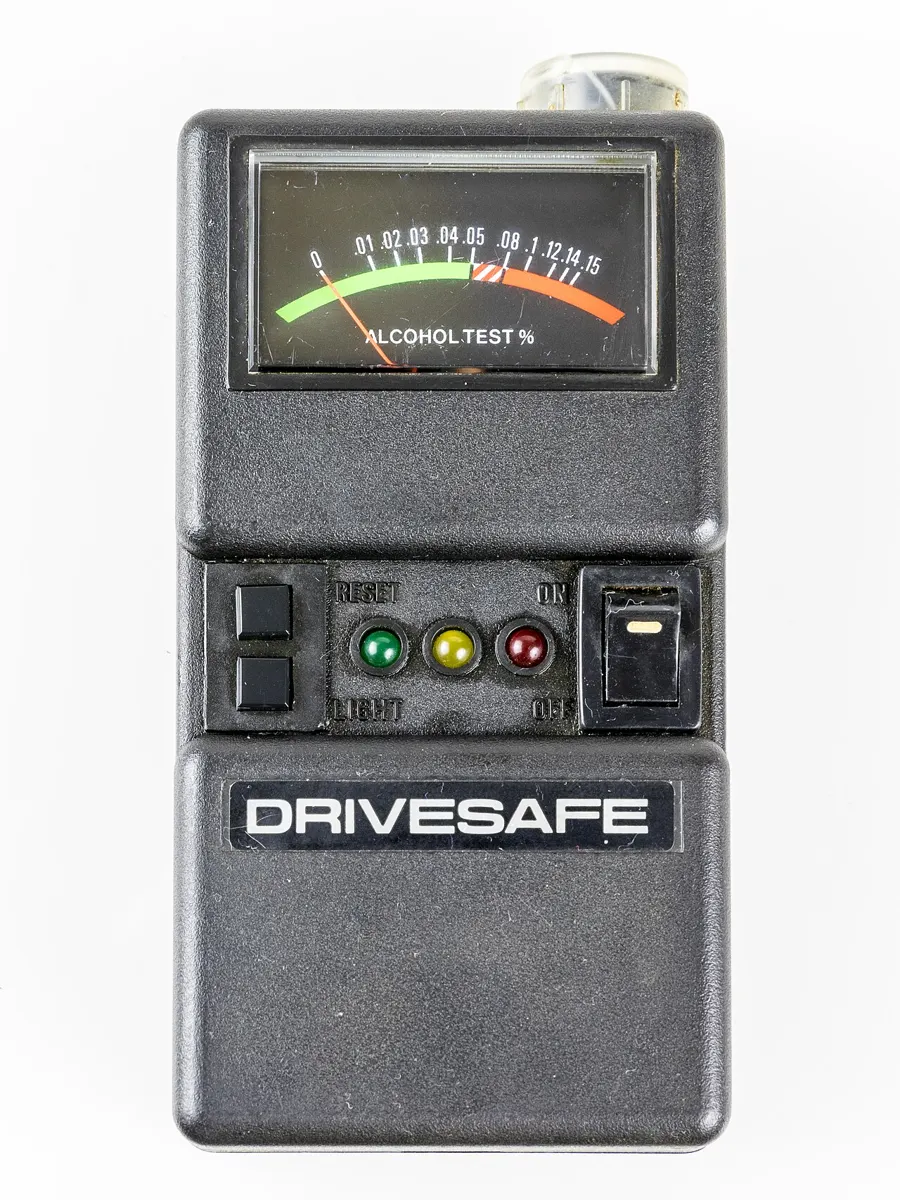
Here's the thing most people miss: when you finish your last drink, your blood alcohol usually isn't falling yet. It keeps climbing for 30 to 90 minutes while your gut finishes absorbing that last round. So the countdown to sober doesn't start when you put the glass down. It starts at your peak. Let's walk through what that means in real numbers.
Step 1: absorption keeps going after the last sip
Alcohol is absorbed mostly through the small intestine. On an empty stomach, peak blood alcohol typically arrives 30 to 60 minutes after the last drink. With a full meal, it can take up to 90 minutes or more, and the peak is lower. Carbonated drinks and shots on an empty stomach absorb fastest. That's why people feel "fine" leaving the bar and then feel worse 40 minutes later, and why driving "right after the last one" is so dangerous.
Step 2: elimination at a steady pace
Once absorption tapers off, your liver clears alcohol at a fairly constant rate, roughly 0.015% BAC per hour for an average adult (NIAAA). It doesn't matter if you had beer, wine or whiskey; ethanol is ethanol. Your liver can't be rushed by coffee, sleep, water or sweat.
Step 3: the windows by test type
| Test | After your last drink, roughly... |
|---|---|
| Breath / blood | Until your BAC hits zero: time to peak plus about 1 hour per 0.015% of peak BAC |
| Saliva alcohol strip | About the same as blood, up to around 12-24 hours after heavy drinking |
| Urine ethanol | A few hours past blood |
| Urine EtG / EtS | Up to about 80 hours depending on amount |
| Blood PEth | Up to about 2-4 weeks after heavy drinking |
| Hair EtG | Up to about 90 days |
Sources: NIAAA; SAMHSA Advisory on alcohol biomarkers (2012). Full references are on our detection table.
Worked examples from the last drink
Two glasses of wine with dinner
A 150 lb woman has two 5 oz glasses of wine with a meal, finishing at 9 PM. Her BAC might peak around 0.04-0.05% near 10 PM. At 0.015% per hour, she's back to roughly zero by about 1 to 1:30 AM. A urine EtG test the next afternoon could still be positive at sensitive cutoffs.
Six beers watching the game
A 190 lb man drinks six beers between 6 and 10 PM. His BAC peaks around 0.08-0.09% close to 10:30 PM. He's near zero by about 4 to 5 AM. EtG at a 500 ng/mL cutoff could stay positive into the following day or two.
Heavy night with shots
Someone who peaks at 0.18% at 1 AM needs about 12 hours to reach zero, so they're still over 0.08% at about 7 AM and above zero until roughly 1 PM. Getting up for an early shift after a night like this is genuinely risky, and for commercial drivers it's a violation waiting to happen.
Try your own numbers in our BAC calculator.
What changes the timeline
- Body size and composition: more body water dilutes alcohol, lowering peak BAC.
- Sex: on average women have less body water and less stomach alcohol dehydrogenase, so the same drinks produce a higher BAC.
- Food: slows absorption and lowers the peak.
- Drinking speed: fast drinking stacks alcohol faster than your liver clears it.
- Medications: some drugs interact with alcohol metabolism or increase sedation.
- Liver health: liver disease can slow elimination.
- Age: older adults have less body water and often reach higher BACs.
- Genetics: variants in alcohol-processing enzymes change how people feel and process alcohol, though average elimination rates are fairly similar.
"Sobering up" vs "being clear"
Feeling sober and being at zero are not the same. Tolerance makes regular drinkers feel less impaired at the same BAC, but their reaction times and judgment are still affected and tests still read the same numbers. And after BAC returns to zero, the hangover can still slow your reactions; research has found next-day impairment in tasks like driving even after alcohol is gone.
Why EtG lasts so long
A tiny fraction of alcohol is converted to ethyl glucuronide (EtG) and ethyl sulfate (EtS). They're filtered by the kidneys and leave slowly, so urine tests can detect drinking long after the alcohol itself is gone. Programs that require abstinence, like some treatment and professional monitoring programs, rely on them. EtG cutoffs of 500 ng/mL are common; at 100 ng/mL, even incidental exposure to alcohol-based products may show up.
Checking yourself
A fuel-cell breathalyzer is the best home tool for knowing when your BAC is truly back to zero after your last drink. Wait 15 to 20 minutes after any drink, food or mouthwash before blowing. For EtG-style questions, a breathalyzer can't help; only time works.
Ad: we may earn a commission if you buy through this link. Information only, not medical or legal advice. Tampering with a drug test can be illegal and usually counts as a refusal. The only sure way to pass is to not use.
Safety first
If someone has been drinking heavily and is very hard to wake, breathing slowly or irregularly, vomiting while confused, or has cold, clammy or bluish skin, that may be alcohol poisoning. Call 911 and don't leave them alone. "Sleeping it off" can be fatal because BAC can keep rising after they pass out.
If you're asking these questions often, it might be worth talking to someone. The SAMHSA National Helpline (1-800-662-4357) is free and confidential, and the NIAAA's "Rethinking Drinking" site has helpful self-checks.
Standard drink sizes that trip people up
All the math above relies on standard drinks, and real drinks are often bigger. A US standard drink contains 14 grams of pure alcohol. Here's how common pours compare:
| Drink | Roughly how many standard drinks |
|---|---|
| 12 oz regular beer (5%) | 1 |
| 16 oz pint of IPA (7%) | About 1.9 |
| 12 oz hard seltzer (5%) | 1 |
| 5 oz glass of wine (12%) | 1 |
| Generous 9 oz restaurant wine pour | About 1.8 |
| 1.5 oz shot of 80-proof liquor | 1 |
| Long Island iced tea | Often 3 or more |
A night of four craft pints can easily be seven or eight standard drinks, which pushes your timeline much further out than you'd guess from counting glasses.
Hangovers and next-day impairment
Hangover symptoms usually peak when your BAC returns to zero and can last up to 24 hours. Studies on simulated driving have found that people with a hangover can drive about as poorly as someone with a measurable BAC, even when their alcohol level is zero. Sleep loss, dehydration and inflammation all play a part. So "my breathalyzer says 0.00" doesn't automatically mean you're sharp enough to operate machinery or drive a truck.
Alcohol and medications
Alcohol stays in your system for the same amount of time, but its effects can be much stronger when combined with sleep aids, antihistamines, opioids, benzodiazepines, some antidepressants and muscle relaxants. Some antibiotics like metronidazole cause a nasty reaction with alcohol. Acetaminophen (Tylenol) and heavy drinking together strain the liver. Check with a pharmacist if you're unsure about any medication.
Myths about speeding it up
- Coffee: makes you a wide-awake drunk, not a sober one.
- Cold shower: wakes you up, doesn't lower BAC.
- Exercise: you breathe and sweat out only a tiny percentage of alcohol; the liver does almost all the work.
- Greasy breakfast: may help your hangover feel better; it won't remove alcohol already in your blood.
- Water: great for hangover symptoms; doesn't lower BAC.
- Supplements and "hangover pills": some may ease symptoms, but none has been shown to meaningfully speed alcohol elimination.
How long until it's fully out of your body?
Ethanol itself is typically gone within about 12 to 24 hours of the last drink even after a heavy night. Metabolites like EtG take days. Effects on sleep quality, mood and blood sugar can last a day or two after heavy drinking. Long-term heavy drinking leaves effects (on the liver, heart and brain) that take weeks to months to improve after stopping.
Rules of thumb employers use
Many workplaces with safety rules set "no alcohol within X hours of duty" policies. DOT rules for commercial drivers, for example, prohibit alcohol use within four hours of performing safety-sensitive duties, and aviation rules require eight hours from bottle to throttle for pilots, along with a 0.04% limit. Those are minimums. After a big night, your BAC may still be over the line well beyond those windows, so the hours rule doesn't replace common sense or a breathalyzer check.
Quick calculator for the last drink
If you want a fast mental estimate: count your standard drinks, multiply by about 0.02% for an average-size man or 0.03% for a smaller woman to get a rough peak (minus about 0.015% for each hour you spent drinking), add an hour for absorption after your last drink, then divide your peak by 0.015 to get hours to zero. It's crude, but it's a lot better than guessing. Our BAC calculator does the math for you.
Sources
Detection windows, cutoffs and procedures on this page are based on these public sources. Individual results vary; this is information, not medical or legal advice. See how the DrugTestAnswers Editorial Team checks facts.
Questions people ask
Does eating after drinking lower my BAC?
Food eaten after drinking can slow absorption of alcohol still in your stomach, but it does not remove alcohol already in your blood.
Does alcohol stay in your system longer if you drink every day?
Daily drinking does not change the hourly elimination rate much, but higher total amounts mean longer times to zero and longer EtG windows.
How long after the last drink does a hangover start?
Usually as your BAC falls toward zero, often the next morning, and it can last up to 24 hours.
Does BAC keep rising after the last drink?
Yes. It usually keeps rising for 30-90 minutes as your body finishes absorbing the alcohol.
How long after my last drink can I drive?
There is no safe rule of thumb. Wait until your BAC is zero, which can take many hours after heavy drinking. When in doubt, don't drive.
How long after my last drink will an EtG test be negative?
Often about 1-3 days, depending on how much you drank and the cutoff used.
Does throwing up lower BAC?
Only if alcohol is still in your stomach. Alcohol already absorbed into your blood is not affected.
Ad: we may earn a commission if you buy through this link. Information only, not medical or legal advice. Tampering with a drug test can be illegal and usually counts as a refusal. The only sure way to pass is to not use.
No product can promise you a pass, and the only certain way is to not use. Tampering with a drug test can be illegal and is usually treated as a refusal. We never help anyone beat DOT, federal, safety-sensitive, or court-ordered tests. If substance use is getting on top of you, call the free, confidential SAMHSA National Helpline on 1-800-662-4357 (24/7, English and Spanish), or call or text 988 in a crisis. Source: samhsa.gov.