10-Panel vs 14-Panel Drug Test: What Each Screens For, Who Uses Them and Which One You Need
Ad: we may earn a commission if you buy through this link. Information only, not medical or legal advice. Tampering with a drug test can be illegal and usually counts as a refusal. The only sure way to pass is to not use.
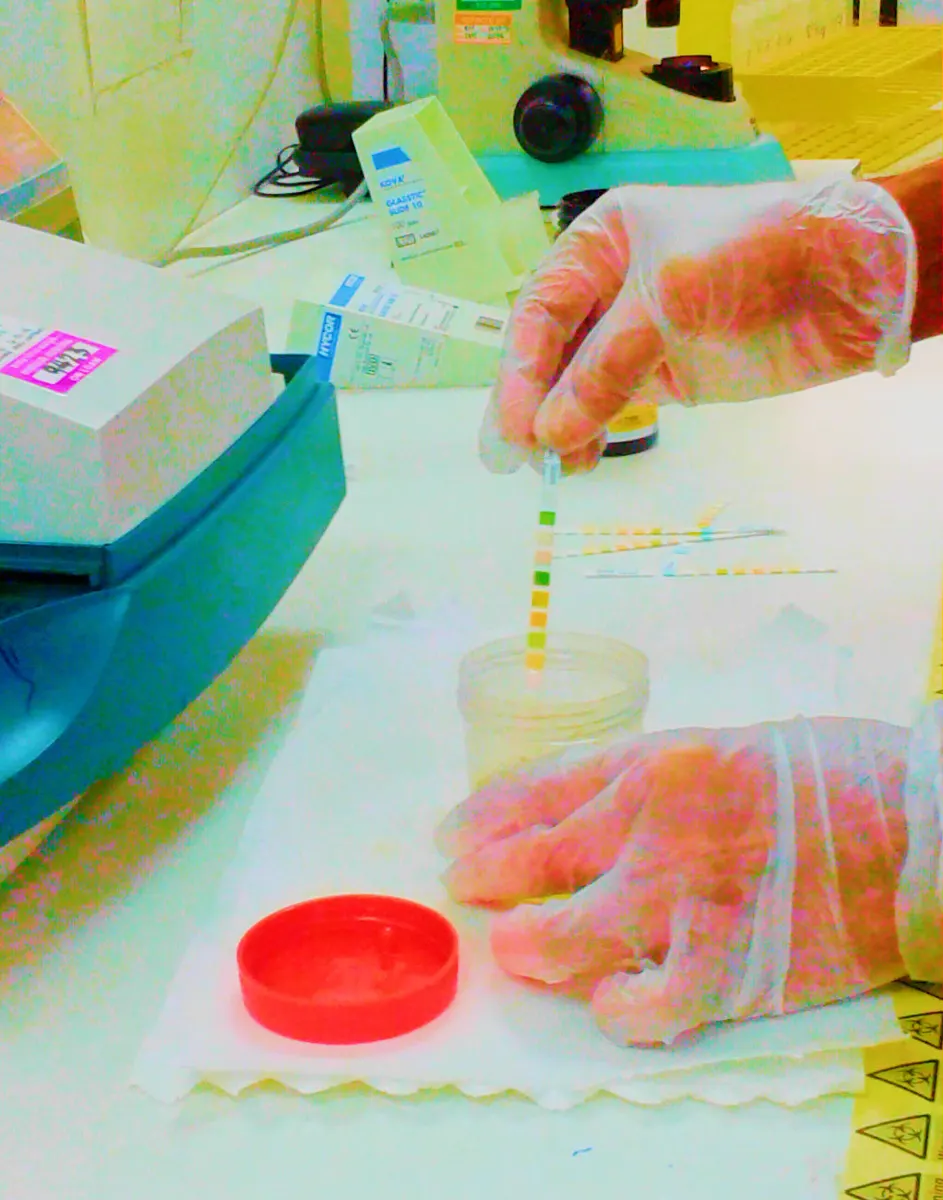
The difference sounds simple, brother: a 14-panel tests for four more drug groups than a 10-panel. The catch is that there's no single official list for either one. Two "10-panel" cups from different brands can test for slightly different things, and the same goes for 14-panels. So the useful question isn't really "10 vs 14," it's "which drugs are on this particular test, and which ones do I actually need to know about?" Here's how to sort it out.
The short comparison
| 10-panel | 14-panel | |
|---|---|---|
| Number of drug groups | 10 | 14 |
| Usually includes | Marijuana, cocaine, amphetamines, methamphetamine, opiates, benzodiazepines, barbiturates, methadone, PCP, plus one more such as oxycodone, MDMA or propoxyphene | Everything in a typical 10-panel plus several of: oxycodone, buprenorphine, MDMA, tricyclic antidepressants, fentanyl, propoxyphene, tramadol |
| Common users | Employers, parents, healthcare hiring, home testers | Pain clinics, treatment programs, some healthcare and high-responsibility jobs, thorough home testers |
| Home kit cost | Lower | Somewhat higher |
| Best for | A broad general check | When prescription opioids or specific extra drugs matter |
Why the panels aren't standardized
The only drug list with a formal federal definition is the one used in federally regulated workplace testing, which grew out of the original "NIDA-5." Everything beyond that, 10, 12, 14 and so on, is defined by whoever makes or orders the test. Manufacturers choose which strips to put on a cup based on what customers ask for, and labs build panel menus the same way. Older 10-panels often included methaqualone and propoxyphene, drugs that are rarely seen today; propoxyphene (Darvon) was pulled from the US market in 2010. Newer 10-panels tend to swap those out for oxycodone, MDMA or buprenorphine. That's why reading the actual list on the box or the lab order matters more than the number.
A typical 10-panel, drug by drug
- THC (marijuana)
- COC (cocaine)
- AMP (amphetamine)
- MET or mAMP (methamphetamine)
- OPI (opiates like morphine and codeine)
- BZO (benzodiazepines)
- BAR (barbiturates)
- MTD (methadone)
- PCP (phencyclidine)
- One more, often OXY (oxycodone), MDMA (ecstasy) or PPX (propoxyphene)
What a 14-panel commonly adds
Starting from a modern 10-panel, a 14-panel usually adds four of these:
- OXY (oxycodone and oxymorphone) if it wasn't already included. Standard opiate strips catch oxycodone poorly, so a dedicated OXY strip matters.
- BUP (buprenorphine), used in Suboxone and similar treatments.
- MDMA (ecstasy, molly).
- TCA (tricyclic antidepressants like amitriptyline and nortriptyline).
- FYL or FEN (fentanyl), now increasingly common because of the overdose crisis.
- TML or TRA (tramadol).
- PPX (propoxyphene), still on some older-style kits.
- K2 (synthetic cannabinoids) or EtG (an alcohol marker) on some specialty versions.
Some 14-panels also include adulterant strips that check whether the urine looks normal; those don't count toward the 14 drug panels but are a nice extra.
Opioids: the biggest real difference
If there's one reason to choose a bigger panel, it's prescription and synthetic opioids. A basic opiate strip is designed around morphine and codeine. It detects heroin use (which metabolizes to morphine) well, but it's weak or blind to oxycodone and essentially blind to fentanyl, buprenorphine, methadone and tramadol, which are structurally different. A 10-panel with methadone and maybe oxycodone covers part of that. A 14-panel with OXY, BUP, fentanyl and tramadol covers far more of the opioid landscape. For a parent worried about counterfeit pills, or a clinic monitoring opioid prescriptions, that gap is the whole point.
Who typically orders each one
10-panel
- Healthcare employers screening nurses, techs and support staff, since benzos, barbiturates and methadone are relevant there.
- Some law enforcement and government contractor positions.
- Parents doing a broad check at home.
- Employers who want more than a 5-panel but don't need specialty drugs.
14-panel
- Pain management practices checking that patients take what's prescribed and nothing else.
- Addiction treatment and recovery programs, where buprenorphine and fentanyl results matter.
- Some physician, pharmacist and executive roles where access to controlled substances or high responsibility is involved.
- Families who want the widest home coverage, especially for opioids.
Detection windows don't change with panel size
People sometimes think a bigger panel is "stronger" and will catch older use. It won't. Each strip has its own cutoff, and detection windows depend on the drug, the dose, your use pattern and the sample type, not on how many other strips share the cup. A 14-panel just asks more questions; it doesn't look further back in time. Our detection window calculator shows typical ranges, and the cutoff levels table lists common cutoffs.
Prescriptions show up on bigger panels
More panels mean more chances that a legitimate prescription shows up: benzos for anxiety, amphetamines for ADHD, buprenorphine for opioid use disorder, tricyclics for depression or nerve pain, tramadol for pain. That's not a problem in a properly run program, because a medical review officer will verify your prescription before anything is reported. Just be ready with your pharmacy details, and don't stop a prescribed medicine before a test without talking to your prescriber.
False positives: more strips, more chances
Every immunoassay strip has its own list of known cross-reactants. The TCA strip, for example, can react to some other medicines with similar ring structures, such as cyclobenzaprine (a muscle relaxant), carbamazepine and quetiapine in some reports. Amphetamine strips can react to certain decongestants and antidepressants. The more strips on a test, the more opportunities for an odd result. That's why any positive on a home or instant test should be treated as preliminary and confirmed by a lab before anyone acts on it. Our screen vs confirm guide explains how labs settle those questions.
Urine, saliva or hair?
Most 10 and 14-panel tests people buy at home are urine cups or dip cards. Saliva tests usually come in smaller panels, often 5 to 12 drugs, and hair tests are sent to a lab and can be ordered with broad panels. If you're comparing, keep the sample type in mind: a 14-panel urine cup covers roughly the past few days for most drugs, while a 5-panel hair test covers about three months for fewer drugs. More panels and a longer window are two different ways of being "more thorough."
Ad: we may earn a commission if you buy through this link. Information only, not medical or legal advice. Tampering with a drug test can be illegal and usually counts as a refusal. The only sure way to pass is to not use.
How to choose for home testing
- Start with the question. What are you worried about? If it's marijuana only, a single THC strip is cheaper and simpler.
- Check the opioid coverage. If pills or fentanyl are a concern, make sure OXY and FYL are on the list.
- Read the strip abbreviations on the product listing before buying.
- Look for printed cutoffs. Kits that list cutoff levels let you compare with what a lab might use.
- Consider adulterant strips if you want to know whether the sample is too watery to trust.
- Check the expiration date and buy only as many as you'll use in that time.
If you need help reading the result, see how to know if a drug test kit is positive.
Cost: is the extra panel worth it?
Home 14-panel cups typically cost a little more per test than 10-panel cups, though bulk packs bring the price down. For lab-based employer testing, larger panels add cost per sample, which is one reason most employers stick with 5 or 10 panels. At home, the extra few dollars is worth it if the added strips answer a question you actually have, like fentanyl or buprenorphine. If they don't, a 10-panel or even a 5-panel will do the job just as well.
What about 12-panel tests?
The 12-panel sits in between and is one of the most popular home and employer formats. It's usually a 10-panel plus two extra strips, often oxycodone and MDMA or buprenorphine. If a 14-panel feels like overkill but you want opioid coverage beyond basic opiates, a 12-panel with OXY is a practical middle ground.
Drugs even a 14-panel usually misses
A bigger number on the box still leaves gaps. Unless specifically added, most 10 and 14-panel tests won't detect:
- Alcohol (needs breath, blood or an EtG strip).
- Kratom (mitragynine; separate strips exist).
- Gabapentin and pregabalin, which are increasingly misused and need specific tests.
- Xylazine, the veterinary sedative showing up in the illicit drug supply.
- Synthetic cannabinoids (K2, Spice) unless a K2 strip is included.
- Designer benzodiazepines and newer synthetic opioids like nitazenes, which standard strips often miss.
- Psilocybin, LSD and ketamine, rarely on standard panels.
- Nicotine (needs a cotinine test).
Specialty panels of 16, 18 or 20+ drugs exist, mostly in labs serving treatment programs, but even those are built for specific purposes rather than "everything."
Reading a 14-panel cup without mistakes
Fourteen strips in a cup can look like a barcode. A few tips make reading easier:
- Use good light and hold the cup at eye level, rotating slowly so each strip faces you.
- Read each strip separately by its abbreviation: control line first, then test line.
- Remember the rule: a visible test line, even faint, means negative; no test line means preliminary positive; no control line means that strip is invalid.
- Read in the time window on the insert, often around 5 minutes.
- Take a photo within the window so you can zoom in and double-check.
- Write down results strip by strip before you toss the cup.
Dip cards with many panels are read the same way. Peel back the label covering the result window if the card has one.
Treatment programs: why BUP and methadone strips matter
For people in medication treatment for opioid use disorder, testing isn't about catching anyone; it's about making sure treatment is working. A buprenorphine strip confirms the person is actually taking their prescribed medication (rather than selling it, for instance), and a methadone strip does the same for methadone patients. Fentanyl and other opioid strips show whether street drugs are still in the picture. Clinics use these results to adjust doses and support, not to punish. That's why 12 and 14-panels with BUP, MTD and FYL are standard in treatment settings, while a typical employer has no need for them.
Why most employers stop at 5 or 10
From an employer's perspective, each extra panel costs money and adds more prescription positives for the MRO to sort through, without necessarily improving safety. Many also weigh privacy: a 14-panel can reveal medications like antidepressants that have nothing to do with job performance. So most private employers choose a 5-panel or a 10-panel and add specific drugs only where the role demands it, such as healthcare settings with access to controlled substances. If a job posting mentions a 14-panel, it's usually because of the role's access to medications or its level of responsibility.
Lab-based panels vs instant cups
When an employer or clinic orders a 14-panel from a lab, the lab runs automated immunoassay screens for each drug group and confirms any non-negative by mass spectrometry. Lab screens can use different cutoffs from home cups and can add tests like fentanyl, EtG or specific benzodiazepines on request. Instant 14-panel cups give answers in minutes but are screening only. If you're comparing a home result with a lab result, keep in mind that the strips, cutoffs and confirmation steps may not match exactly.
Three real-world scenarios
A nurse applicant with an ADHD prescription. The hospital orders a 10-panel urine test. The AMP strip screens non-negative, the lab confirms amphetamine, and the MRO calls. The applicant gives their pharmacy details, the MRO verifies the prescription, and the hospital receives a negative. Panel size didn't change the outcome; the prescription process did.
A parent worried about pills. A teenager's friend overdosed on a counterfeit pill. The parent wants to know what a home test can show. A basic 10-panel with only an OPI strip would likely miss fentanyl and oxycodone. A 14-panel with FYL and OXY strips covers those. For this parent, the extra panels are the whole reason to buy.
A warehouse worker taking a pre-employment test. The employer uses a 5-panel. The worker buys a 14-panel at home "to be safe" and gets a positive on the TCA strip from a prescribed medication for migraines. That strip isn't even on the employer's test. Matching your home test to the real one avoids unnecessary worry.
Our take
For most home testers, a modern 10 or 12-panel that includes oxycodone is plenty. Step up to a 14-panel when opioids beyond morphine and codeine are a genuine concern, such as fentanyl, buprenorphine or tramadol, or when you're trying to match a specific clinic or employer test that uses one. And whichever you choose, treat any positive as preliminary until a lab confirms it.
Questions to ask before a workplace panel
- Is it urine, saliva or hair?
- Which drug groups are on the panel, by name?
- Is it an instant cup on site or sent to a certified lab?
- Will a medical review officer review any positive result?
- What's the process if I take a prescription that may show up?
HR or the collection site can usually answer these, and knowing the answers lets you pick a matching home test instead of guessing.
Sources
Detection windows, cutoffs and procedures on this page are based on these public sources. Individual results vary; this is information, not medical or legal advice. See how the DrugTestAnswers Editorial Team checks facts.
- HHS/SAMHSA, Mandatory Guidelines: Authorized Testing Panels, Federal Register, 13 Mar 2026
- HHS/SAMHSA, Mandatory Guidelines for Federal Workplace Drug Testing Programs using Urine, Federal Register, 12 Oct 2023
- Moeller KE et al., "Clinical Interpretation of Urine Drug Tests", Mayo Clinic Proceedings, 2017 (PubMed)
- MedlinePlus Medical Encyclopedia: Urine drug screen
- SAMHSA National Helpline (free, confidential, 24/7)
Questions people ask
What is the difference between a 10-panel and 14-panel drug test?
A 14-panel screens for four more drug groups, often oxycodone, buprenorphine, MDMA, tricyclic antidepressants, fentanyl or tramadol. The exact list varies by brand and lab.
Does a 14-panel test for fentanyl?
Some do, but not all. Check for an FYL or FEN strip on the product or lab order.
Is a 14-panel drug test more accurate than a 10-panel?
No. It tests for more substances, but each strip has the same kind of accuracy and detection window.
Will a 10-panel drug test detect oxycodone?
Only if it includes a dedicated OXY strip. Standard opiate strips are designed for morphine and codeine and often miss oxycodone at normal doses.
Does a 10-panel drug test include alcohol?
Usually not. Alcohol needs a breath test, blood test or an EtG strip, which some specialty panels add.
Which drug test do hospitals use?
Many healthcare employers use a 10-panel; pain clinics and treatment programs often use 12 or 14-panel tests.
Ad: we may earn a commission if you buy through this link. Information only, not medical or legal advice. Tampering with a drug test can be illegal and usually counts as a refusal. The only sure way to pass is to not use.
No product can promise you a pass, and the only certain way is to not use. Tampering with a drug test can be illegal and is usually treated as a refusal. We never help anyone beat DOT, federal, safety-sensitive, or court-ordered tests. If substance use is getting on top of you, call the free, confidential SAMHSA National Helpline on 1-800-662-4357 (24/7, English and Spanish), or call or text 988 in a crisis. Source: samhsa.gov.