Breathalyzer Margin of Error: How Far Off a Reading Can Be, by Device Type
Ad: we may earn a commission if you buy through this link. Information only, not medical or legal advice. Tampering with a drug test can be illegal and usually counts as a refusal. The only sure way to pass is to not use.
Updated ·  Written by Daniel Brooks ·
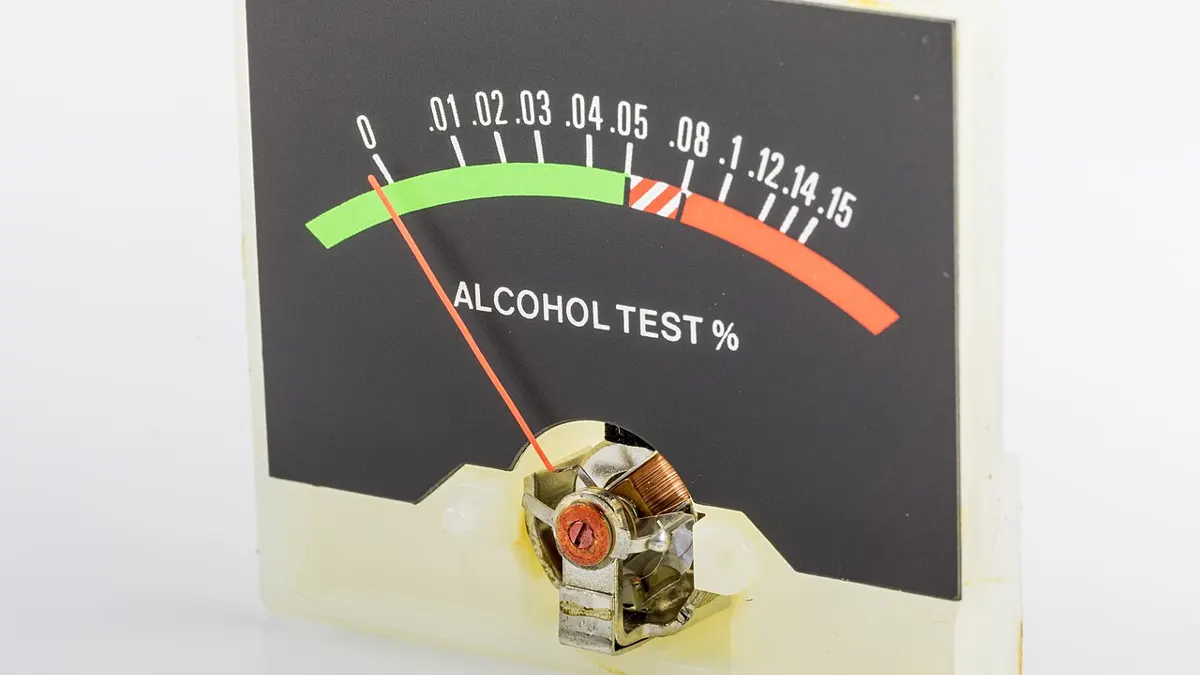
Every breathalyzer has a margin of error, and the number printed on the box is only part of the story. A spec like "±0.005 at 0.050" describes the sensor on a good day in a lab. Your real-world error also depends on how you blow, when you test, how old the sensor is and when it was last calibrated. Here's what those accuracy figures mean, typical ranges by device type, and a simple routine to keep your readings as tight as the hardware allows.
What "margin of error" means on a breathalyzer
Makers usually state accuracy one of two ways:
- A fixed amount, such as ±0.005 BAC. At a true 0.050, the device should read somewhere from 0.045 to 0.055.
- A percentage, such as ±5%. At a true 0.080, that's ±0.004, so 0.076 to 0.084. Percentage specs get looser in absolute terms as BAC rises.
Many specs list accuracy at one test point, often 0.050 or 0.100. The error at other levels can be larger, especially near zero and at high readings. If a box just says "high accuracy" with no number, treat that as no spec at all.
The spec also describes instrument error only: how close the sensor gets when fed a perfect, known alcohol sample from a calibration device. It doesn't include you. Breath technique, timing and the conversion from breath to blood add their own error on top.
Typical margins of error by device type
| Device type | Typical stated accuracy | Real-world notes |
|---|---|---|
| Evidential desk-top instruments | About ±0.005 or ±5%, whichever is greater | Run by trained operators with controlled procedures and regular checks |
| Professional fuel-cell handhelds | About ±0.005 at 0.050 to 0.100 | Stays close if calibrated on schedule |
| Consumer fuel-cell units | About ±0.005 to ±0.01 | Good for personal checks; drift grows past the calibration date |
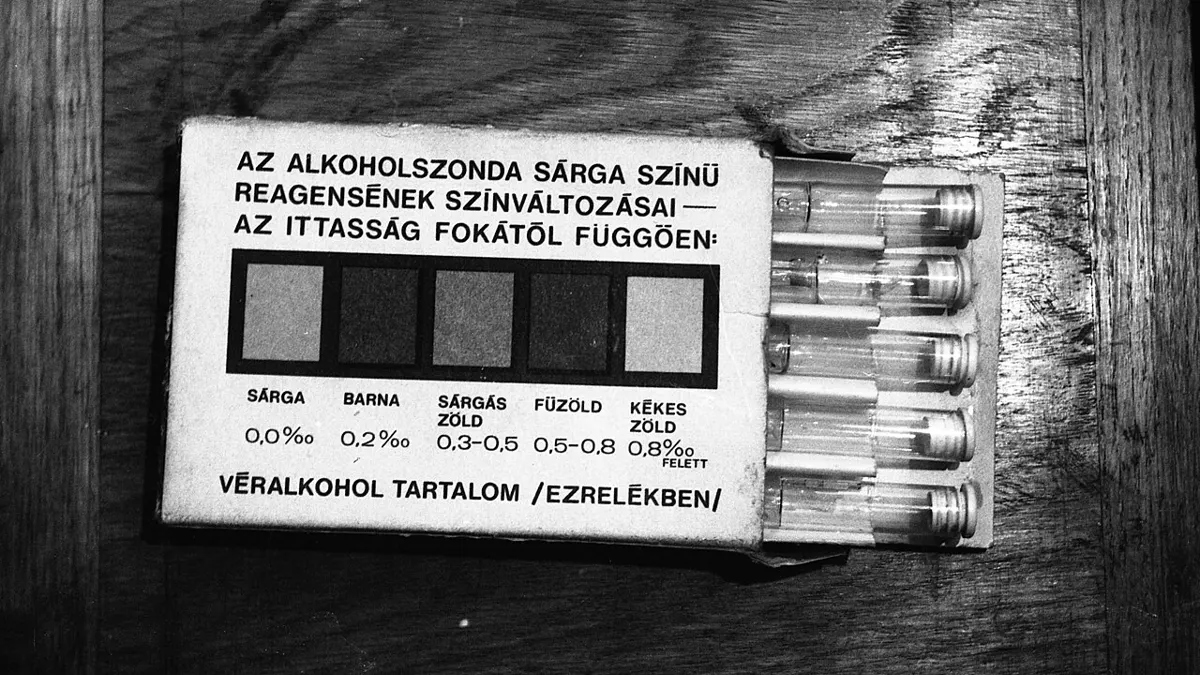
| Semiconductor (metal-oxide) units | Often ±0.01 to ±0.02, sometimes unstated | Can react to other compounds; sensitive to temperature and humidity; drift fast |
| Phone-app-linked testers | Depends entirely on the sensor inside | The app adds no accuracy; check whether it's fuel-cell or semiconductor |
| Disposable one-use tubes | Rough threshold only | Color change above or below a set level, not a number |
For comparison, NHTSA's model specifications for evidential breath testers require readings within ±0.005 or ±5%, whichever is greater, at set test points. Consumer devices don't have to meet that standard, though good fuel-cell units are built to get close.
Five things that widen the error in real life
1. Mouth alcohol
This is the biggest one by far. A sip in the last few minutes, a burp, reflux, or alcohol-based mouthwash leaves alcohol in your mouth that the sensor reads as if it came from your lungs. It can push a reading up by several hundredths, far beyond any device spec. Waiting 15 minutes with nothing in your mouth fixes most of it.
2. Short or shallow breath samples
The device needs air from deep in the lungs, which comes at the end of a long exhale. A short puff reads air from your mouth and airway, which usually holds less alcohol, so the number comes out low. Blowing harder than needed at the very end can push it the other way. Steady and long until the device beeps or signals is the goal.
3. Calibration drift
Every sensor drifts with use and time. Fuel-cell units commonly need calibration about once a year or after a set number of tests, whichever comes first. Past that, the margin of error grows beyond the spec, and you won't see it happen. Semiconductor sensors drift faster and are often not worth recalibrating.
4. Temperature, humidity and warm-up
Testing in a freezing car, a hot truck cab or right after switching on can throw off a sensor. Let the unit warm up fully and test at normal room temperature when you can. Store it out of direct sun and extreme cold.
5. The breath-to-blood conversion
Breathalyzers estimate blood alcohol from breath using an average ratio. Real people vary around that average, so even a perfect sensor can land a bit above or below what a blood test would show. We break that down in breathalyzer vs blood test results.
Back-to-back readings that don't match
Two blows a minute apart giving 0.042 and 0.048 is normal on many consumer units. A spread of a few thousandths falls inside a typical margin of error. Readings that bounce by 0.02 or more usually point to one of these:
- Mouth alcohol that's fading between tests (the second one usually reads lower).
- Different breath lengths on each blow.
- Not enough recovery time; many fuel-cell units need 30 seconds to a few minutes between tests.
- A sensor that's overdue for calibration or failing.
The fix is a repeatable routine: wait 15 minutes, take two full blows a few minutes apart, and treat the higher one as your number.
Ad: we may earn a commission if you buy through this link. Information only, not medical or legal advice. Tampering with a drug test can be illegal and usually counts as a refusal. The only sure way to pass is to not use.
What a ±0.005 error means in practice
If your device reads 0.035 and its margin is ±0.005, your breath alcohol could be anywhere from 0.030 to 0.040 as far as the sensor knows, before adding technique and conversion error. That's why a reading near any limit isn't a safe zone. Impairment begins well below 0.08 for most people, and your BAC may still be climbing if you drank in the last hour. A reading is useful information, not a decision to drive.
How to keep your breathalyzer's error small
- Pick fuel-cell over semiconductor if accuracy matters to you. It's the single biggest factor you control.
- Look for a stated spec with a number and a test point, not just "accurate."
- Calibrate on schedule. Write the date on a sticker on the device.
- Wait 15 minutes after drinking, eating, smoking, vaping or mouthwash.
- Blow long and steady until the device signals a complete sample.
- Test twice and use the higher reading.
- Use fresh mouthpieces and keep the inlet clean and dry.
- Mind the battery. Low power can cause odd readings on some units.
If you're comparing models, our guide to breathalyzers for sale covers what to look for, and businesses can see breathalyzer machines for business.
When a reading looks wrong
If a device shows a number that doesn't fit how much you've had, don't argue with it in either direction. Wait, rinse with water, wait another 15 minutes and retest. If it reads alcohol when you've had none at all, the sensor may be contaminated or failing, so get it calibrated or replaced. You can estimate an expected range with our BAC calculator, keeping in mind it's an estimate too.
Fuel cell vs semiconductor: why the sensor sets the floor
A fuel-cell sensor works by oxidizing alcohol on a platinum surface, which produces a tiny electric current in proportion to the alcohol present. Because the reaction is specific to alcohol, things like acetone on the breath of someone on a strict low-carb diet, cigarette smoke or food odors have little effect. That's why fuel-cell units hold a tight margin of error for hundreds or thousands of tests between calibrations.
A semiconductor sensor uses a heated metal-oxide element whose resistance changes when it meets alcohol, but also when it meets many other gases. It's cheap, which is why it shows up in keychain and novelty testers, yet it's sensitive to humidity, temperature and other compounds, and its accuracy fades quickly. If a tester costs about the same as a takeout dinner, it's almost certainly semiconductor, and its real margin of error is likely wider than the box suggests.
Help is available
If you're testing yourself often because drinking feels hard to control, you're not alone. The SAMHSA National Helpline is free, confidential and open 24/7 at 1-800-662-4357, and anyone in crisis can call or text 988.
Sources
Detection windows, cutoffs and procedures on this page are based on these public sources. Individual results vary; this is information, not medical or legal advice. See how the DrugTestAnswers Editorial Team checks facts.
Questions people ask
What is the margin of error on a breathalyzer?
Good fuel-cell units are commonly rated around ±0.005 BAC at a set test point. Semiconductor units are often ±0.01 to ±0.02 or unstated. Real-world error is larger once breath technique and timing are added.
Can a breathalyzer be off by 0.02?
Yes, especially with a semiconductor sensor, a device overdue for calibration, or a test within 15 minutes of a drink. A calibrated fuel-cell unit used correctly is usually much closer.
Why do I get different readings on the same breathalyzer?
Small differences of a few thousandths are normal. Bigger swings usually come from fading mouth alcohol, different breath lengths, too little time between tests or a sensor that needs calibration.
Do breathalyzers read high or low?
Either, depending on the cause. Mouth alcohol reads high; short breaths often read low; an uncalibrated sensor can drift either way.
How often should a breathalyzer be calibrated?
Many fuel-cell models call for calibration about once a year or after a set number of tests, whichever comes first. Follow the maker's manual.
Are phone breathalyzers accurate?
Only as accurate as the sensor inside. The app adds convenience, not accuracy, so check whether the unit uses a fuel-cell sensor and has a stated spec.
Ad: we may earn a commission if you buy through this link. Information only, not medical or legal advice. Tampering with a drug test can be illegal and usually counts as a refusal. The only sure way to pass is to not use.
No product can promise you a pass, and the only certain way is to not use. Tampering with a drug test can be illegal and is usually treated as a refusal. We never help anyone beat DOT, federal, safety-sensitive, or court-ordered tests. If substance use is getting on top of you, call the free, confidential SAMHSA National Helpline on 1-800-662-4357 (24/7, English and Spanish), or call or text 988 in a crisis. Source: samhsa.gov.