TestClear Powdered Urine Reviews (2026): What's in the Kit, Is It Real Human Urine, Price and the Honest Risks
Ad: we may earn a commission if you buy through this link. Information only, not medical or legal advice. Tampering with a drug test can be illegal and usually counts as a refusal. The only sure way to pass is to not use.
Updated ·  Written by Daniel Brooks ·
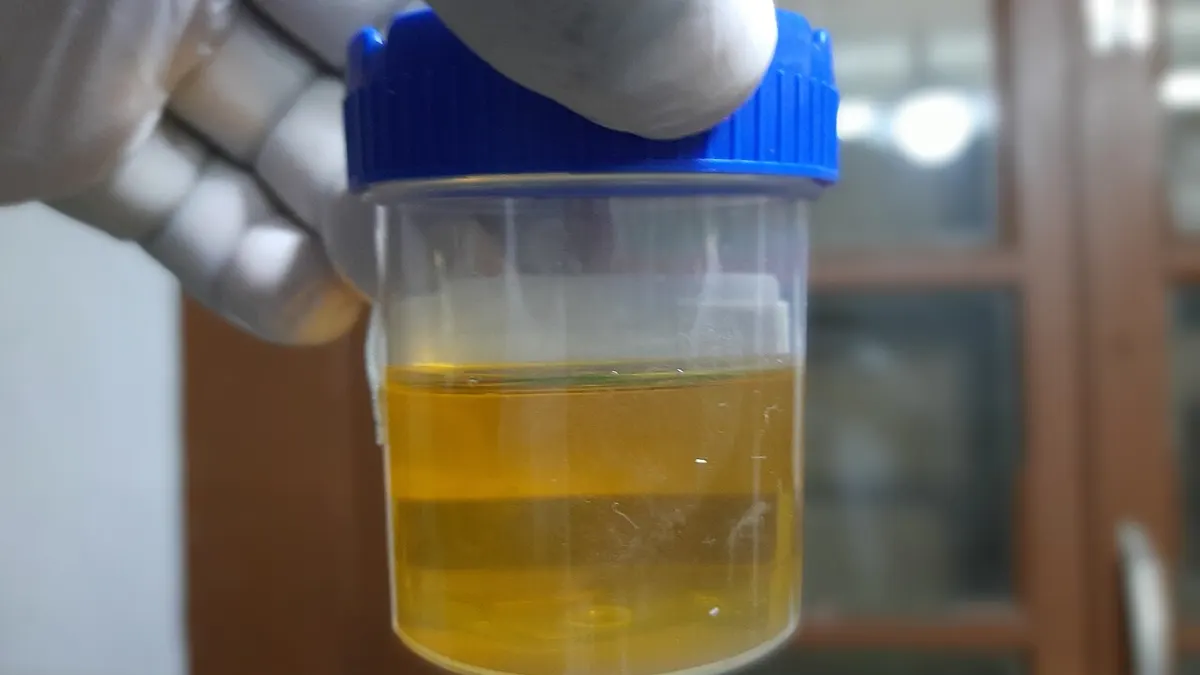
If you've been searching TestClear powdered urine reviews, you've probably noticed something odd: a lot of the pages ranking for it are long "reviews" sitting on hospital, charity or association websites that have nothing to do with drug testing. That's not a great sign for the quality of advice out there. So here's a plain, independent look at the product instead. TestClear's powdered urine kit is a $69.95 kit containing what the company says is real, dehydrated human urine, a 50 mL vial, a temperature strip and two heaters. The company markets it for calibration, specimen-validity testing, experiments and novelty use. Its own site shows 755 reviews, most of them glowing, but those are hosted by the seller and can't be independently checked. There's no independent lab study we could find showing how the product performs, and using any substitute sample for a real employment drug test carries serious risks, from an automatic "refusal" to breaking state law.
This page sticks to product facts: what you get, what it costs, what the claims are, what buyers report, how labs check samples, and what the legal and practical risks look like. It isn't a how-to for getting a sample past a collector, and we don't encourage cheating any drug test. Nothing here applies to DOT, FAA, federal, military, court, probation or parole testing, where substitution can have severe legal consequences.
The quick verdict
Here's the short version before the detail:
- What it is: a powdered urine kit sold by TestClear, a long-running US seller of drug test kits, detox products and novelty items, based in Redmond, Washington. The product code is PU100.
- Price: $69.95 for one kit, with 10% off for 3 to 9 kits and 25% off for 10 or more, plus optional extras such as more heaters, a digital thermometer and extra vials.
- Main claim: the powder is real, dehydrated human urine, not synthetic, with the natural markers you'd expect in a urine sample, including urea, uric acid and creatinine, plus normal pH and specific gravity once mixed.
- Stated uses: lab calibration, specimen-validity testing, education, experiments, and gag gifts or pranks.
- Reviews: 755 on TestClear's own site at the time we checked in October 2026, overwhelmingly positive. These are seller-hosted, so treat them with care.
- Biggest buyer complaint: volume. One recent verified-buyer review said the kit didn't provide as much liquid as the collection site wanted.
- Biggest risk: using any substituted sample in a real workplace test can be treated as a refusal to test, can cost you the job, and is illegal in a number of states.
- Our view: if you need a urine-like sample for calibration, teaching or novelty, it's one of the better-known options. If you're thinking about a real drug test, a home test kit and time clean are the safer path.
Who makes it
TestClear has sold drug testing and related products online for many years. Alongside the powdered urine kit, it sells home drug test kits for urine, saliva and hair, breathalyzers, detox drinks and pills, and hair-care products. Its contact details list a PO box in Redmond, Washington, a toll-free support number and an email address, and its site offers live chat. That kind of visible contact information doesn't prove anything about a product, but it's more than many anonymous sellers in this space provide.
The kit is sold under the name "Urine Simulation with Powdered Urine Kit", and the product page repeatedly stresses that it is not fake or synthetic urine. That's the central selling point and the reason it costs more than a lot of premixed synthetic products.
What's in the box
According to TestClear's product page, each kit includes:
- One small vial of powdered urine. This is the dehydrated sample itself.
- One 50 mL plastic medical transport vial with a blue lid, used to mix the powder with water.
- One temperature strip, a stick-on strip with a color scale. TestClear describes it as accurate and reusable.
- Two air-activated heaters. The product page says a heater can last up to about six hours.
- An instruction sheet.
You supply your own water. The product page says the 50 mL vial gives a little more than 45 mL, and that up to 25 mL of extra water can be added, for a total of about 75 mL, before the sample would be considered diluted. Extras sold at checkout include additional heaters, a digital thermometer, and extra 50 mL or 15 mL vials.
Why the volume detail matters
Volume is the most specific complaint in the recent reviews. One verified buyer, writing in September 2026, said the collection site she went to asked for significantly more urine than the kit provided. The same buyer said she had stopped using cannabis about eight days earlier and had already tested negative on home tests. Whatever you make of that review, it shows a practical point: collection sites set their own minimums, and the kit is designed around a fairly small volume. If you need a sample for calibration or lab practice, check how much your equipment or protocol needs before you buy.
The price, and what you really end up paying
The listed price is $69.95 for a single kit, and the regular price and sale price were the same when we checked. Bulk discounts are 10% for three to nine kits and 25% for ten or more. Add-ons push the total up:
- Extra heaters, which the seller pitches for delays.
- A digital thermometer, which gives a numeric reading instead of a color strip.
- Extra vials for more volume.
Shipping costs and speed vary with the option you choose. If you add a couple of extras and expedited shipping, a single order can easily approach or pass $100. That's a lot more than a premixed synthetic urine, which can cost less than half as much, and far more than a basic home drug test, which is often a few dollars per cup.
Price compared with other products
| Product type | Typical price range | What it's for |
|---|---|---|
| TestClear powdered urine kit | $69.95 before add-ons and shipping | Calibration, validity testing, education, novelty (seller's stated uses) |
| Premixed synthetic urine | Often around $20-$45 | Product testing (diapers, bedding), calibration, novelty |
| Single-panel THC home test | Often a few dollars per test in multipacks | Checking your own status before a test |
| Multi-panel home drug test cup | Often around $5-$20 per cup | Checking several drugs at once |
Prices change often and vary by seller, so treat these as rough ranges, not quotes.
Is it really human urine?
This is the question behind searches for "real powdered human urine", and it's a fair one. TestClear says the product is made from real human urine that has been dehydrated, and that once mixed it contains the natural compounds and properties of real urine: urea, uric acid, creatinine, normal pH and specific gravity, with the color and smell you'd expect. The company contrasts it with synthetic urine, which it says is made from chemicals and is mainly meant for testing things like diapers and bedding.
What we couldn't find was an independent, published laboratory analysis of the product. The claims come from the seller. There's no public certificate of analysis listing the exact composition by batch, and the source of the urine isn't described in detail on the product page. That doesn't mean the claims are false. It means you're taking the company's word for it, as you are with most products in this category.
Why "real" vs "synthetic" matters at all
Synthetic urines are mixtures of water and chemicals designed to imitate urine. Older and cheaper ones sometimes lacked uric acid or urea, or had unusual creatinine or specific gravity levels, which made them stand out on validity checks. Better synthetics now add those compounds. A dehydrated human sample, if that's what it is, would naturally contain them. That's the logic behind TestClear's pitch.
The flip side is that labs know all this too. Specimen-validity testing has kept evolving, and some labs now offer checks aimed specifically at spotting synthetic or substituted samples. We'll go through how labs check samples in a moment, because that's where the real risk sits.
What the reviews say
TestClear's product page showed 755 reviews in October 2026, with mostly five-star ratings. The recent ones we read were written between August and September 2026 and marked "Verified Buyer". The themes were consistent:
- Ease of use. Several reviewers called the kit simple and said the instructions were clear.
- Temperature. Reviewers repeatedly mentioned the importance of keeping the sample in the right temperature range, which tells you how central that part of the process is.
- Job outcomes. Many reviewers said they got the job they were testing for.
- Volume. As above, one review complained that the kit didn't contain enough liquid for the collection site.
- Repeat buying. Some reviewers said they'd buy again.
How much to trust those reviews
Reviews hosted on a seller's own website are filtered by that seller, even when they're genuine. There's no way for an outsider to check how many negative reviews were never published, or how "Verified Buyer" is defined. Positive outcomes in reviews also tell you very little about the cases that went wrong, because people who lose a job offer or face a refusal aren't likely to post about it on the product page.
Third-party discussion, such as Reddit threads, is mixed and anecdotal. Some people report success, some report problems with temperature or volume, and many threads include the same advice you'll read here: a substituted sample is a gamble with big downside.
A warning about "review" sites
When we checked the search results for "testclear powdered urine reviews", most of the top results were long articles on websites that appear to belong to hospitals, charities and professional associations, with no connection to drug testing. Pages like that are typically sponsored or placed content on domains that have been bought or rented for their search ranking. They often present seller claims as facts, quote suspiciously precise "pass rates", and link straight to a shop. We'd treat any review published that way with a lot of skepticism, including the pass percentages they quote.
How labs check urine samples
To understand the risk of any urine substitute, you need to understand specimen-validity testing (SVT). Labs and collection sites don't just test for drugs. They also check whether the sample looks like it came from a person, at that time, without being tampered with. Typical checks include:
Temperature at collection
Collectors check the temperature of a urine specimen shortly after it's handed over. Under the federal workplace testing procedures many private employers copy, the acceptable range is 90 to 100°F, read within four minutes of collection. A sample outside that range can lead to an immediate second collection, often directly observed.
Creatinine
Creatinine is a waste product made by muscle and found in all normal urine. Very low creatinine suggests a sample is diluted or not human. Labs flag results below set thresholds as dilute, and much lower levels as substituted.
Specific gravity
Specific gravity measures how concentrated urine is compared with water. Normal urine is a little denser than water. A specific gravity that's too close to water, especially combined with low creatinine, can lead to a dilute or substituted result.
pH
Normal urine has a pH within a known range. Results outside it can point to adulteration with acids or bases.
Oxidants and adulterants
Labs can test for nitrites, chromate, bleach, peroxide and other additives that people have used to interfere with drug testing. A positive here is reported as adulterated.
Tests for synthetic urine
Some labs now offer additional checks designed to identify synthetic urine, for example by looking for compounds that appear in synthetic mixtures but not in real urine, or for natural compounds that synthetic products lack. Whether a lab runs those checks depends on the lab and the employer's contract. A dehydrated human product is pitched as avoiding that problem, but there's no independent evidence we could find on how it performs against every lab's methods.
What happens when a sample fails SVT
A sample flagged as substituted or adulterated is usually treated as a refusal to test. For most employers, a refusal has the same consequence as a positive result, and sometimes a worse one: the offer is withdrawn, or the employee is terminated under policy. In federally regulated testing, a refusal can have long-lasting consequences for your ability to work in that field. That's why we never recommend substitution for any real test.
Observed collections change everything
Most pre-employment urine collections are unobserved: you go into a bathroom with water turned off and a dye in the toilet, and the collector checks the cup when you come out. But collections can be directly observed in a range of situations, including when a previous sample was out of temperature range, looked tampered with, or came back dilute; in return-to-duty and follow-up testing; and under some employer policies. In an observed collection, a substitute is not a realistic option, and attempting one is serious misconduct. Any honest assessment of a product like this has to start there.
Is it legal to buy or use?
Buying and owning powdered urine is legal in many places, and the product is sold openly for calibration, experiments and novelty use. Using it to defraud a drug test is a different matter. A number of US states have laws that make it a crime to sell, possess, or use synthetic urine or other substances or devices intended to falsify a drug test, and some of those laws cover any urine substitute, not just synthetic ones. Penalties vary from misdemeanors to more serious charges in some states. There's no single federal law that bans these products for private employment tests, but federal rules treat substitution in federally regulated testing very seriously.
Laws change and differ by state, so if you're unsure, check your state's current statutes. The safest legal position is simple: don't use a substitute in any test you're required to take.
Shelf life and storage
A powder keeps far better than a liquid. Unopened, dry powdered urine is generally stable for a long time if it's kept sealed, cool and dry, away from heat and humidity. Once mixed with water, it behaves like a fresh urine sample and starts to break down. TestClear says a mixed sample can be refrigerated and used within 72 hours, but reheating more than once, or using it after 72 hours, won't give the expected results. If you're using the kit for calibration or experiments, plan to mix only what you need, when you need it. For a deeper look at how long powdered and premixed products last, see our guide to whether fake pee goes bad.
Legitimate uses for powdered urine
It's easy to forget that urine-like samples have plenty of real, legal uses. TestClear lists several, and they're worth spelling out:
- Calibrating equipment. Urine analyzers and test strips need control samples to check they're reading correctly.
- Specimen-validity training. People learning how SVT works need samples to practice on.
- Education and demonstrations. Teachers and trainers in health, lab and science fields can use a safe, consistent sample instead of collecting real urine.
- Product testing. Testing how materials, pads or sensors handle urine. TestClear says premixed synthetic products are more commonly used for this.
- Novelty and pranks. The seller also mentions gag gifts.
If any of those describe your situation, the main questions are price, consistency and how much volume you need, rather than anything to do with drug testing.
Powdered urine vs synthetic urine vs your own sample
| Factor | TestClear powdered urine | Premixed synthetic urine | Your own sample |
|---|---|---|---|
| What it is | Dehydrated human urine (seller's claim) | Lab-made chemical mixture | Real urine, from you, now |
| Shelf life | Long when dry and sealed; about 72 hours once mixed, refrigerated | Often one to two years sealed | Not relevant |
| Price | $69.95 plus extras | Often cheaper | Free |
| Volume | About 45-50 mL, up to 75 mL with extra water per the seller | Varies, often 2-3 oz | Whatever you produce |
| Risk in a real test | Refusal, job loss and possible legal trouble if detected | Same, and older products easier to spot | Only your actual drug use shows |
The real risks, in plain terms
It's worth being direct about what can go wrong if someone tries to use any urine substitute for a workplace test:
- Temperature problems. Reviewers mention temperature again and again because a sample that's too hot or too cold is the most common reason a collection gets flagged. An out-of-range sample can lead to an observed recollection on the spot.
- Volume problems. If the site wants more than you have, you're stuck, as one reviewer found.
- Validity flags. Any unusual reading on creatinine, specific gravity, pH or synthetic markers can lead to a substituted or invalid report.
- Refusal consequences. A substituted result is usually treated as a refusal, which most employers handle like a positive.
- Legal exposure. In states that ban drug-test fraud, getting caught can mean criminal charges, not just a lost job.
- Observed collections. In those situations, a substitute isn't viable at all.
Put together, the downside of being caught is often far worse than the downside of a positive result. Some employers will let someone who tests positive for cannabis reapply later. A refusal for tampering often ends that possibility.
Ad: we may earn a commission if you buy through this link. Information only, not medical or legal advice. Tampering with a drug test can be illegal and usually counts as a refusal. The only sure way to pass is to not use.
Better options if you have a drug test coming
Find out where you actually stand
Many people buy a substitute because they're scared, not because they know they'd fail. A home drug test can answer that question for a few dollars. If you've stopped using, test with first-morning urine a few days before your real test, and use a test with the same cutoff your employer uses if you can find out. On most strip tests, any line in the test zone, even a faint one, means negative.
Give yourself time
Detection windows depend on the drug, how much and how often you used, and the test type. For cannabis in urine, a single use often clears in about one to three days, while daily use can take weeks. Stopping as early as possible is the only method that can't backfire.
Know your rights
Some states limit what employers can do with cannabis results. California, for example, bars most employers from acting on off-duty use or on metabolite-only THC results. See our guide on whether California employers can drug test for weed and our page on testing for weed in legal states.
Be honest about prescriptions
If you take a prescribed medication that can show up on a test, tell the Medical Review Officer when they call. A valid prescription can turn a lab positive into a negative report to your employer.
Ask about the test
It's normal to ask what type of test it is: urine, saliva, hair or blood. That changes your detection window a lot. A saliva test usually looks back about a day or two for cannabis; a hair test can look back about 90 days.
Buyer checklist
If you're buying powdered urine for a legitimate purpose, a few practical checks will save you money and frustration:
- Volume: confirm the kit provides enough for your equipment or protocol, and price in extra vials if not.
- Timing: mix only when you need it, given the 72-hour limit on a mixed sample.
- Storage: keep unopened powder sealed, cool and dry.
- Temperature tools: for lab simulation, a digital thermometer is more precise than a color strip.
- Bulk pricing: if you're a trainer or lab buying regularly, the 10% and 25% bulk tiers can make a real difference.
- Support: TestClear lists phone, email and live chat; ask questions before you buy.
How powdered urine is made, in general terms
TestClear doesn't publish a detailed manufacturing process, so we can only describe how dehydrated biological samples are generally produced. Liquid is removed from a sample, usually by evaporation under controlled conditions or by freeze-drying, leaving behind the dissolved solids. In urine, those solids are mostly urea, salts, creatinine, uric acid and smaller amounts of other compounds. When water is added back, those solids dissolve again and the liquid takes on a composition close to the original, as long as nothing was lost or changed during drying and storage.
Two things can affect quality in any product made this way. The first is the starting sample: if it isn't screened, it could contain substances you wouldn't expect. TestClear says its powdered urine is toxin-free, which is the claim you'd want, but again there's no public batch testing to confirm it. The second is storage: heat and moisture can degrade dried biological material over time. That's one reason to buy from a seller with fast turnover and to keep the product sealed until you need it.
Why water quality matters when mixing
Because the kit relies on water you supply, the water itself becomes part of the sample. Tap water contains chlorine or chloramine in many areas, along with minerals that vary from town to town. For calibration and lab work, people often use distilled or deionized water so the result is consistent and nothing unexpected is introduced. TestClear's page mentions room-temperature water but doesn't go into water type, so if consistency matters for your use, distilled water is the cautious choice.
Reading the claims on the product page
The product page makes several claims that are worth separating into "checkable" and "not checkable".
Claims you can check yourself
- Kit contents. You can confirm what's in the box when it arrives.
- Volume. You can measure the liquid once mixed.
- Price and discounts. These are shown at checkout.
- Temperature strip behavior. You can see whether it reads clearly.
- Basic urine chemistry. Inexpensive urinalysis or adulterant test strips can show whether a mixed sample reads in a normal range for things like pH, specific gravity and creatinine. That's useful for calibration users who want a sanity check.
Claims you can't easily check
- That it's real human urine. You'd need a lab analysis.
- That it's toxin-free. Again, only a full lab panel would confirm this.
- That it's "the industry standard" or "the most trusted". Those are marketing phrases, not measurable facts.
- Pass rates quoted in reviews. One reviewer mentioned a "passing ratio online" of about 95%. That number doesn't come from any study we could find, and it isn't something we'd rely on.
A closer look at the review themes
Reading a batch of reviews closely tells you more than the star rating does. Here's what stood out in the recent verified-buyer reviews we read in October 2026, and what each one really means.
"Easy to use"
This is the most common praise, and it's believable: the kit has few parts, and mixing powder with water isn't complicated. Ease of use is a reasonable thing to praise for calibration or teaching too.
"Just make sure the temp is in range"
Temperature comes up so often that it's clearly the part buyers find hardest. That's consistent with how collections work: temperature is checked first, on the spot, by a person. It's also the point where a lot of attempts go wrong, which is a big reason we don't recommend going down this road for a real test.
"Not enough in the kit"
The volume complaint is specific and practical. It also shows how reviews can hide the true risk: that reviewer said she had already tested negative at home, so her outcome tells you nothing about the product's performance. She'd likely have passed with her own sample.
"Passed a rapid test and lab test"
Several reviewers say this, and we can't verify any of them. Lab reports are sent to the employer or Medical Review Officer, not to the person tested, so even the reviewer may not know exactly what checks were run on their sample.
Common myths about powdered urine
- "Real urine can't be detected." Labs can flag samples for temperature, dilution, unusual chemistry and, increasingly, signs of substitution. "Real" doesn't mean "undetectable".
- "Labs never check for substitution on pre-employment tests." Basic validity checks are standard on lab-based urine tests, and collectors check temperature on every collection.
- "Adding more water makes it go further." Adding too much water dilutes the sample, and dilute results get flagged. The seller itself warns about this.
- "A mixed sample keeps for a week in the fridge." TestClear says 72 hours, and reheating more than once won't give the expected results.
- "It's legal everywhere because it's sold openly." Selling a product for calibration or novelty is different from using it to falsify a test, which is illegal in a number of states.
- "Hospital and association websites have reviewed it, so it must be good." Many of those pages appear to be placed content on unrelated domains, not genuine independent reviews.
Cost per sample for trainers and labs
For anyone buying for legitimate, repeat use, cost per sample is the number that matters. Using the listed prices:
- One kit: $69.95 per sample, before shipping.
- Three to nine kits at 10% off: about $62.96 per kit, so roughly $188.86 for three or $566.60 for nine.
- Ten or more at 25% off: about $52.46 per kit, so roughly $524.63 for ten.
Those figures are rounded and exclude shipping, tax and add-ons. Compared with commercial urine controls sold to clinical labs, which come with documented concentrations, the kit is a very different product: it's not sold with a certificate of analysis or stated target values. If you need traceable controls for regulated lab work, buy products made and documented for that purpose. The TestClear kit is better suited to training, demonstrations and informal checks.
What to look for in any powdered urine product
TestClear isn't the only seller of powdered or dehydrated urine. If you're comparing options for a legitimate use, the same questions apply to every brand:
- Is the composition stated? The more specific the seller is about what's in the product, the better. Vague claims like "lab grade" don't tell you much.
- Is there any independent testing? A published analysis, or at least a batch certificate, is a big plus. Most consumer brands don't offer one.
- What's the volume once mixed? Make sure it matches what you need.
- What's the shelf life, dry and mixed? Look for clear dates and storage advice.
- Who's the seller? A real address, phone number and support channel are basic signs of accountability.
- Do the marketing claims match the stated use? If a product is sold "for calibration only" but every review talks about job tests, you know how the market uses it, and so do labs.
Terms you'll see in reviews, explained
- Specimen validity testing (SVT): lab checks that confirm a sample is real, undiluted and unadulterated.
- Dilute: a sample with creatinine and specific gravity lower than normal, often from drinking lots of water or adding water. Usually triggers a retest.
- Substituted: a sample with chemistry so far from normal human urine that the lab reports it wasn't urine from the donor. Usually treated as a refusal.
- Adulterated: a sample with a foreign substance added, such as an oxidant. Also usually treated as a refusal.
- Invalid: a result the lab can't interpret, often because something interfered with the test. Typically leads to a recollection, sometimes observed.
- Medical Review Officer (MRO): a licensed physician who reviews lab results, contacts the donor about non-negative results and reports the final outcome to the employer.
- Observed collection: a collection where a same-gender observer watches the sample being provided.
What happens after a sample is flagged
Reviews only describe the good outcomes, so it's worth walking through the other path. Here's roughly how a flagged urine sample is handled in a typical lab-based workplace program:
- At collection: if the temperature is out of range or the sample looks unusual, the collector notes it and may require a second collection right away, sometimes observed. Both samples can be sent to the lab.
- At the lab: the sample is screened for drugs and run through validity checks. A result that doesn't look like normal human urine is confirmed with further testing before it's reported as substituted, adulterated or invalid.
- At the MRO: the Medical Review Officer reviews the lab report and usually contacts the donor to ask whether there's a medical explanation. For a substituted result, there rarely is one.
- To the employer: the final result is reported. Substituted and adulterated results are normally reported as a refusal to test, and most company policies treat that as grounds to withdraw an offer or end employment.
The whole process can take several days. That delay is one reason review comments posted right after a collection aren't a reliable measure of outcomes. Someone who writes that it worked on the day of the collection may not yet know the final result.
Who should skip it
We'd suggest not buying this product if any of these apply to you:
- You're facing a DOT, FAA, federal, military, court, probation or parole test.
- Your test is likely to be observed, for example a return-to-duty, follow-up or recollection.
- You live in a state that bans urine substitutes for drug testing.
- You haven't yet checked whether you'd even fail. A home test costs a fraction of the kit.
- Your job offer matters more than the risk of a refusal on your record with that employer.
And it's a reasonable buy if you're a trainer, a lab or clinic needing control samples, a science teacher, a product tester or someone buying a novelty gift, and you've checked that the volume and the 72-hour mixed life fit your needs.
What we'd tell a friend
If a friend asked us whether TestClear's powdered urine is "legit", we'd say it's a real, widely sold product from a seller that's been around a long time, with clear contents and a clear price. If they wanted it for a classroom, a lab calibration or a prank, fine. If they wanted it for a job test, we'd tell them to stop, buy a cheap home test, find out where they stand, and give themselves as much clean time as possible. If the test is still positive, an honest conversation about timing, or checking whether state law protects them, is a better gamble than a tampering finding that can follow them around.
If drug use is causing problems
If you're worried about your use, help is free and confidential. The SAMHSA National Helpline is open 24/7 at 1-800-662-4357 for treatment referrals and information. If you're in crisis or thinking about harming yourself, call or text 988.
This page is general information, not medical or legal advice. We may earn a commission if you buy through links on this page. Tampering with a drug test may be illegal and can count as a refusal or failed test; the only guaranteed way to pass is not to use. Never use any product to try to beat DOT, FAA, federal, military, court, probation or parole testing. Product details and prices were checked in October 2026 and can change.
Sources
Detection windows, cutoffs and procedures on this page are based on these public sources. Individual results vary; this is information, not medical or legal advice. See how the DrugTestAnswers Editorial Team checks facts.
Questions people ask
Is TestClear powdered urine real human urine?
TestClear says it's real, dehydrated human urine with natural markers such as urea, uric acid and creatinine, not a synthetic mixture. We couldn't find an independent lab analysis confirming the composition, so that claim rests on the seller.
How much does TestClear powdered urine cost?
$69.95 for one kit when we checked in October 2026, with 10% off for 3 to 9 kits and 25% off for 10 or more. Extra heaters, a digital thermometer, extra vials and shipping add to the total.
What comes in the TestClear powdered urine kit?
A vial of powdered urine, a 50 mL plastic transport vial with a blue lid, a temperature strip, two air-activated heaters and an instruction sheet. You add your own water.
Are TestClear powdered urine reviews trustworthy?
The 755 reviews on TestClear's own site are seller-hosted, so there's no way to see what was filtered out. Many top search results for this product are sponsored-style pages on unrelated websites. Treat both with caution.
How long does TestClear powdered urine last?
Dry and sealed, powdered urine keeps for a long time if stored cool and dry. Once mixed, TestClear says it can be refrigerated and used within 72 hours and shouldn't be reheated more than once.
Can labs detect powdered urine?
Labs run specimen-validity tests for temperature, creatinine, specific gravity, pH and adulterants, and some can test specifically for synthetic or substituted samples. A substituted result is usually treated as a refusal to test, which most employers treat like a positive.
Is it legal to use powdered urine for a drug test?
Buying it for calibration or novelty is legal in many places, but a number of states make it a crime to use urine substitutes to falsify a drug test, and federally regulated testing treats substitution very seriously.
What's a safer alternative?
Stop using as early as possible and take a home drug test a few days before the real one so you know where you stand. Check whether your state limits employer action on cannabis results.
Ad: we may earn a commission if you buy through this link. Information only, not medical or legal advice. Tampering with a drug test can be illegal and usually counts as a refusal. The only sure way to pass is to not use.
No product can promise you a pass, and the only certain way is to not use. Tampering with a drug test can be illegal and is usually treated as a refusal. We never help anyone beat DOT, federal, safety-sensitive, or court-ordered tests. If substance use is getting on top of you, call the free, confidential SAMHSA National Helpline on 1-800-662-4357 (24/7, English and Spanish), or call or text 988 in a crisis. Source: samhsa.gov.