False Positive Drug Test for Benzodiazepines: Medications That Cross-React and What to Do Next
Ad: we may earn a commission if you buy through this link. Information only, not medical or legal advice. Tampering with a drug test can be illegal and usually counts as a refusal. The only sure way to pass is to not use.
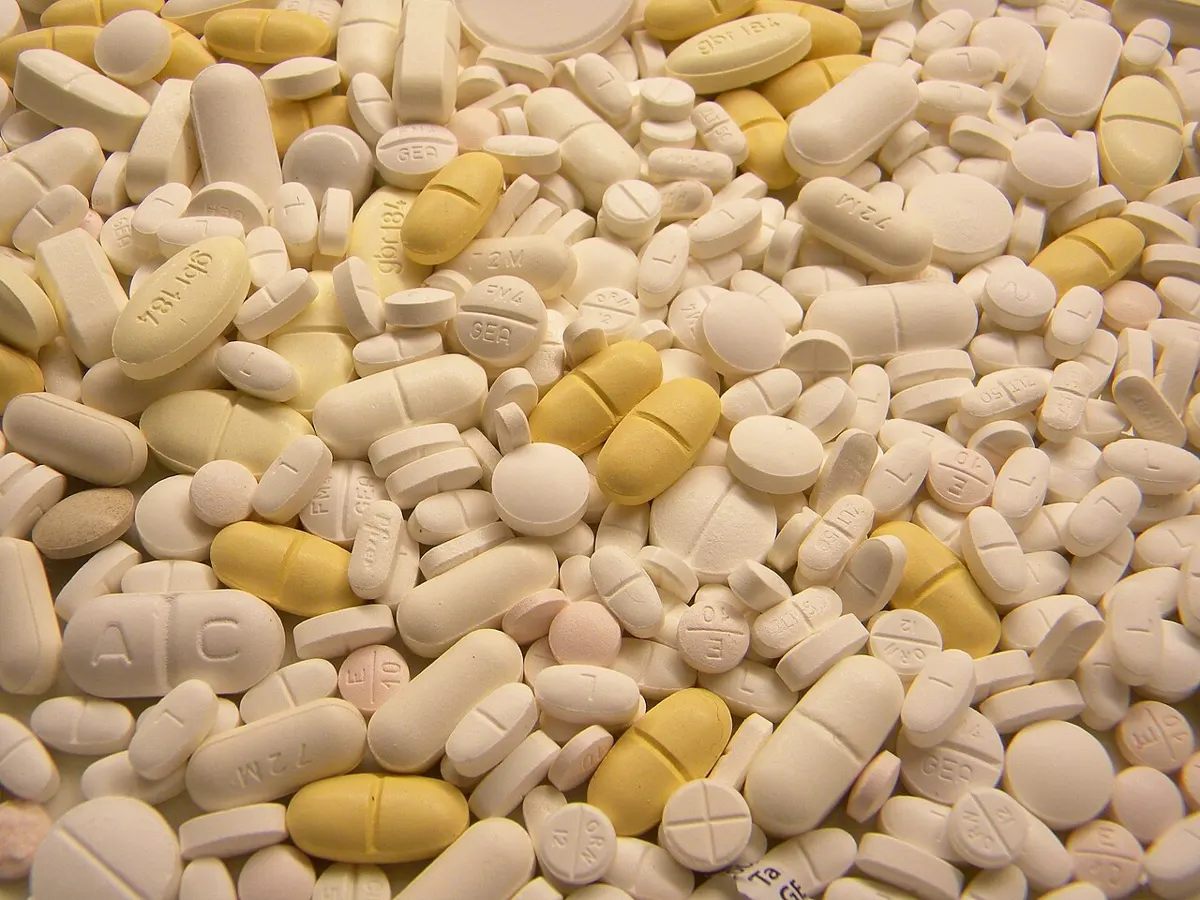
A benzodiazepine positive when you don't take Xanax, Valium or Klonopin is scary. Sometimes it's a real positive from a medicine you didn't realize was a benzo. Sometimes it's a screening false positive. Here's how to tell the difference and what to do next.

How benzo screens work
Immunoassay screens for benzodiazepines look for a family of related compounds, not one molecule. Some benzos (like lorazepam and clonazepam) are actually poorly detected by older screens, while some non-benzo drugs have been reported to cross-react. That's why a non-negative screen is not the final word.
Medications reported to cause false positives
Published reports and reviews (including Moeller et al., Mayo Clinic Proceedings 2017) have linked benzo screen false positives to drugs such as:
- Sertraline (Zoloft), in some assays
- Oxaprozin (Daypro)
- Efavirenz (less commonly discussed for benzos than for THC, but assay-dependent)
- Some NSAIDs, in older case reports
Cross-reactivity is assay-specific. A drug that fooled one brand of cup may not fool a lab analyzer. Always ask for confirmation.
Medications that cause true positives
These are real benzos or metabolize to them:
- Alprazolam (Xanax)
- Diazepam (Valium)
- Clonazepam (Klonopin)
- Lorazepam (Ativan)
- Temazepam, midazolam, triazolam and others
- Some combination products and, rarely, certain herbal products contaminated with benzos
If you take any of these with a prescription, the MRO should verify it.
Screen vs confirm
GC-MS or LC-MS confirmation identifies specific benzodiazepines. It clears most immunoassay false positives. If your result was only from an instant cup, ask whether it was lab-confirmed before any job action. Our screen vs confirm guide explains each status label.
What to do if you get a non-negative
- Ask for a copy of the result and whether confirmation was done.
- List every prescription, OTC medicine and supplement from the past two weeks.
- Answer the MRO's call and share prescription details.
- Request a split-specimen retest if you believe the sample is wrong and one was collected.
- Don't stop prescribed benzos suddenly; withdrawal can be dangerous. Talk to your doctor.
Detection windows for real benzo use
Short-acting benzos like lorazepam are often detectable in urine for about 3 days. Long-acting ones like diazepam can show for weeks. See our detection table.
Home testing
A home benzo strip uses the same immunoassay idea as a lab screen. It's useful for a quick check but can share the same false-positive risks. A lab confirmation is the definitive step.
Which benzos are easy or hard to detect
Ironically, some true benzo use is missed by screens. Clonazepam and lorazepam are frequently cited as poorly detected by certain immunoassays, while nordiazepam (from diazepam) is detected more readily. That is another reason confirmation with LC-MS/MS is the gold standard when results matter.
Sleep aids and "non-benzo" medicines
Zolpidem (Ambien), eszopiclone (Lunesta) and zaleplon are not benzodiazepines chemically and usually do not trigger benzo screens. Some muscle relaxants and antihistamines also do not. Do not assume a sedating medicine will show as a benzo, and do not assume it won't affect your job performance.
Hospital and pain-clinic testing
If you are in a pain management program, benzo testing is often part of compliance monitoring. A surprise positive should be discussed with the clinic promptly. Bring pharmacy records. Clinics that use definitive LC-MS testing have far fewer false-positive problems than those that rely only on cups.
Which tests even look for benzos?
Benzodiazepines aren't on the classic 5-panel used in many workplace programs. They show up on most 10, 12 and 14-panel tests, in pain management and addiction treatment monitoring, in hospital emergency department screens, and in some post-accident or reasonable-suspicion testing. So if you got a benzo result, you were probably on an expanded panel or in a medical setting. That matters because medical screens are designed to guide care quickly and often aren't confirmed unless someone asks, while workplace tests in well-run programs go through lab confirmation and an MRO before an employer hears anything.
What the screen is actually calibrated to
Most benzodiazepine immunoassays are calibrated to one specific compound, commonly oxazepam or nordiazepam, at a cutoff such as 200 or 300 ng/mL, with some labs using 100. Other benzos are detected only as well as their metabolites resemble that calibrator. That's why detection varies so much from drug to drug:
| Medicine | Main urine markers | Typical screen detection |
|---|---|---|
| Diazepam (Valium) | Nordiazepam, oxazepam, temazepam | Usually detected well |
| Alprazolam (Xanax) | Alpha-hydroxyalprazolam | Usually detected at normal doses |
| Clonazepam (Klonopin) | 7-aminoclonazepam | Often poorly detected by older screens |
| Lorazepam (Ativan) | Lorazepam glucuronide | Often missed unless the lab hydrolyzes the sample |
| Temazepam (Restoril) | Temazepam glucuronide, oxazepam | Variable |
Some labs add an enzyme step (beta-glucuronidase) that frees the drug from its glucuronide form, which makes lorazepam and similar drugs much easier to catch. Newer high-sensitivity immunoassays also pick up clonazepam better than older ones did. Bottom line: a screen can produce both false positives and false negatives, and only confirmation testing tells you exactly what's there.
Ad: we may earn a commission if you buy through this link. Information only, not medical or legal advice. Tampering with a drug test can be illegal and usually counts as a refusal. The only sure way to pass is to not use.
Typical detection windows for real benzo use
| Medicine | Urine, single or occasional dose | Urine, regular long-term use |
|---|---|---|
| Alprazolam | About 1 to 4 days | Up to about a week |
| Lorazepam | About 2 to 5 days | Up to about a week or more |
| Clonazepam | About 3 to 6 days | Can be several weeks |
| Diazepam | About 5 to 10 days | Several weeks; long-term users can be positive for a month or more |
These are approximate ranges from clinical references. Long-acting benzos and their active metabolites build up with daily use, which is why diazepam users can test positive long after the last dose. Our detection windows table lists more substances.
Designer benzos: a newer complication
Pills sold on the street as "Xanax" increasingly contain designer benzodiazepines such as etizolam, flualprazolam, bromazolam or clonazolam. These aren't FDA-approved, and some are much stronger than the real thing. Standard screens detect some of them inconsistently, and many routine confirmation menus don't look for them at all unless the lab adds them. From a health angle, this is a serious risk: counterfeit pills can also contain fentanyl. If you take pills that didn't come from a pharmacy, carry naloxone, never use alone and don't mix them with alcohol or opioids. From a testing angle, it means a "benzo positive" or "benzo negative" from a street pill tells you less than you might think.
Supplements and "natural" products
Ordinary herbal sleep aids like valerian, chamomile, melatonin, passionflower and magnesium aren't benzodiazepines and shouldn't trigger a benzo screen. Kava and kratom don't either. The concern is contamination and mislabeling: the FDA has issued warnings over the years about supplements and imported products marketed as natural relaxants or sleep aids that were found to contain hidden prescription drugs. If you took an imported or unbranded "calming" product and got a confirmed benzo positive, that product is a suspect worth mentioning to the MRO and your doctor. Keep the bottle.
How the MRO process works, step by step
- Lab screen: the sample tests non-negative for benzodiazepines on immunoassay.
- Lab confirmation: the lab runs LC-MS/MS or GC-MS to identify and measure specific benzos or metabolites. If nothing confirms above the cutoff, the result is reported negative and the screen is ignored.
- MRO review: if a benzo confirms, a medical review officer (a physician) contacts you, usually by phone.
- Your explanation: you tell the MRO about prescriptions, recent surgeries or procedures (midazolam is common before endoscopies and dental work), or other medicines.
- Verification: the MRO checks with your pharmacy or prescriber.
- Final report: with a valid explanation, the employer typically receives a negative result. The MRO may raise a safety concern if a medication could affect a safety-sensitive role, but your diagnosis stays private.
If you miss the MRO's calls, the result can be verified positive without your input, so answer unknown numbers for a few days after a test.
Procedures that can cause a surprise benzo positive
Many people forget about medications given during a procedure. Midazolam (Versed) is widely used for sedation during colonoscopies, endoscopies, dental surgery, minor surgery and sometimes in the emergency room. It's a real benzodiazepine, and its metabolites can be detectable for a day or more afterward. Diazepam is sometimes used before MRIs for anxiety or for muscle spasms. If you had any procedure in the week or two before a test, ask for your discharge paperwork and bring it up with the MRO.
Older adults and benzo screening
Older adults are more likely to be taking long-acting benzos, often for years, and they clear them more slowly. They're also more likely to be on sertraline or other medicines reported to cross-react. If an older family member has a surprise benzo result in a hospital or care setting, a confirmation test and a full medication list usually clear it up quickly. It's also a good time to ask the doctor whether a long-term benzo is still the right choice, since benzos raise fall and confusion risk in older people.
Never stop a benzo suddenly
We said it above and we'll say it again because it matters: if you take a benzodiazepine regularly, stopping abruptly can cause withdrawal that ranges from rebound anxiety and insomnia to seizures in severe cases. The FDA added a boxed warning about dependence and withdrawal risks to all benzodiazepines in 2020. If you want to come off a benzo, ask your prescriber about a gradual taper. Don't stop to "pass" a test; with a valid prescription, you don't need to.
A closer look at the sertraline and oxaprozin reports
These two come up most often, so here's a bit more context. Oxaprozin, a prescription anti-inflammatory sold as Daypro, was linked to false-positive benzodiazepine screens in published reports in the late 1990s and early 2000s, and it's still listed as an interfering substance in many references. Sertraline, one of the most commonly prescribed antidepressants, has case reports and small studies describing false-positive benzo screens with certain immunoassays, particularly at higher doses. In both cases, confirmation by mass spectrometry finds no benzodiazepine, and the result is reported negative. Newer assays have reduced some of these interferences, but because many different screening products are in use, it's worth mentioning either medicine if you take it.
Read the package insert of your home test
Home benzo strips and multi-panel cups come with an insert that lists cross-reactivity: which compounds were tested, at what concentration they turn the strip positive, and sometimes which unrelated drugs were checked for interference. It's dense, but it's genuinely useful. If you take a medication and want to know whether it's likely to trigger the strip you bought, the insert is the first place to look. If your medicine isn't listed, that doesn't mean it's safe or unsafe for that strip, just that it wasn't tested.
Emergency room screens are a different animal
Hospital urine drug screens are run fast to help doctors make treatment decisions, and they're often not confirmed unless the result changes care. A benzo positive on an ER screen can end up in your chart even if it was caused by something you were given in the ambulance or the ER itself, or by a cross-reacting medicine. If you see a benzo result in your hospital records that doesn't make sense, ask the care team whether it was confirmed and request a note in your record. This matters for things like future prescribing and, sometimes, custody or insurance questions.
Keep a simple medication record
A small habit that makes any drug test less stressful: keep a note on your phone listing every prescription with the dose, prescriber and pharmacy, plus any over-the-counter medicines and supplements you take regularly. Add any procedures with sedation and the date. When an MRO calls, you can answer clearly in two minutes instead of scrambling. Photos of prescription labels are a good backup. If you use more than one pharmacy, list them all, because the MRO may need to verify with each.
Quick decision guide
- You take a prescribed benzo: expect a positive screen; tell the MRO; you'll usually be reported negative.
- You had sedation for a procedure recently: get the paperwork; tell the MRO.
- You take sertraline, oxaprozin or efavirenz: mention it; confirmation testing should clear a false screen.
- You took a pill from a friend or the street: it may have been a real or designer benzo; be careful, and consider talking to a doctor.
- None of the above, and it confirmed: ask about split-specimen testing and review supplements or imported products.
Can a benzo false positive cost you a job?
In a properly run workplace program, a screening false positive should never reach your employer, because the lab confirms before reporting and the MRO reviews any confirmed result. Problems usually happen with instant on-site cups where someone acts on the screen alone. If an employer tells you that you failed based on a cup, politely ask for the sample to be sent to a certified lab for confirmation before any decision. That request is reasonable, and many company policies already require it.
Sources
Detection windows, cutoffs and procedures on this page are based on these public sources. Individual results vary; this is information, not medical or legal advice. See how the DrugTestAnswers Editorial Team checks facts.
- HHS/SAMHSA, Mandatory Guidelines: Authorized Testing Panels, Federal Register, 13 Mar 2026
- HHS/SAMHSA, Mandatory Guidelines for Federal Workplace Drug Testing Programs using Urine, Federal Register, 12 Oct 2023
- Moeller KE et al., "Clinical Interpretation of Urine Drug Tests", Mayo Clinic Proceedings, 2017 (PubMed)
- MedlinePlus Medical Encyclopedia: Urine drug screen
- SAMHSA National Helpline (free, confidential, 24/7)
Questions people ask
Can Zoloft cause a false positive for benzos?
It has been reported with some immunoassays. Confirmation testing distinguishes it.
How common are false positives for benzodiazepines?
Uncommon with modern lab screens, but possible. Confirmation makes them rare.
Can a colonoscopy cause a positive benzo test?
Yes. Midazolam, a benzodiazepine commonly used for sedation, can be detectable for a day or more. Tell the MRO about the procedure.
Will a prescription Xanax show as a positive?
Yes on the screen and confirmation, but the MRO usually reports a verified prescription as negative.
Ad: we may earn a commission if you buy through this link. Information only, not medical or legal advice. Tampering with a drug test can be illegal and usually counts as a refusal. The only sure way to pass is to not use.
No product can promise you a pass, and the only certain way is to not use. Tampering with a drug test can be illegal and is usually treated as a refusal. We never help anyone beat DOT, federal, safety-sensitive, or court-ordered tests. If substance use is getting on top of you, call the free, confidential SAMHSA National Helpline on 1-800-662-4357 (24/7, English and Spanish), or call or text 988 in a crisis. Source: samhsa.gov.