How Long Does Kratom Stay in Your System for a Drug Test? Half-Life, Urine Windows and Which Tests Even Look for It
Compare TestClear's urine-test products in one place: detox drinks, multi-day programs and more.
Ad: we may earn a commission if you buy through this link. Information only, not medical or legal advice. Tampering with a drug test can be illegal and usually counts as a refusal. The only sure way to pass is to not use.
Updated ·  Written by Daniel Brooks ·
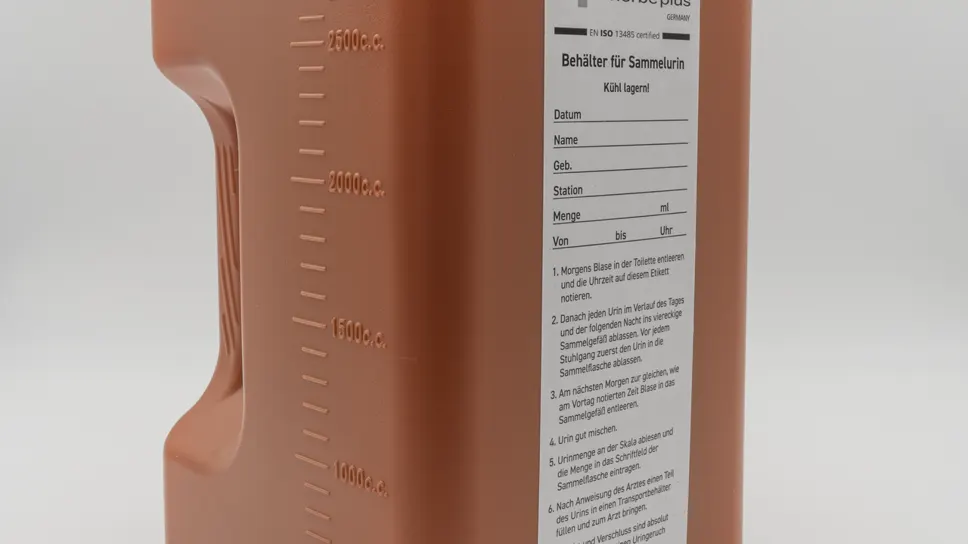
Straight answer, brother: kratom's main active compound, mitragynine, has a half-life of roughly a day in the one small human study that measured it carefully, so for most people it's mostly cleared from the body in about five days, and urine tests that specifically look for it have been reported to pick it up for around 1 to 7 days, longer after heavy daily use. The bigger news for most people is that a standard 5-panel or 10-panel drug test doesn't look for kratom at all. It takes a kratom-specific test, usually run in a lab. Here's how it all works, and where the research is still thin.
This is general information from published research, not medical or legal advice. If you're facing a DOT, federal, court-ordered or military test, follow your program's rules and talk to the people running it or a lawyer. Nothing here is about beating those tests, and no detection window is a sure thing for your body.
The quick answer table
| Sample | What's measured | Rough window (limited research) |
|---|---|---|
| Urine | Mitragynine and its metabolites | About 1 to 7 days; possibly up to around 9 days or more after heavy, long-term use |
| Blood | Mitragynine | Roughly 1 to 2 days for a single dose; longer with regular use |
| Saliva | Mitragynine | Short, likely a day or two; very little published data |
| Hair | Mitragynine locked into the hair shaft | Potentially up to about 90 days, but almost never ordered and not well validated |
Those ranges come from a small set of pharmacology studies and clinical lab references, and they vary a lot between people. Treat them as ballpark figures, not a schedule.
Does kratom show up on a standard drug test?
Usually, no. The common workplace panels are built around a fixed list of drugs:
- A 5-panel typically screens for marijuana (THC-COOH), cocaine, amphetamines, opiates and PCP.
- A 10-panel adds things like benzodiazepines, barbiturates, methadone, propoxyphene and methaqualone.
- 12-panel and expanded panels may add oxycodone, buprenorphine, MDMA or fentanyl, depending on the lab.
Kratom isn't on any of those standard lists, and it isn't part of the federal workplace panel used for DOT-regulated jobs either. Mitragynine doesn't look enough like morphine or codeine to reliably trigger an opiate screen. To find kratom, someone has to order a test that specifically targets mitragynine, and that's normally done by liquid chromatography with tandem mass spectrometry (LC-MS/MS) at a lab.
So the honest version is: whether kratom "shows up" depends far more on what test is ordered than on how much time has passed.
Who actually tests for kratom?
It's uncommon, but not unheard of. Places that may add a kratom or mitragynine test include:
- Addiction treatment and pain management programs, where clinicians want to know everything a patient is taking.
- Some probation, drug court or monitoring programs, especially in states where kratom is restricted.
- Hospitals and emergency departments, when someone shows up with symptoms and the doctors need answers. These are clinical tests, not workplace ones.
- Some employers who order expanded or custom panels, which is rare for standard hiring.
- Medical examiners in post-mortem toxicology.
If you don't know what a test includes, the most reliable move is simply to ask the employer, program or collection site what panel they're running. You're allowed to ask.
What the half-life research actually says
Most of the numbers floating around online trace back to a few studies. The best-known is a 2015 pharmacokinetic study by Trakulsrichai and colleagues, which gave kratom tea to 10 healthy male regular users in Thailand. It measured mitragynine in blood and urine over time. The key findings:
- Mitragynine reached its peak in the blood in under an hour, on average.
- The terminal half-life was about 23 hours, but with a big spread: plus or minus around 16 hours. Some people cleared it much faster, some much slower.
- Only a tiny fraction, around 0.14%, came out in urine unchanged. The rest is broken down by the liver first, so urine tests lean on metabolites as well as the parent drug.
The rule of thumb in pharmacology is that a drug is mostly gone after four to five half-lives. With a 23-hour half-life, that's roughly 4 to 5 days. With the slower end of the spread, it stretches past a week. That's where the "about a week" figure comes from.
The other famous kratom compound, 7-hydroxymitragynine (7-OH), is much more potent at opioid receptors but present in tiny amounts in natural leaf, and it has a much shorter half-life, in the range of a couple of hours. Concentrated 7-OH products are a different story and have drawn heavy regulatory attention, which I'll get to below.
Remember the limits here: 10 male subjects, one country, one way of taking kratom. Women, older people, people with liver problems, and heavy long-term users weren't really represented. That's why every honest source hedges.
Urine: the test you're most likely to face
If a kratom test is ordered, it's almost always urine. Labs look for mitragynine and often its metabolites, because the metabolites can stick around longer and there's more of them. Some labs also look for related alkaloids such as speciociliatine and speciogynine, which research has suggested could be useful extra markers of kratom use.
Reported detection windows are around 1 to 7 days for most users, and potentially longer, around 9 days or more, for chronic heavy use. That's similar in shape to many other drugs: occasional use clears faster, daily use builds up and lingers.
One important detail from clinical lab references: the level found in urine can't tell anyone how much you took or exactly when. It mainly shows whether kratom compounds are present above the lab's cutoff. Hydration, the time of day and when you last used all swing the number around.
Blood and saliva
Blood tests reflect what's circulating right now, so they're used in clinical settings, like an ER, much more than for screening. Given the half-life, a single dose would usually be detectable in blood for something like a day or two. Regular users may test positive longer.
Saliva testing for kratom exists in research but is rare in practice. Oral fluid generally has short windows for most drugs, and there isn't enough published kratom data to give a confident number. If someone tells you exactly how long kratom stays in saliva, ask where they got it.
Hair
In theory, like many drugs, mitragynine can be incorporated into hair as it grows, which would give a long look-back of roughly 90 days for a standard 1.5-inch sample. In practice, hair testing for kratom is very rarely ordered, and the methods aren't as established as hair testing for cocaine or opioids. It's mostly a research and forensic tool right now.
What changes how long kratom stays in your system
- How often you use it. This is the big one. A one-off dose clears in days. Daily use for months means mitragynine and metabolites build up in body tissues, which stretches the window.
- Dose. Bigger doses take longer to clear, simply because there's more to process.
- Product strength. Extracts, concentrates and "enhanced" products can contain far more alkaloids than plain leaf powder, and some are spiked with concentrated 7-OH.
- Liver function. Mitragynine is processed mostly by liver enzymes. Liver problems, age and genetics all affect speed.
- Other medications. Some drugs share the same liver enzymes and can slow or speed up kratom's breakdown. Mixing kratom with other substances is also where many of the serious health risks show up.
- Body fat. Mitragynine is fat-soluble, which is part of why heavy users may see longer windows.
- Hydration and timing of the sample. These shift urine concentration on the day, though they don't change how fast your body actually clears the drug.
How kratom is broken down in the body
It helps to know what happens to kratom after you swallow it, because that's what decides how long a test can find it. Kratom leaf contains dozens of alkaloids, but mitragynine makes up the largest share in most leaf, often the majority of the total alkaloid content. Once absorbed from the gut, it travels to the liver, where enzymes (mainly from the CYP3A4 family, with help from others) strip and rearrange parts of the molecule. One of the products of that process is 7-hydroxymitragynine, which is part of why the effects of kratom can feel stronger than the leaf's natural 7-OH content alone would suggest.
The liver also attaches sugar-like groups (glucuronides) and sulfate groups to some metabolites so the kidneys can flush them out. That's why lab tests often look at several metabolites, not just the parent drug. Different labs pick different targets, and that's one reason detection windows reported by different sources don't match exactly.
Mitragynine is also fat-loving and binds strongly to proteins in the blood, which slows how quickly it's released and cleared. In heavy, long-term users, that slow release from tissues can extend the tail end of the detection window.
Kratom detection timeline by use pattern
| Use pattern | Rough urine window on a kratom-specific test | Notes |
|---|---|---|
| Single moderate dose | About 1 to 4 days | Most of the parent drug cleared within about five half-lives |
| A few times in one week | About 3 to 7 days after the last dose | Some build-up, depends on dose |
| Daily use for weeks or months | About a week, possibly 9 days or more | Tissue storage and slower clearance stretch the tail |
| Heavy daily use of extracts | Hard to predict, potentially longer | Very little direct research on this group |
These are illustrative ranges assembled from the limited research and lab references, not tested cutoffs for a specific lab. A lab with a very low cutoff will find traces for longer than one with a higher cutoff.
Ad: we may earn a commission if you buy through this link. Information only, not medical or legal advice. Tampering with a drug test can be illegal and usually counts as a refusal. The only sure way to pass is to not use.
Myths about kratom and drug tests
"Kratom is an opioid, so it shows up as opiates." Kratom acts on opioid receptors, but chemically it isn't morphine or codeine, and standard opiate screens aren't built to catch it.
"Drinking tons of water flushes kratom out in a day." Water can dilute a urine sample, but it doesn't make your liver clear mitragynine faster. Labs also check for diluted samples, and an overly dilute result can create its own problems.
"Kratom never shows up on any test." It does show up when someone orders a mitragynine test. It's just not on the standard panels.
"Red, green and white strains clear at different speeds." There's no good evidence for this. Strain colour mostly reflects marketing and drying methods; what matters is the alkaloid content and how much you take.
"Detox drinks get kratom out of your system." No product speeds up how your body breaks down mitragynine. Time is the only thing that really clears it.
Can kratom cause a false positive for something else?
On its own, natural kratom isn't known to reliably trip standard opiate screens. The real risk is the product, not the plant. The FDA has repeatedly warned about kratom products contaminated with heavy metals or salmonella, and some products sold as kratom have been found to contain other substances. If a product were adulterated with an actual opioid or another drug, that drug could show up on a regular panel, and a confirmation test would name it.
If you get an unexpected positive, ask for the lab confirmation result and talk to the Medical Review Officer (MRO) if your test has one. Tell them about everything you've taken, including supplements. That's what the MRO process is for.
A worked example
Let's say someone took a moderate dose of plain kratom powder three times over one weekend, then stopped on Sunday night. With an average half-life of about a day, most of it would likely be cleared by Thursday or Friday. If a kratom-specific urine test were ordered early in the week, it could well be positive; by the following week, a positive becomes much less likely. A standard 10-panel on Monday morning wouldn't be looking for kratom at all.
Now take someone who's used kratom extract every day for a year. Their window is longer and less predictable. A week or more off may still not be enough for a sensitive LC-MS/MS test. That's the honest reality: daily, heavy use makes any timeline guesswork.
Why online answers disagree so much
Search this question and you'll see answers from "24 hours" to "a month". Most of the gap comes from mixing up different things. Some sources quote the half-life and call it the detection window. Others quote how long effects last, which is only a few hours. Some describe one-off use, others daily use of strong extracts. And a few borrow numbers from opioids or cannabis without saying so. When you read a figure, check whether it's about blood or urine, a single dose or regular use, and whether it cites an actual study. The 2015 human study and clinical lab references are the most solid ground we have, and even they come with wide error bars.
Is kratom legal?
At the federal level, kratom itself isn't a controlled substance in the US. The DEA proposed scheduling it back in 2016 and pulled back after public pushback. The FDA hasn't approved kratom for any medical use and has warned consumers against it. In 2025, federal health agencies moved to recommend scheduling concentrated 7-OH products, separating them from plain leaf, and several states have cracked down on 7-OH as well. A handful of states and some cities ban kratom outright, and others regulate it through consumer protection acts with age limits and labelling rules.
Legal status matters for drug testing because a legal substance can still be against an employer's or program's policy. "It's legal" and "it's allowed under my probation terms" are two very different things. Check the rules that actually apply to you.
Kratom and workplace testing rules
For DOT-regulated jobs like truck drivers, pilots and pipeline workers, the federal panel is fixed by regulation, and kratom isn't on it. That doesn't make kratom use safe or acceptable in a safety-sensitive role, and an employer can have its own policy. Some employers also run a separate non-DOT test under company authority. If you're in one of those jobs and worried, talk honestly with your employer's program or your doctor rather than relying on a timeline from the internet.
For non-regulated private employers, they can generally choose what to test for within state law. Most don't add kratom because it costs extra and isn't standard, but a few do.
Questions to ask before a test
If you're worried about an upcoming test and you take kratom, a few plain questions save a lot of stress:
- What panel is this? Ask whether it's a standard 5-, 10- or 12-panel, or an expanded panel. If it's standard, kratom isn't on it.
- Is it a screen or a confirmation? A quick cup screen and a lab LC-MS/MS confirmation are very different tests.
- Is there an MRO? Regulated and many employer tests route results through a Medical Review Officer, who'll ask about medications and supplements before reporting anything.
- What's the policy on supplements? Some programs ban kratom specifically, even where it's legal. Knowing that up front is better than guessing.
Being upfront with a clinician or MRO about kratom use is almost always the better move. They see it regularly and can only interpret results accurately with the full picture.
Checking yourself at home
Here's where I'll be straight with you: TestClear doesn't sell a kratom-specific home test, and standard home cups like a 10-panel won't detect it. What a home multi-panel can do is check for the substances that are on most workplace panels. That's useful if you're worried a product you bought might have been cut with something else, or if you've used other drugs too.
If you need to know what your specific test covers, or how to handle a result you think is wrong, a drug-testing consultation can walk you through it. And if your program has an MRO, they're the person who can actually make a determination.
If kratom use is getting hard to control
Daily kratom use can lead to dependence, and stopping can bring withdrawal symptoms like muscle aches, irritability, runny nose, trouble sleeping and cravings. Some people use kratom to come off opioids and end up stuck on kratom instead. If that sounds familiar, you're not alone and there's real help. The SAMHSA National Helpline is free, confidential and open 24/7 at 1-800-662-4357. If you're in crisis or having thoughts of harming yourself, call or text 988 to reach the Suicide and Crisis Lifeline. Doctors can also help you taper safely rather than stopping cold.
Bottom line
Kratom's main compound has an average half-life of about a day, which puts the usual urine window at roughly 1 to 7 days, longer for heavy daily users. But most drug tests don't look for it at all, so the real question is what your test includes. Ask what panel is being run, be honest with any MRO or clinician about what you've taken, and don't trust anyone who promises an exact number of days.
Sources: Trakulsrichai S, et al. "Pharmacokinetics of mitragynine in man," Drug Design, Development and Therapy (2015); peer-reviewed work on speciociliatine and speciogynine as kratom biomarkers; FDA consumer advisories on kratom; clinical laboratory test catalog notes on mitragynine testing. Our sourced detection table lists other drugs' windows.
Information only, not medical or legal advice. Detection windows vary from person to person and nothing here should be relied on for a DOT, federal, court-ordered or military test.
Sources
Detection windows, cutoffs and procedures on this page are based on these public sources. Individual results vary; this is information, not medical or legal advice. See how the DrugTestAnswers Editorial Team checks facts.
- Moeller KE et al., "Clinical Interpretation of Urine Drug Tests", Mayo Clinic Proceedings, 2017 (PubMed)
- SAMHSA, TAP 32: Clinical Drug Testing in Primary Care
- National Institute on Drug Abuse (NIDA): Drugs A to Z
- MedlinePlus Medical Encyclopedia: Urine drug screen
- SAMHSA National Helpline (free, confidential, 24/7)
Questions people ask
Does kratom show up on a 10-panel drug test?
No. Standard 5-, 10- and 12-panel tests don't include kratom. It takes a mitragynine-specific test, usually done at a lab by LC-MS/MS.
How long does kratom stay in your urine?
Reported windows are about 1 to 7 days for most users, and possibly longer after heavy daily use. Research is limited and people vary a lot.
What is the half-life of kratom?
In a 2015 study of 10 regular users, mitragynine's half-life averaged about 23 hours, with a wide spread between people.
Can kratom cause a false positive for opiates?
Natural kratom isn't known to reliably trigger opiate screens, but products contaminated with other drugs could. Lab confirmation names the actual substance.
Is there a home drug test for kratom?
Kratom-specific tests are mostly lab-based. Standard home multi-panel cups don't detect it, though they do check for common workplace drugs.
How long does kratom stay in your blood?
For a single dose, roughly a day or two. Regular users may test positive longer. Blood tests are mostly used in hospitals, not for screening.
Do kratom strains clear at different speeds?
There is no good evidence that red, green or white strains clear differently. Dose, frequency and your own metabolism matter more.
Does the DOT test for kratom?
Kratom isn't on the federal DOT panel, but employers can have their own policies and separate non-DOT testing.
Ad: we may earn a commission if you buy through this link. Information only, not medical or legal advice. Tampering with a drug test can be illegal and usually counts as a refusal. The only sure way to pass is to not use.
No product can promise you a pass, and the only certain way is to not use. Tampering with a drug test can be illegal and is usually treated as a refusal. We never help anyone beat DOT, federal, safety-sensitive, or court-ordered tests. If substance use is getting on top of you, call the free, confidential SAMHSA National Helpline on 1-800-662-4357 (24/7, English and Spanish), or call or text 988 in a crisis. Source: samhsa.gov.