How Long Do 2 Keys (Key Bumps) of Cocaine Stay in Your System? Urine, Blood, Saliva and Hair
Compare TestClear's urine-test products in one place: detox drinks, multi-day programs and more.
Ad: we may earn a commission if you buy through this link. Information only, not medical or legal advice. Tampering with a drug test can be illegal and usually counts as a refusal. The only sure way to pass is to not use.
First, let's make sure we're talking about the same thing. When most people type "2 keys of cocaine," they mean two key bumps: small amounts scooped on the end of a house key and snorted. (In dealer slang a "key" is also a kilogram, but nobody is putting that in their body.) So this guide is about what two key bumps, or a light night of use, means for a drug test. Short version: for a one-time small dose, most people screen negative on a urine test within about 2 to 3 days, but blood, saliva and especially hair work on different clocks.
Quick answer by test type
| Test | Typical window after a small, one-time dose | What it looks for |
|---|---|---|
| Urine | About 1 to 3 days | Benzoylecgonine (main metabolite) |
| Blood | Cocaine for hours; metabolite up to about 1 to 2 days | Cocaine and benzoylecgonine |
| Saliva | Roughly 1 to 2 days | Cocaine and benzoylecgonine |
| Hair | Up to about 90 days (standard sample) | Cocaine, benzoylecgonine and related compounds |
These are typical ranges from medical references and toxicology reviews, not promises. Your own number depends on things we'll get into below. For the full cross-substance picture, see our detection windows table.
How much is a key bump, really?
There's no standard. A bump scooped on a key tip is usually a fraction of a typical line, often estimated somewhere in the range of 10 to 50 milligrams, but it varies wildly with the key, the person and the powder. Street cocaine purity also swings a lot, and it's often cut with other substances. So "two key bumps" could be a small amount of actual cocaine or quite a bit more than you think.
That uncertainty matters for testing because labs don't measure how much you took. They measure how much metabolite is in your sample compared with a cutoff level. Bigger or purer doses produce more metabolite, which takes longer to fall below that line.
What happens in your body after a bump
Snorted cocaine is absorbed through the nasal lining. Effects come on within minutes and fade within about 15 to 30 minutes for many people, which is why bumps tend to get repeated. Cocaine itself breaks down fast; its half-life in blood is commonly cited at around an hour. Your liver and blood enzymes turn most of it into two main metabolites:
- Benzoylecgonine (BE): the one urine tests look for. Its half-life is several hours, often reported in the range of about 6 to 8 hours, and sometimes longer.
- Ecgonine methyl ester (EME): another inactive metabolite that some labs also measure.
Because BE hangs around much longer than cocaine itself, a urine test can be positive long after you stopped feeling anything.
Urine tests: the one you'll most likely face
Most workplace and pre-employment testing is urine. Standard lab programs screen for BE at 150 ng/mL and confirm at 100 ng/mL (these are the HHS/SAMHSA guideline numbers many employer labs also use). Our cutoff levels table has the full list.
Rough guide for urine:
- One-time small use (like two bumps): often about 1 to 3 days.
- Several uses over a weekend: often around 3 to 5 days.
- Heavy or daily use: commonly 1 to 2 weeks, and some studies of very heavy users have reported longer.
Two bumps on a single night sit at the short end. But if those two bumps were part of a longer night, or followed use earlier in the week, you're not really in the "one-time" category anymore.
Blood tests
Blood tests are less common for jobs because they're invasive and expensive, but hospitals, accident investigations and some insurance exams use them. Cocaine itself is usually gone from blood within hours. BE can be detected for about a day or two after light use. Blood mainly tells someone whether you used recently, not last week.
Saliva (mouth swab) tests
Oral fluid tests have become more popular with employers because they're quick and hard to tamper with. They catch recent use: cocaine and BE generally show for roughly 1 to 2 days. Snorting can leave drug residue that drains into the back of the throat, so swab tests right after use are especially likely to pick it up.
Hair tests
Hair is the long-memory test. Labs typically cut about 1.5 inches of hair closest to the scalp, which represents about 90 days of growth. Cocaine and its metabolites get locked into the growing hair shaft. A single small use may or may not reach the hair test's cutoff, depending on the dose and the lab. Repeated use is much more likely to show. Hair also doesn't capture the last week or so, because hair that's still under the skin isn't cut. Our guide to hair follicle test timing covers how labs read hair.
What makes the window longer or shorter
- Dose and purity. More actual cocaine means more BE to clear.
- How often you use. Frequent use builds up metabolite levels so it takes longer to drop below cutoff.
- Drinking alcohol at the same time. Alcohol plus cocaine forms cocaethylene, which lasts longer in the body and is harder on the heart. We cover this in cocaine and drinking.
- Liver and kidney health. These organs do the clearing. Problems with either slow things down.
- Body size, age and hydration. Smaller effects, but they add up.
- What the cocaine was cut with. Some cuts can show up as other drugs, such as amphetamines or, dangerously, fentanyl.
The fentanyl problem nobody should ignore
This part isn't about testing, it's about staying alive. The DEA and CDC have repeatedly warned that illicit powders, including cocaine, can be contaminated with fentanyl. People who don't use opioids have no tolerance, so even a tiny amount can cause an overdose. If you or someone you're with uses powder:
- Carry naloxone (Narcan). It's sold over the counter in pharmacies.
- Fentanyl test strips are legal in many places and can check a sample before use.
- Never use alone; if someone becomes unresponsive or has slow breathing, call 911 and give naloxone.
Ad: we may earn a commission if you buy through this link. Information only, not medical or legal advice. Tampering with a drug test can be illegal and usually counts as a refusal. The only sure way to pass is to not use.
Things that don't speed it up
There's a lot of hope sold online. Here's what the evidence says doesn't meaningfully clear BE faster:
- Drinking huge amounts of water. It dilutes a sample for a few hours. Labs measure creatinine and specific gravity and flag dilute samples, and overhydration can be dangerous.
- Sweating it out in a sauna. Very little BE leaves through sweat.
- Vinegar, cranberry juice, niacin or goldenseal. Popular myths without good evidence; niacin megadoses can actually hurt your liver.
- Exercise right before a test. Fine for health, but it doesn't change BE clearance in any useful way.
Time is what clears it. That's the honest answer.
A practical timeline for two bumps
Here's what a typical, healthy adult might expect after two small bumps on one night with no other recent use. Treat it as a ballpark, not a guarantee.
- Hours 0 to 6: cocaine in blood and saliva; urine turning positive.
- Day 1: blood cocaine gone; BE still in blood and urine; saliva may still be positive.
- Day 2: many light users fall below the urine cutoff late on day 2 or on day 3; saliva usually clearing.
- Day 3 to 4: most light, one-time users test negative on urine.
- Weeks to months: a hair test may or may not show a single small use.
How to check yourself
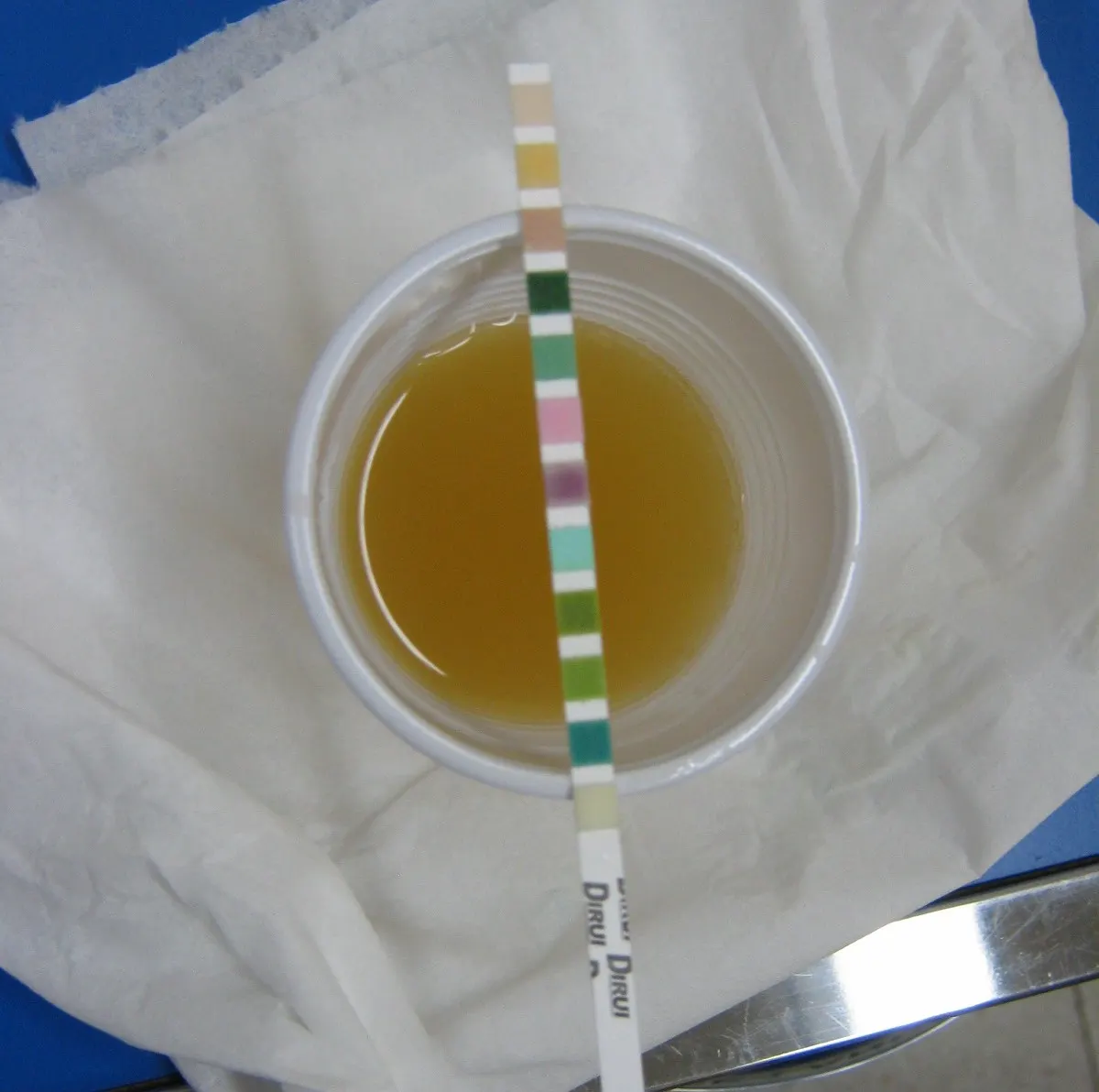
If you've got a test coming, a home cocaine strip uses the same type of screening chemistry many labs use first, at a cutoff printed on the box. Test with first-morning urine, because that's usually the most concentrated sample of the day and gives you the most conservative read. Remember that on drug strips, any visible test line means negative. If you're not sure how to read the strip, our guide on how to know if a drug test kit is positive walks through it.
What if you test positive at work?
For a regular, non-safety-sensitive employer, a lab positive typically goes to a medical review officer, who will ask about prescriptions. There's essentially no legitimate prescription that explains benzoylecgonine, apart from medical uses of topical cocaine in some ear, nose and throat procedures. If you had one of those procedures recently, tell the MRO. Otherwise, many employers have policies around retesting, assistance programs or waiting periods before reapplying. Read your company's written policy.
And if the test is DOT, federal or court-ordered, don't try to work around it. Those programs have strict rules and serious consequences. We don't give advice for beating them.
If it's more than two bumps
If "two keys" turned into a regular weekend thing, or you're finding it hard to stop once you start, you're not alone, and it's worth talking to someone. Cocaine affects your heart, mood and sleep, and the comedown can be rough. The SAMHSA helpline below is free, confidential and open 24/7. They don't report you to anyone, and they can point you to local, low-cost options.
Does the way you take it change the window?
Key bumps are snorted, and snorting is the most common route people ask about. Smoked crack reaches the brain faster and wears off faster, and injected cocaine hits the bloodstream directly. For urine testing, though, the route matters less than the total amount that reaches your blood, because all of it ends up as benzoylecgonine. A smaller fraction of a snorted dose may be absorbed compared with injection, since some stays in the nasal passages or drips down the throat, so the same weight of powder may produce somewhat less metabolite. Don't lean on that too hard. Purity and frequency move the needle far more than the route.
Can you test positive from being around cocaine?
People sometimes worry about touching cocaine, handling money, or being in a room where others are using. Studies on passive exposure suggest that touching powder or breathing smoke in a room can, in some cases, put small amounts of metabolite in urine, but usually well below standard workplace cutoffs. That's one reason labs use cutoffs instead of "any amount at all." Being around crack smoke in a closed space for a long time is the scenario most likely to cause a low-level result. Hair is trickier: labs wash hair samples before testing to remove outside contamination, but environmental exposure is a known debate in hair testing, and some labs also look for specific metabolites to separate use from exposure. If you're worried about a real, honest exposure, tell the medical review officer.
Coca tea and "natural" products
Coca leaf tea, which is legal and common in parts of South America, contains small amounts of cocaine, and drinking it can produce a positive urine test for benzoylecgonine. If you recently traveled to Peru, Bolivia or Colombia and drank mate de coca or chewed leaves, that can explain a result, and you should mention it. In the US, decocainized coca extract is used in some flavorings, but those products are processed so they shouldn't cause a positive. Numbing products like lidocaine and benzocaine are chemically different and don't trigger cocaine tests either.
Why online answers disagree so much
Search around and you'll see "2 days," "4 days," "a week" and "three weeks" all quoted for cocaine. They're not all wrong; they're answering different questions. Short numbers usually describe a single small dose and a standard 150 ng/mL urine screen. Long numbers usually come from studies of heavy, daily users or from more sensitive lab methods with lower cutoffs. When you read a number, ask what dose, what test and what cutoff it's based on. For two bumps on one night, the short end is the relevant one.
Sources
Detection windows, cutoffs and procedures on this page are based on these public sources. Individual results vary; this is information, not medical or legal advice. See how the DrugTestAnswers Editorial Team checks facts.
- HHS/SAMHSA, proposed Mandatory Guidelines using hair specimens, Federal Register, 10 Sep 2020
- SAMHSA, TAP 32: Clinical Drug Testing in Primary Care
- MedlinePlus (U.S. National Library of Medicine): Drug Testing
- Moeller KE et al., "Clinical Interpretation of Urine Drug Tests", Mayo Clinic Proceedings, 2017 (PubMed)
- SAMHSA National Helpline (free, confidential, 24/7)
Questions people ask
Will 2 key bumps of cocaine show up on a urine test?
Likely yes for a short time. After one small dose, benzoylecgonine is usually detectable in urine for about 1 to 3 days, depending on dose, purity and your body.
How long after 2 bumps can I pass a mouth swab?
Saliva tests generally detect cocaine for roughly 1 to 2 days after use.
Will one night of cocaine show up on a hair test?
It may or may not. Hair tests cover about 90 days and are more reliable at catching repeated use than a single small dose.
Does drinking water flush cocaine out faster?
No. Water only dilutes urine temporarily, and labs check for dilute samples.
Does drinking alcohol with cocaine make it stay longer?
It can. Alcohol and cocaine together form cocaethylene, which lasts longer in the body and is harder on the heart.
Ad: we may earn a commission if you buy through this link. Information only, not medical or legal advice. Tampering with a drug test can be illegal and usually counts as a refusal. The only sure way to pass is to not use.
No product can promise you a pass, and the only certain way is to not use. Tampering with a drug test can be illegal and is usually treated as a refusal. We never help anyone beat DOT, federal, safety-sensitive, or court-ordered tests. If substance use is getting on top of you, call the free, confidential SAMHSA National Helpline on 1-800-662-4357 (24/7, English and Spanish), or call or text 988 in a crisis. Source: samhsa.gov.