How to Pass a Urine Test for Nicotine: Cotinine Windows, Quit Timelines, NRT and Honest Options
Compare TestClear's urine-test products in one place: detox drinks, multi-day programs and more.
Ad: we may earn a commission if you buy through this link. Information only, not medical or legal advice. Tampering with a drug test can be illegal and usually counts as a refusal. The only sure way to pass is to not use.
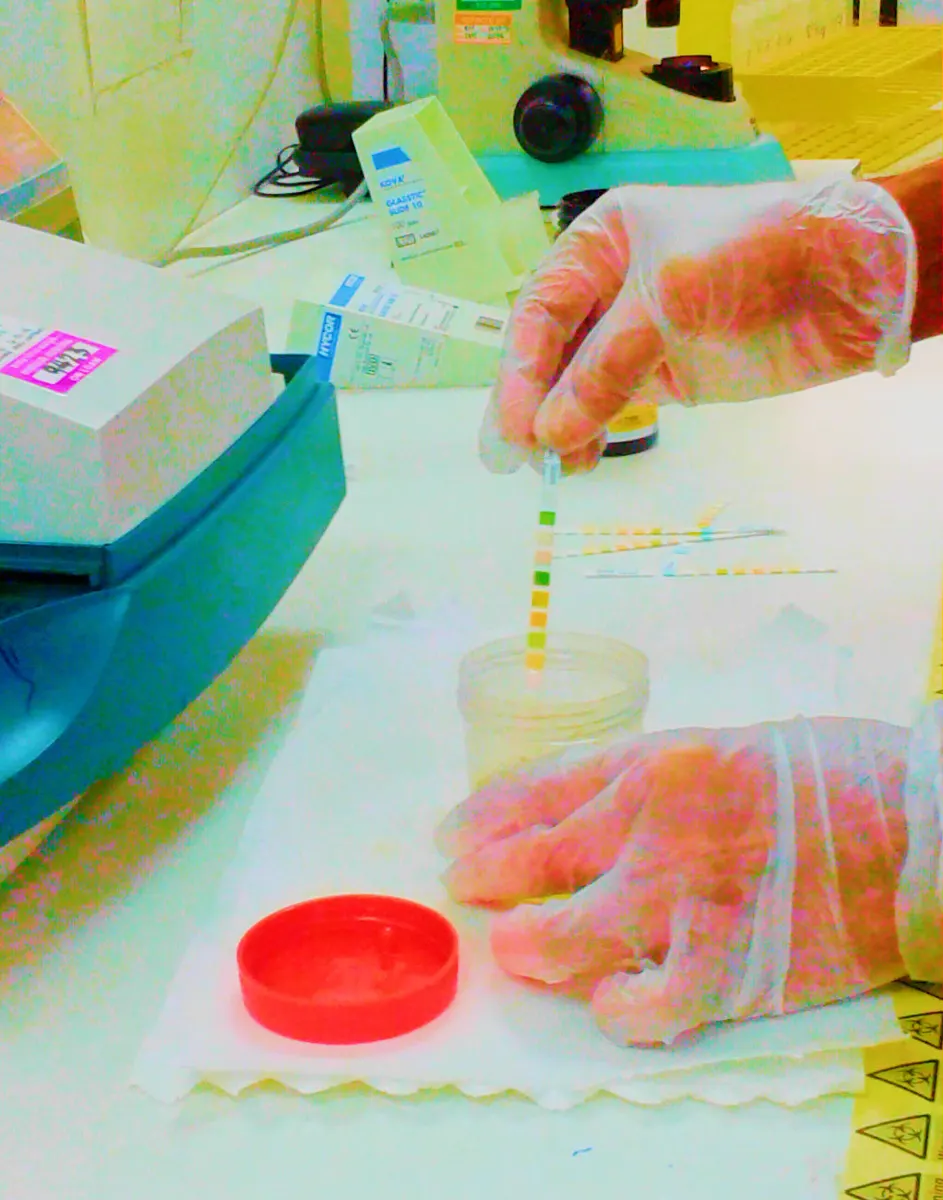
More employers, hospitals and insurers test for nicotine than most people realize, usually to set health insurance rates or enforce a tobacco-free hiring policy. The only honest way to pass is to have stopped long enough for cotinine to clear. Here's exactly how long that takes, what shows up, and how to check yourself before it counts.
Nicotine testing is legal for many private employers, but about half of US states have "smoker protection" laws limiting how employers can treat off-duty tobacco use. Rules for insurance surcharges are different. Check your state if this matters to your job.
What a nicotine urine test looks for
Nicotine itself clears quickly, with a half-life of about two hours. So tests look for cotinine, the main metabolite, which has a half-life of roughly 16 to 20 hours. Some tests also look for anabasine, a tobacco alkaloid that's not in nicotine replacement products, to tell tobacco users apart from people using patches or gum.
Cotinine cutoffs vary. Many lab tests and home strips use 200 ng/mL; some use 100 or even lower. Light smokers can fall under higher cutoffs sooner, while sensitive lab tests can catch even secondhand exposure in rare cases.
How long cotinine stays in urine
| Use pattern | Typical urine detection window |
|---|---|
| Occasional smoker / one cigarette | About 2-4 days |
| Regular daily smoker (about a pack a day) | About 1-2 weeks, sometimes up to 3 weeks |
| Heavy vaper or pouch user | Similar to daily smokers, depends on nicotine strength |
| Secondhand smoke exposure | Usually below common cutoffs |
Sources include Benowitz et al.'s pharmacology research on nicotine and cotinine (Handbook of Experimental Pharmacology, 2009) and clinical toxicology references. Our detection table lists them.
Why the range? Cotinine clearance varies a lot between people. Genetics (especially the CYP2A6 enzyme), ethnicity, pregnancy, oral contraceptives and liver health all change how fast you process nicotine. Menthol cigarettes may slow clearance slightly in some studies.
Vapes, pouches, cigars and chew
Every nicotine product produces cotinine. That includes e-cigarettes, disposable vapes, nicotine pouches, snus, chewing tobacco, cigars and hookah. High-strength vapes and pouches can deliver as much nicotine as a pack of cigarettes or more, so don't assume vaping is a safe zone. Cotinine levels in heavy vapers are often comparable to smokers.
Do patches, gum and lozenges show up?
Yes, on a cotinine test. Nicotine replacement therapy (NRT) produces cotinine just like smoking. The difference is anabasine: tobacco contains it and NRT doesn't. If your employer or insurer uses an anabasine test, people using NRT to quit can show they aren't using tobacco. If they only test cotinine, NRT will look the same as smoking. If you're quitting with NRT and have a test coming, ask whether they distinguish the two, and keep documentation from your doctor or pharmacist.
Honest ways to prepare
1. Stop as early as you can
For a daily smoker, plan on two to three weeks of no nicotine of any kind. Occasional users can often clear in three to five days. Earlier is better, because individual variation is big.
2. Use quit support
Stopping cold turkey before a test is tough. Free help is available at 1-800-QUIT-NOW (1-800-784-8669), which connects you to your state's quitline, and at smokefree.gov. Many quitlines offer free NRT, but remember the cotinine issue above.
3. Test yourself at home
Home cotinine strips are cheap and use common cutoffs like 200 ng/mL. Start testing a week after quitting, using first-morning urine for the most cautious reading. When you get clear negatives several days in a row, you're in good shape.
4. Keep normal hydration
Drink normally. Overdrinking water dilutes urine, and labs check creatinine. A dilute result can trigger a retest or be treated as a fail.
5. Be honest on insurance forms
Insurers price tobacco use in, and misrepresenting it can void a policy. Many insurers reclassify you as a non-smoker after 12 months tobacco-free. That's a strong incentive to quit for real.
What about detox drinks for nicotine?
Detox drinks and pills work the same way for nicotine as for anything else: mostly dilution plus creatine and vitamins for color. They don't speed up cotinine clearance, and we haven't seen independent evidence they do. If you want the details, see our page on workplace testing and the detox product guides.
Saliva and blood nicotine tests
Some insurers and clinics use saliva or blood instead of urine. Cotinine in saliva and blood tracks urine roughly but at lower concentrations, with detection windows of about one to four days for regular users. Hair can show nicotine use for months, but it's rarely used for employment.
Ad: we may earn a commission if you buy through this link. Information only, not medical or legal advice. Tampering with a drug test can be illegal and usually counts as a refusal. The only sure way to pass is to not use.
Why employers test for nicotine
- Health insurance costs: tobacco users often pay a surcharge on employer health plans, which federal law allows within limits.
- Tobacco-free hiring: some hospitals and health systems don't hire nicotine users at all, where state law allows.
- Wellness programs: discounts for non-users.
If a test result doesn't match reality, for example because of heavy secondhand smoke exposure at home, ask about the cutoff and whether anabasine was tested. A retest after a few days away from smoke often clears it up.
Quit timeline: what to expect week by week
- Days 1-3: nicotine is gone from your blood within a day, but cotinine is still high. Cravings, irritability and trouble focusing peak.
- Days 4-7: occasional users may test negative at 200 ng/mL. Daily users are usually still positive. Cravings come in waves.
- Week 2: many daily smokers drop below common cutoffs. Start home testing with first-morning urine.
- Week 3: most heavy users are clear at 200 ng/mL. Sensitive tests at lower cutoffs may still pick up traces in some people.
- Month 1 and beyond: you're well clear for urine tests. Breathing, taste and smell keep improving.
Secondhand smoke and vapor
Living with a smoker or working in a smoky bar can put measurable cotinine in your urine, but usually well below 100 to 200 ng/mL cutoffs. Very sensitive lab tests (some measure down to 10 ng/mL or less) can catch heavy secondhand exposure. If you're a non-smoker and test positive, ask the cutoff used, avoid smoky places for a few days and request a retest. Secondhand vape aerosol contains far less nicotine than tobacco smoke, so positives from it are unlikely.
Employer nicotine tests vs health plan surcharges
Some employers don't test at all and instead ask you to sign a tobacco-use attestation for health insurance pricing. Lying on that form can be treated as fraud and lead to firing or paying back the surcharge. Many plans also have to offer a "reasonable alternative," like a quit program, that lets tobacco users avoid the surcharge. Ask HR what alternatives exist; quitting with support may save you real money.
Health benefits worth the effort
Within weeks of quitting, circulation improves and lung function begins to recover. After a year, your excess heart disease risk is roughly halved compared with continuing to smoke, according to the CDC. Passing a test is a short-term goal; quitting is a long-term win.
How to read a home cotinine strip
Most home nicotine tests work like drug test strips. You dip the absorbent end in urine for about 10-15 seconds, lay it flat and read it at around five minutes. A control (C) line must appear for the test to be valid. A visible test (T) line, even faint, usually means negative, below the cutoff. No T line means cotinine is above the cutoff. Some semi-quantitative strips show several levels, which helps you track how your level drops day by day. Read the instructions for your specific test, because a few brands work differently.
If you can't quit in time
Be honest with yourself and the employer. Some employers will let you reschedule; some only apply a premium surcharge rather than refusing to hire; some hospitals have strict no-nicotine hiring and won't move. Knowing which kind of employer you're dealing with helps you make a decision. What we won't do is tell you how to fake a sample. It's not worth risking a job offer or insurance fraud.
Sources
Detection windows, cutoffs and procedures on this page are based on these public sources. Individual results vary; this is information, not medical or legal advice. See how the DrugTestAnswers Editorial Team checks facts.
- SAMHSA: Drug-Free Workplace
- HHS/SAMHSA, Mandatory Guidelines for Federal Workplace Drug Testing Programs using Urine, Federal Register, 12 Oct 2023
- 49 CFR Part 40: DOT procedures for workplace drug and alcohol testing (eCFR)
- MedlinePlus (U.S. National Library of Medicine): Drug Testing
- SAMHSA National Helpline (free, confidential, 24/7)
Questions people ask
Will chewing nicotine gum before a test cause a positive?
Yes on a cotinine test. Gum and lozenges create cotinine just like smoking does.
Does cotinine show up in saliva tests longer than urine?
No. Saliva cotinine generally clears sooner than urine, usually within about 1-4 days for regular users.
Can I pass a nicotine test in 3 days?
Occasional users often can at a 200 ng/mL cutoff. Daily smokers usually need 1-3 weeks.
Do employers test for vaping?
A cotinine test catches any nicotine, including vapes and pouches.
Is nicotine testing legal?
Often yes for private employers, but about half of states have laws protecting off-duty tobacco use for some workers.
How long does nicotine stay in urine for a pack-a-day smoker?
Usually around 1-2 weeks as cotinine, sometimes up to 3 weeks.
Will a nicotine patch make me fail a nicotine test?
On a cotinine-only test, yes. An anabasine test can distinguish patches from tobacco.
Do nicotine pouches show up on a drug test?
Yes. Pouches produce cotinine like any nicotine product.
Does a standard 10-panel drug test check for nicotine?
No. Nicotine testing is a separate test ordered specifically.
Ad: we may earn a commission if you buy through this link. Information only, not medical or legal advice. Tampering with a drug test can be illegal and usually counts as a refusal. The only sure way to pass is to not use.
No product can promise you a pass, and the only certain way is to not use. Tampering with a drug test can be illegal and is usually treated as a refusal. We never help anyone beat DOT, federal, safety-sensitive, or court-ordered tests. If substance use is getting on top of you, call the free, confidential SAMHSA National Helpline on 1-800-662-4357 (24/7, English and Spanish), or call or text 988 in a crisis. Source: samhsa.gov.